Search "water test kit" and you'll find strips for $20 promising to test 16 parameters in 60 seconds. So why would anyone pay more for laboratory testing? Because the two products answer different questions — and if the question is "is my family's drinking water safe?", only one of them can answer it.
What DIY Kits Do Well
- Speed — dip, wait, compare colours. Results in a minute.
- Rough screening — pH, hardness, and chlorine strips are accurate enough to spot big swings
- Ongoing monitoring — handy for checking that treatment equipment (like a pH filter) is still doing its job between proper tests
- Price — cheap enough to use weekly
Where DIY Kits Fall Short
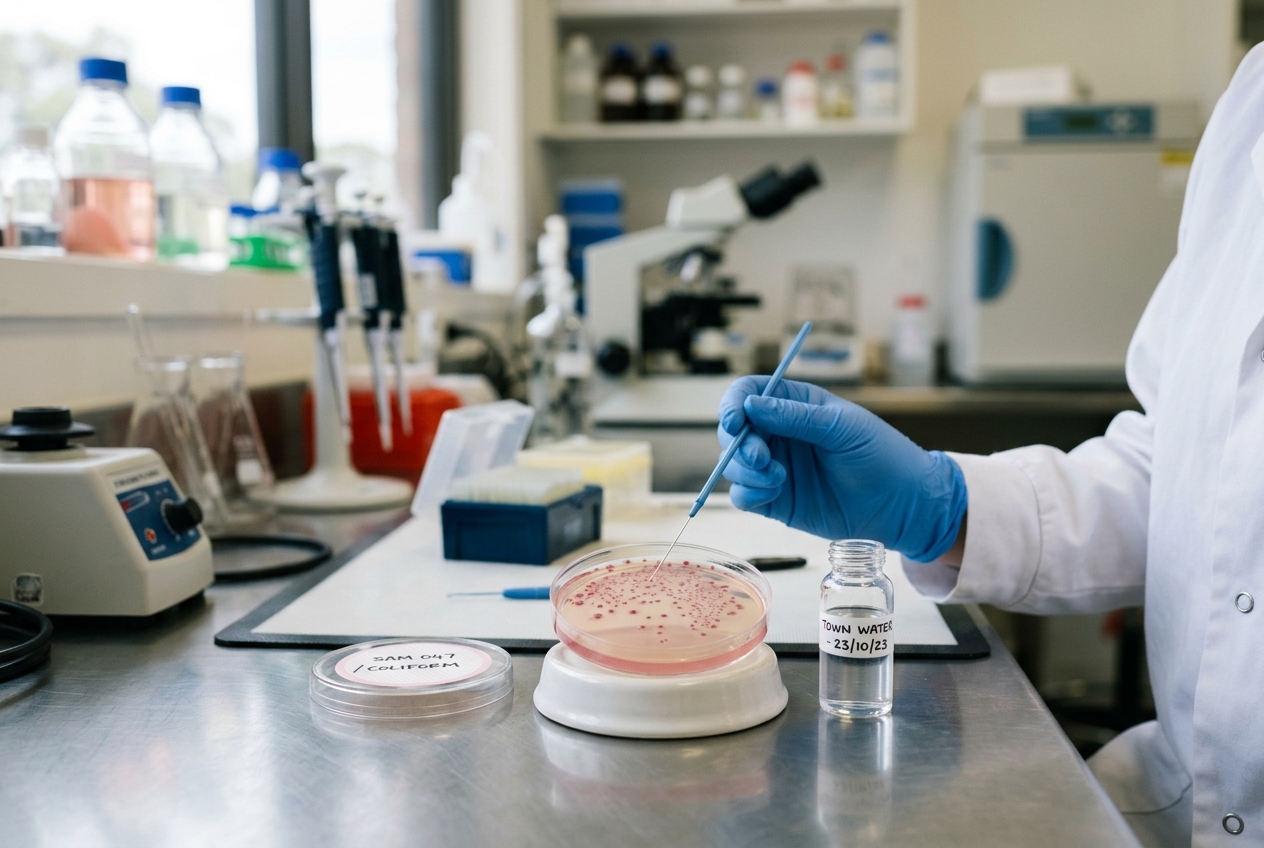
- Bacteria — this is the big one. E. coli and coliforms need culture-based laboratory analysis. Strip "bacteria tests" are presence hints at best, and a false all-clear on bacteria is the most dangerous mistake in water testing.
- Metals at guideline levels — the lead guideline is 0.01 mg/L. Colour-match strips simply cannot read that low; laboratory instruments can.
- Accuracy and drift — strips degrade with heat and humidity, and colour matching is subjective.
- No interpretation — a strip gives you a colour; a lab report tells you whether the result meets the Australian Drinking Water Guidelines and what to do if it doesn't.
Side by Side
| Factor | DIY Strips | Laboratory Test |
|---|---|---|
| Bacteria (E. coli, coliforms) | Unreliable | Culture-based, reliable |
| Heavy metals | Can't reach guideline levels | Measured to guideline precision |
| pH / hardness | Rough indication | Precise, calibrated |
| Result | Colour chart | Plain-English report vs ADWG |
| Best for | Between-test monitoring | Drinking safety decisions |
The Practical Answer: Use Both
The setup that works for most tank and bore households:
- Laboratory test annually (and after heavy rain, floods, or system work) — the reliable baseline. Our complete guide to water testing covers the process.
- DIY strips in between — a quick monthly pH check tells you if something has shifted and it's worth testing properly sooner.
Wondering about the price difference? See what water testing costs in Australia — laboratory testing is more affordable than most people expect.
Frequently Asked Questions
Are DIY water test kits accurate?
For rough indications of pH, hardness and chlorine — reasonably. For bacteria, metals and anything measured against Australian Drinking Water Guideline values — no. Strips can't detect E. coli reliably or measure lead at the 0.01 mg/L guideline level.
When is a DIY kit good enough?
For quick monitoring between laboratory tests — checking your pH correction filter is still working, or watching aquarium or pool water. For any decision about drinking safety, laboratory analysis is the reliable option.
Why does lab testing cost more than a DIY kit?
You're paying for calibrated instruments, culture-based bacterial analysis, trained analysts, and a report measured against the Australian Drinking Water Guidelines — plus interpretation of what the numbers actually mean for your household.
Ready for results you can act on?
Laboratory water testing with sterile sampling kits and plain-English results measured against the Australian Drinking Water Guidelines.