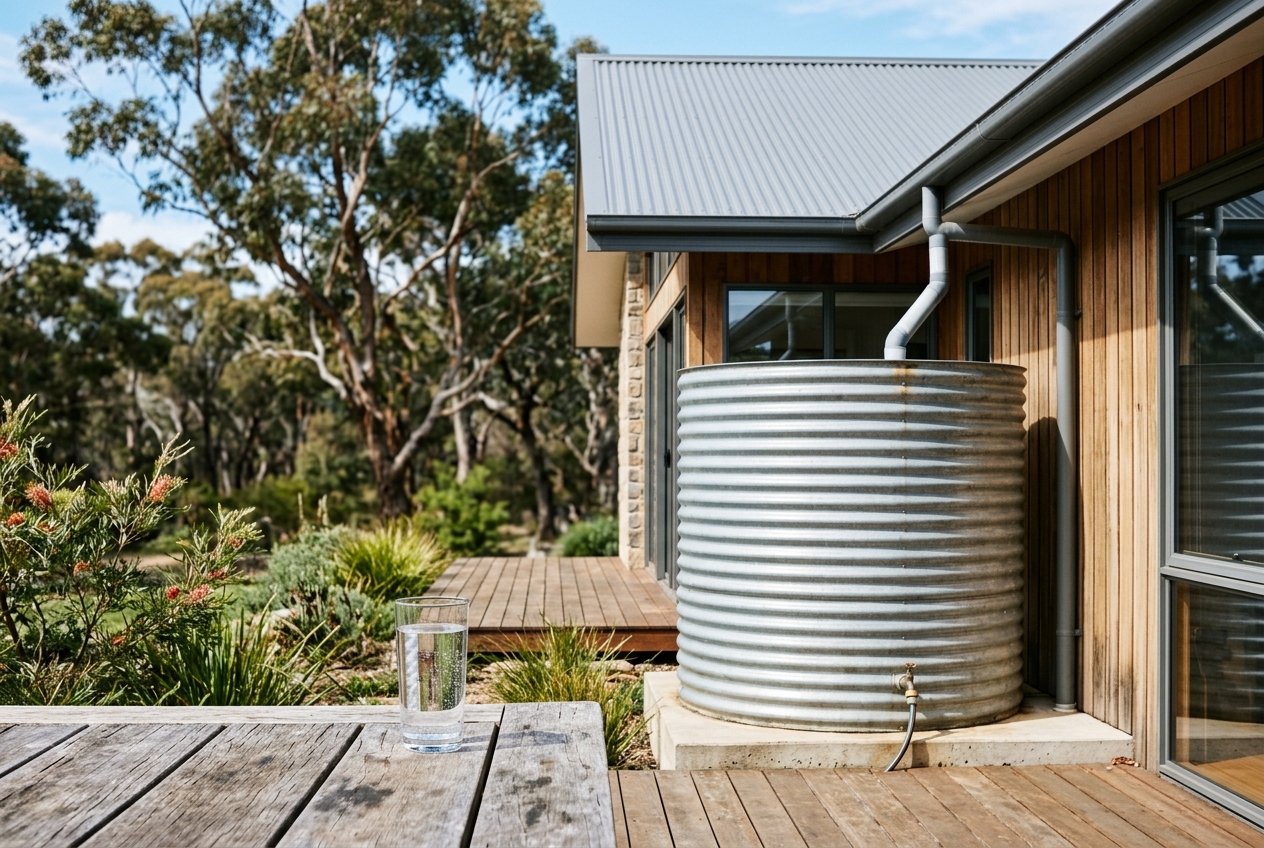
Millions of Australian households rely on rainwater tanks as their primary or supplementary drinking water supply. And most of the time, properly maintained tank water is perfectly fine to drink. But "most of the time" isn't good enough when your family's health is on the line.
The reality is that rainwater picks up contaminants on its journey from sky to roof to gutter to tank — and what ends up in your glass depends on your roof material, local environment, tank condition, and maintenance routine.
This guide covers the actual risks, what to test for, and how to keep your tank water safe.
How Rainwater Gets Contaminated
Rainwater itself starts clean. The problems come from everything it touches on the way to your tap:
Your Roof
- Bird and animal droppings — the number one source of bacteria in tank water. Birds roosting on your roof deposit E. coli, Salmonella, and other pathogens that wash straight into your tank with the next rain — watch for the symptoms of E. coli in a rainwater tank
- Leaf litter and organic matter — decaying leaves create a nutrient source for bacteria and can affect taste and colour
- Roof material — older painted roofs, lead flashing, and some treated timbers can leach chemicals into the water
- Dust and airborne particles — pollen, soil dust, smoke particles, and industrial fallout settle on your roof between rain events
Your Gutters
- Blocked or dirty gutters — standing water in gutters is a breeding ground for mosquitoes and bacteria
- Missing or damaged first-flush diverters — the first flush of rain carries the highest concentration of roof contaminants. Without a diverter, all of it goes into your tank
Your Tank
- Sediment build-up — over time, fine particles settle on the tank floor. This sludge layer can harbour bacteria and affect water quality
- Light entry — cracks, damaged lids, or poorly sealed inlets let light in, which promotes algae growth
- Animal access — frogs, lizards, insects, and even possums can enter poorly sealed tanks
- Dead animals — a dead bird or possum in your tank is a serious contamination event
Your Environment
- Overhanging trees — increase leaf litter, bird activity, and possum access to your roof
- Nearby agriculture — pesticide spray drift can settle on your roof
- Bushfire smoke — ash and particulates from bushfire smoke can contaminate roof catchments
- Industrial areas — airborne pollutants settle on roofs near industrial zones
What to Test For
A thorough tank water test should cover:
Microbiological
| Parameter | Why It Matters |
|---|---|
| E. coli | Direct indicator of faecal contamination — any detection means do not drink |
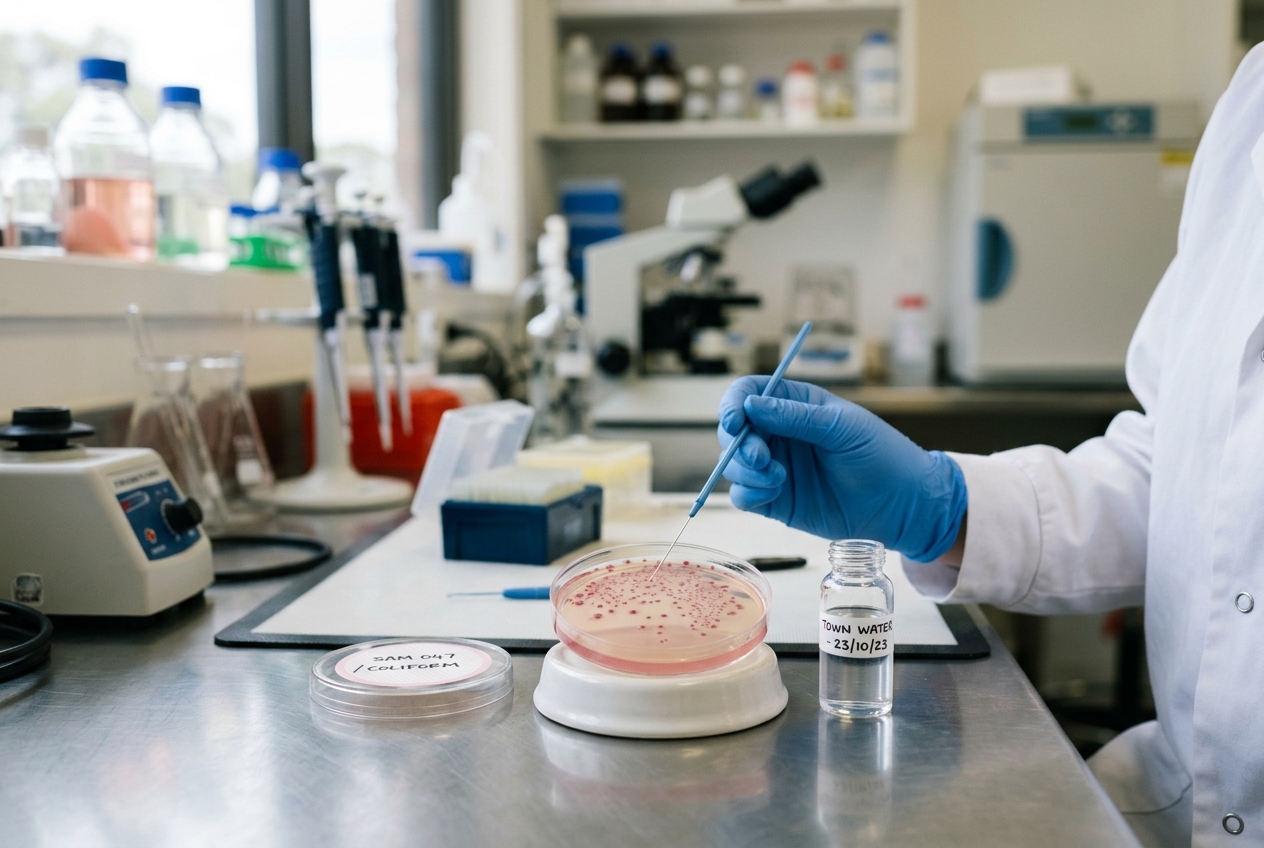
| Coliforms | Warning sign that bacteria are present; may indicate animal or organic contamination |
Chemical and Physical
| Parameter | Why It Matters |
|---|---|
| pH | Rainwater is naturally slightly acidic (pH 5.5–6.5). Acidic water can corrode copper pipes and fittings, leaching metals into your water — why pH matters for tank water |
| Lead | Can leach from lead flashing, old solder joints, or brass fittings — especially with acidic rainwater |
| Copper | Acidic rainwater dissolves copper from pipes over time |
| Turbidity | Cloudy water may indicate sediment, organic matter, or bacterial activity |
| TDS | Generally low in rainwater, but elevated levels may indicate contamination |
| Iron | Can enter from rusting tank components or roof materials |
| Colour | Tannins from leaf litter can discolour water brown or yellow |
Additional Tests for Specific Situations
- Zinc — if you have a galvanised steel roof or tank
- Pesticides — if you're near agricultural land
- Heavy metals panel — if your roof is old, painted, or near industrial areas
How Often Should You Test Tank Water?
- Once a year — annual testing gives you a baseline and catches gradual changes before they become problems
- After extended dry spells — the first rain after a long dry period carries the heaviest load of roof contaminants
- After heavy storms or flooding — extreme weather can overwhelm first-flush diverters and stir up tank sediment
- After bushfire smoke events — if smoke has settled on your roof for days, test before drinking
- After any tank or roof work — new roofing, tank cleaning, gutter repairs, or plumbing changes can affect water quality
- If you notice changes — taste, colour, smell, or visible particles that weren't there before
- Before buying or selling property — a clean water quality report adds confidence to a property transaction
- If household members have unexplained illness — gastro symptoms, especially in young children or elderly family members, can be linked to tank water
What Do the Results Mean?
Your report will compare your tank water results against the NHMRC Australian Drinking Water Guidelines (ADWG):
All clear — your tank water meets Australian drinking water standards at the time of sampling. Maintain your system and keep testing annually.
E. coli or coliforms detected — stop drinking the water. Identify the contamination source (most commonly animal droppings on the roof or a dead animal in the tank). Clean the tank, fix the entry point, and retest. Start with what E. coli means and coliform in your water for the full response steps.
Low pH with elevated metals (lead, copper) — your acidic rainwater is likely corroding plumbing. Consider a pH correction filter or neutralising media, and retest after treatment. Our guide to lead in your water covers reduction steps in detail.
High turbidity or colour — usually sediment or organic matter. May indicate the tank needs cleaning or the first-flush diverter needs servicing.
All test results relate solely to the sample as received by the laboratory. Results reflect your water at the time of collection — which is exactly why regular testing builds a reliable picture over time.
Keeping Your Tank Water Safe
Testing tells you what's in your water right now. Good maintenance keeps it clean between tests:
- Keep gutters clean — clear leaves and debris at least twice a year, more if you have overhanging trees
- Install and maintain a first-flush diverter — this single device makes the biggest difference to tank water quality by diverting the dirtiest water away from your tank
- Fit mesh screens on all inlets — keeps insects, frogs, lizards, and debris out
- Seal your tank properly — no gaps in the lid, overflow, or inlet that would let light or animals in
- Trim overhanging branches — reduces leaf litter, bird roosting, and possum traffic on your roof
- Inspect your tank annually — look for sediment build-up, cracks, light entry, and signs of animal access
- Get your tank professionally cleaned every 2–3 years — removes the sediment layer that builds up on the tank floor
- Consider UV disinfection — a UV filter on the outlet line provides ongoing protection against bacteria without chemicals
Frequently Asked Questions
Is rainwater safe to drink straight from the tank?
It can be, but you won't know for certain without testing. Properly maintained tank systems with clean roofs, first-flush diverters, and sealed tanks generally produce safe drinking water. However, bacterial contamination from bird and animal droppings is common and invisible — testing is the only way to confirm your water is safe.
What are the biggest risks with tank water?
Microbiological contamination is the most common and most immediate health risk. Bird and animal droppings on the roof wash bacteria like E. coli into the tank. The second most common issue is low pH causing metals to leach from plumbing — particularly lead and copper.
How do I know if my tank water has made someone sick?
Gastro symptoms (nausea, vomiting, diarrhoea) within 1–3 days of drinking contaminated water are the most common sign. If multiple household members are affected, test your tank water immediately for E. coli and coliforms. See a doctor if symptoms are severe, especially for young children, elderly, or immunocompromised household members.
Do I need a filter on my rainwater tank?
A first-flush diverter and mesh inlet screen are the most effective front-line defences. For drinking water, a UV disinfection unit on the outlet provides ongoing bacterial protection. Carbon or sediment filters can improve taste and clarity. The right setup depends on what your water test results show.
Is tank water testing different from bore water testing?
The core microbiological tests are the same (E. coli, coliforms). The chemical focus differs — tank water testing emphasises pH, lead, and copper (from roof and plumbing interaction), while bore water testing focuses more on nitrate, iron, hardness, and salinity. A water testing laboratory can recommend the right panel for your supply type.
Ready to test your tank water?
Find out exactly what's in your rainwater tank — with plain-English results measured against the Australian Drinking Water Guidelines.