Does a glass of milky, white water mean there's something wrong with your plumbing, or is it just a harmless trick of the light? Most of us have stood at the kitchen sink, filled a glass, and felt a sudden wave of worry when the liquid looks more like a cloud than a clear drink. It's a common concern for homeowners across Australia, especially when you're wondering if cloudy tap water is safe to drink or if it signals a deeper issue with your local supply. Whether you're on a rainwater tank in the hills or a suburban mains connection, that lack of clarity can be unsettling.
We understand that you want certainty when it comes to what's coming out of your taps. You'll learn exactly why your water might lose its clarity, how to tell the difference between simple air bubbles and actual sediment, and how to verify your supply against the Australian Drinking Water Guidelines. Our checklist of signs you need to test your drinking water covers when to escalate. We'll walk you through a simple home test to help identify the cause and explain how professional laboratory analysis provides the definitive, plain-English answers you need for your household's peace of mind.
Key Takeaways
- Learn how to use the simple "Glass Test" at home to quickly distinguish between harmless air bubbles and persistent sediment.
- Understand the Australian Drinking Water Guidelines (ADWG) framework to evaluate if cloudy tap water is safe to drink or if it exceeds the preferred turbidity range.
- Explore how environmental factors like heavy rain or local plumbing repairs can impact the clarity of your town, tank, or bore water.
- Discover why a professional laboratory test is the essential first step to get a scientific baseline before you invest in filtration or treatment.
- Get a clear explanation of what "turbidity" actually means for your household appliances and plumbing without the technical jargon.
Table of Contents
- Why is My Tap Water Cloudy? Understanding Air Bubbles and Turbidity
- How the Australian Drinking Water Guidelines (ADWG) View Cloudy Water
- Common Causes of Cloudiness in Australian Water Sources
- The Glass Test: Assessing Your Water Quality at Home
- Professional Water Analysis: The Practical Path to Certainty
Why is My Tap Water Cloudy? Understanding Air Bubbles and Turbidity
Seeing a glass of water that looks like milk can be a shock. Most of the time, this isn't a sign of chemical contamination. It's usually just tiny air bubbles. Homeowners often ask is cloudy tap water safe to drink when they first notice this change, but the answer depends on whether the cloudiness is caused by air or physical particles. Discolouration, such as brown or yellow tints, usually points to rust or tannins. True cloudiness, or "milky" water, is a matter of clarity rather than colour.
The Role of Entrapped Air
Pressure changes are the primary culprit for milky water. When air gets trapped in the pipes, it dissolves into the water under high pressure. When you turn on your tap, that pressure is released, and the air forms millions of microscopic bubbles. This often happens after a local water main repair or if there's been recent plumbing work at your property. Tap water can also appear cloudy if a cold pipe suddenly warms up, as warm water holds less air than cold water. These bubbles are harmless and will naturally clear from the bottom of the glass upwards within a few minutes.
Defining Turbidity in Plain English
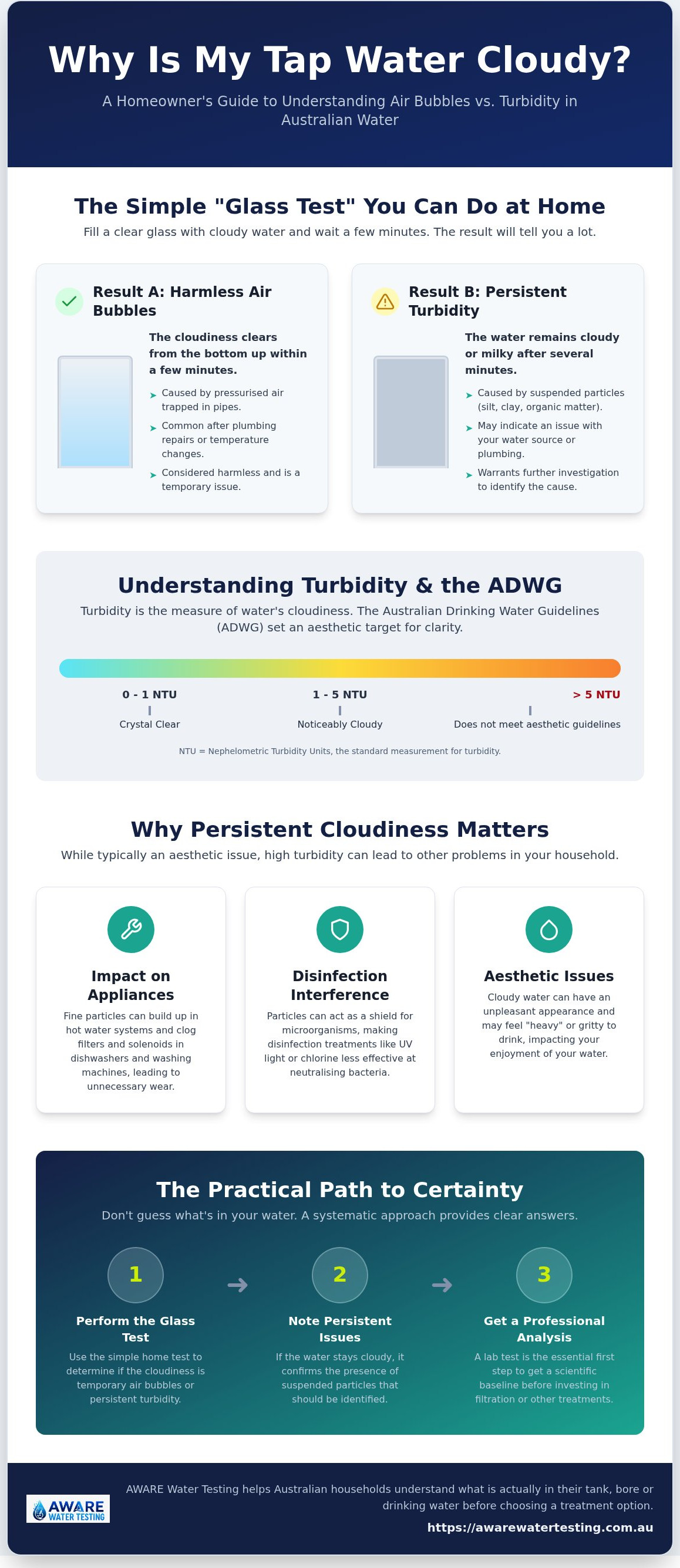
If the water doesn't clear after sitting for a few minutes, you're likely looking at turbidity. In simple terms, turbidity is a measure of how cloudy the water is due to suspended particles like silt, clay, or fine organic matter. In a laboratory setting, we measure this in Nephelometric Turbidity Units (NTU). The Australian Drinking Water Guidelines (ADWG) set an aesthetic limit of 5 NTU for water at the tap. While water with a turbidity of 5 NTU might look slightly milky, "crystal-clear" water usually sits below 1 NTU.
High turbidity isn't just an aesthetic problem. These tiny particles can act as a shield for bacteria, making standard disinfection treatments like chlorine or UV light less effective. If your water is consistently cloudy and doesn't clear in a glass, it's a sign that your supply might be outside the preferred range. Before you spend thousands on a filtration system, a professional analysis from AWARE Water Testing is the essential first step to identify exactly what those particles are. This scientific baseline ensures you aren't guessing about your household safety.
How the Australian Drinking Water Guidelines (ADWG) View Cloudy Water
The framework used to manage our water quality is thorough but easy to understand once you know the basics. The Australian Drinking Water Guidelines (ADWG) provide the roadmap for every tap in the country. These guidelines divide water quality into two main categories: health-related and aesthetic. When you're asking is cloudy tap water safe to drink, you're usually dealing with an aesthetic parameter. This doesn't mean the issue isn't important. It simply means the cloudiness might affect how the water looks, tastes, or smells rather than posing an immediate health risk.
When water looks milky or "off," it's often described as being outside the preferred range. This terminology is used because water quality isn't always a simple pass or fail. Instead, the guidelines set a target for what is considered high-quality, palatable water. If your household supply doesn't meet these targets, it's a signal to investigate the cause rather than a reason for immediate alarm.
Aesthetic vs. Health Guidelines
For appearance and taste, the ADWG suggests that turbidity should be below 5 NTU at the consumer's tap. If your water exceeds this, it officially does not meet the Australian Drinking Water Guidelines for aesthetic quality. High turbidity can make water feel "heavy" or gritty on the palate, which most people find unpleasant. Beyond the glass, clarity matters for your home's infrastructure. Fine suspended particles can settle in your hot water service or clog the delicate solenoids in modern dishwashers and washing machines. Maintaining clear water helps protect these expensive household assets from unnecessary wear and tear.
When Cloudiness Indicates a Quality Issue
While cloudiness is often just a visual nuisance, it can sometimes interfere with how your water is treated. High levels of suspended particles can "shield" microorganisms from disinfection processes. If you rely on a UV steriliser or chlorine treatment, bacteria can essentially hide behind the tiny pieces of silt or clay. This is why persistent cloudiness is often a trigger for a more detailed microbiological analysis. We need to ensure that the particles aren't preventing your treatment system from doing its job effectively.
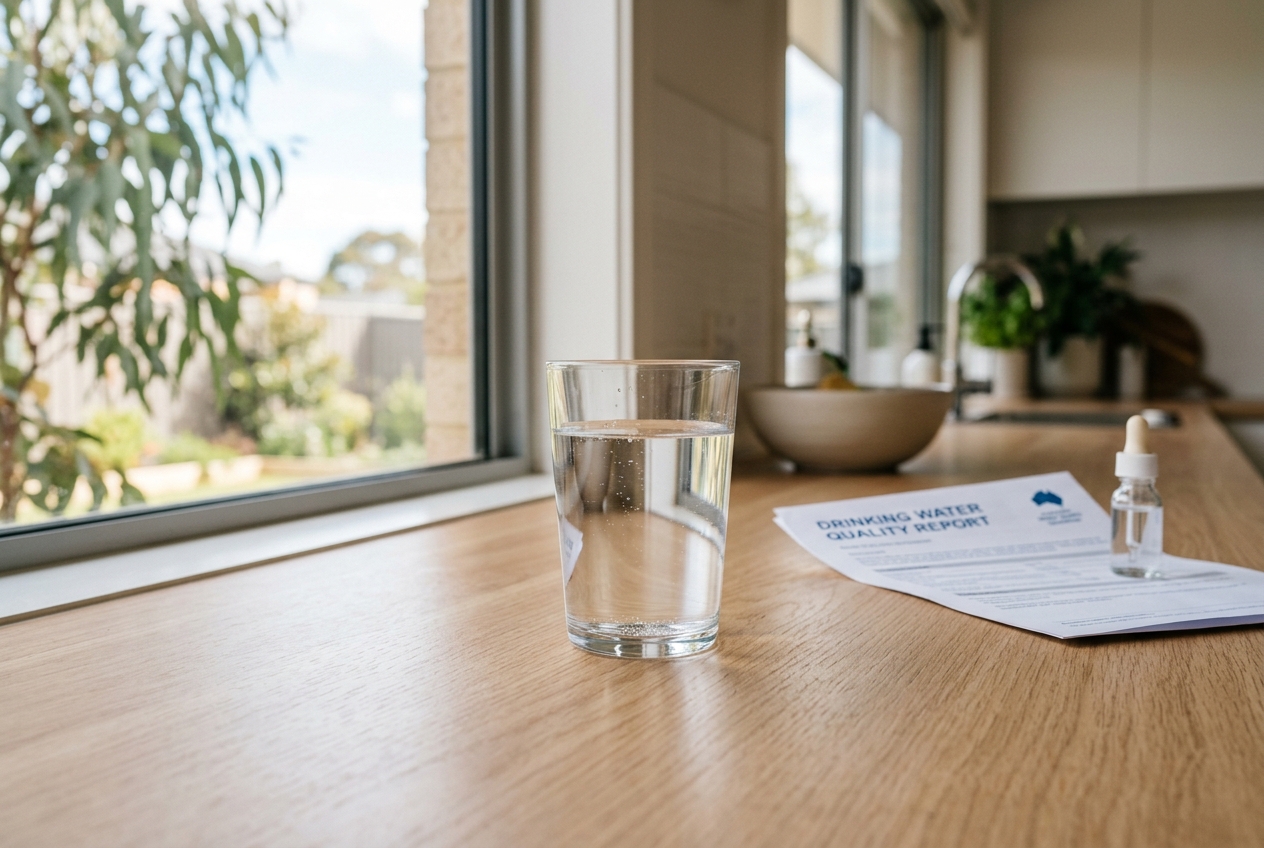
Professional laboratory analysis is the only practical path to certainty. It moves you past the guesswork of the "look and see" method and provides a scientific baseline. If you've noticed a persistent change in your water's clarity, you can book a standard drinking water test to confirm if your supply is within the guideline values or if it requires further attention.
Common Causes of Cloudiness in Australian Water Sources
Homeowners often ask is cloudy tap water safe to drink when they see a sudden change in clarity, but the answer often depends on your specific water source. While air bubbles are the most frequent reason for a milky appearance in urban areas, regional and rural households often deal with physical particles. Understanding the source of the cloudiness helps you decide if a simple fix is possible or if you need professional help. Whether you're on the coast or in the hinterland, the cause usually falls into one of four categories: municipal supply, rainwater storage, groundwater, or your own pipes.
In town water systems, cloudiness often follows a sudden surge in demand or a local main repair. These events can stir up harmless sediment that's settled in the pipes over years. Similarly, within your home, an aging hot water unit can shed mineral scale. This makes your hot water look cloudy while the cold tap remains clear. If you're wondering is cloudy tap water safe to drink when it only happens with the hot tap, it's usually a sign your cylinder needs a service or the sacrificial anode has reached the end of its life.
Sediment in Rainwater Tanks
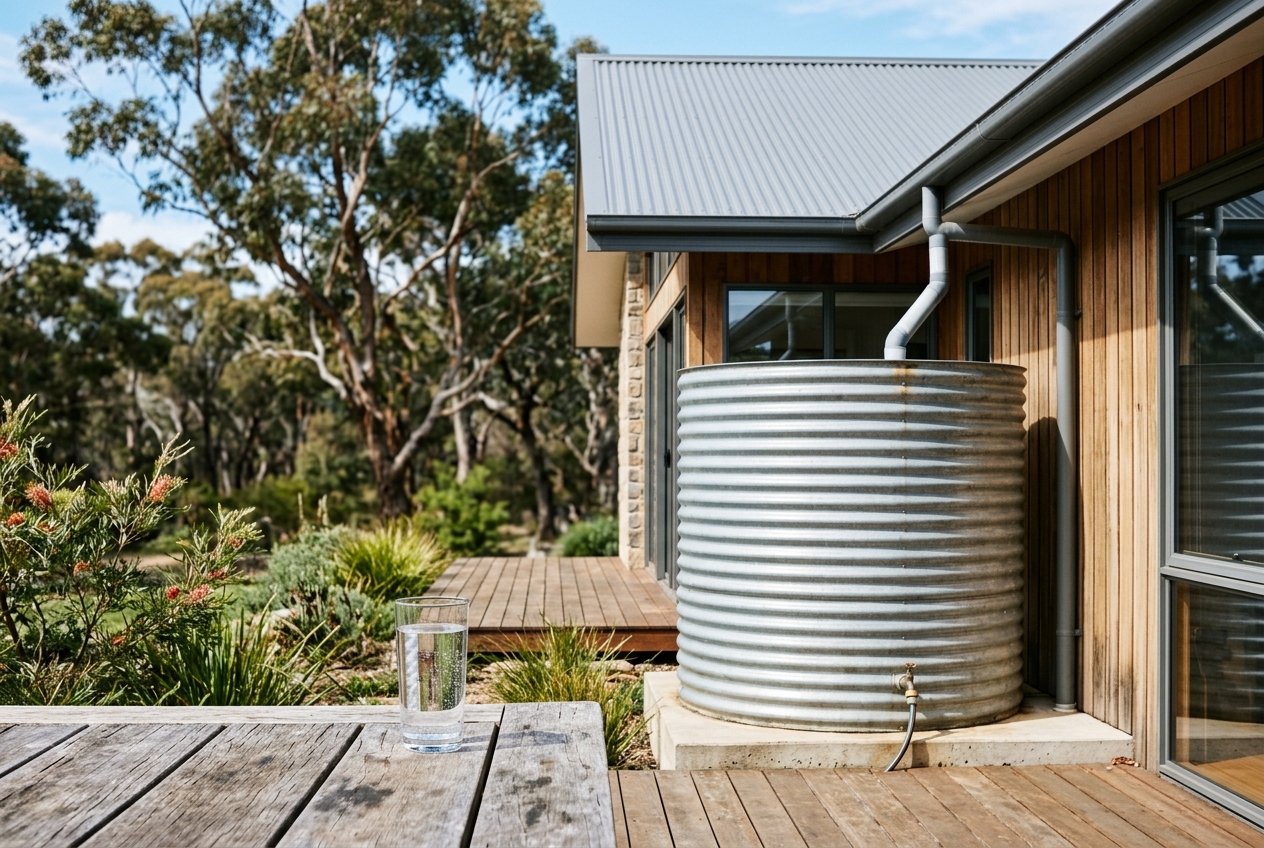
Rainwater is naturally clear, but the environment it passes through isn't. Dust, leaves, and organic debris collect on your roof and eventually settle at the bottom of your tank as a layer of sludge. During a heavy Australian downpour, the force of new water entering the tank can stir this sediment up, resulting in a milky or hazy look. To manage this, you should consider the following:
- First Flush Diverters: These are your first line of defence. They capture the initial, most contaminated run-off from your roof before it enters the tank.
- Low Tank Levels: If your tank is nearly empty, the pump may draw from the bottom where sediment is most concentrated.
- Tank Health: If the water doesn't clear within 24 hours of the rain stopping, your tank likely needs a professional clean or a health check to ensure the water isn't outside the preferred range.
Bore Water and Mineral Profiles
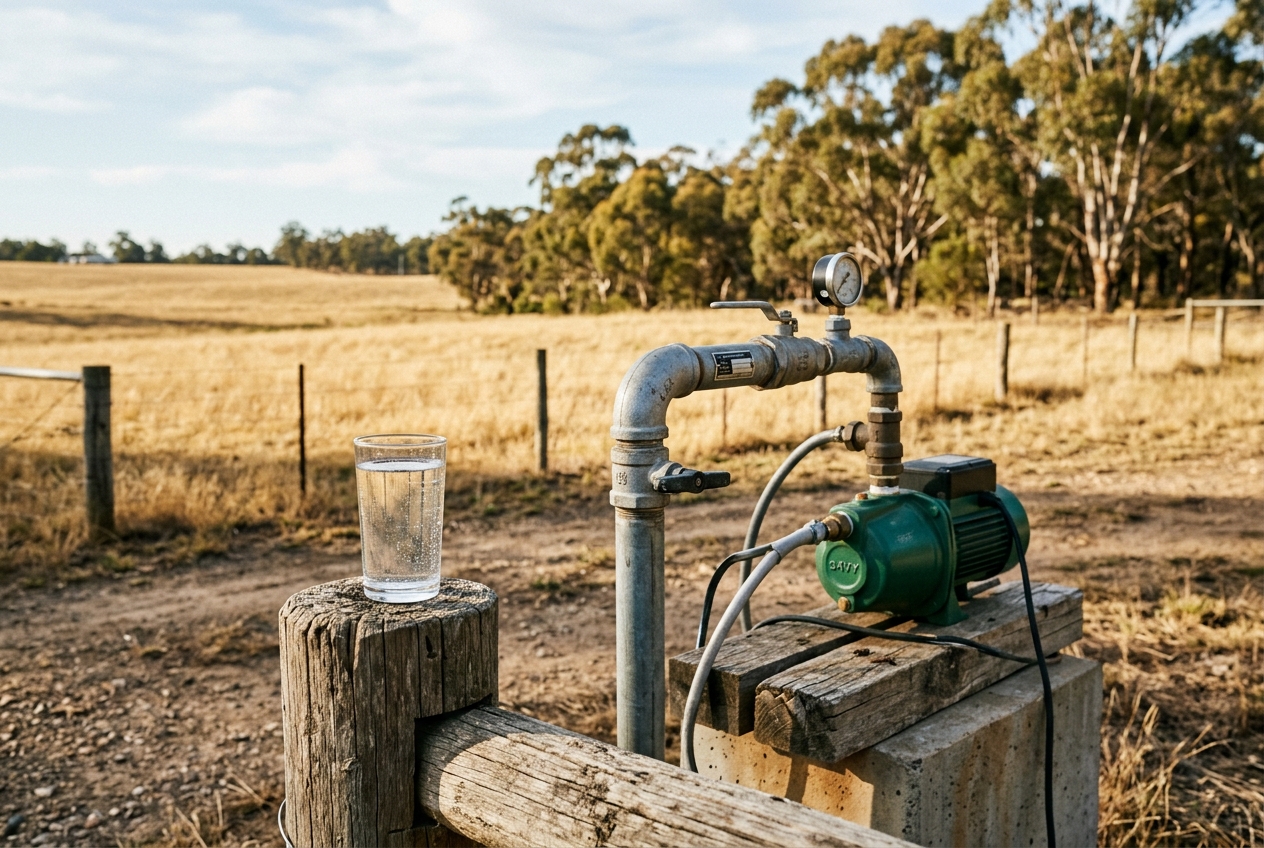
Groundwater is rarely pure and often carries a heavy load of dissolved minerals. High levels of calcium and magnesium, often referred to as hardness, can give water a cloudy or hazy appearance. Seasonal fluctuations, such as a rising water table after a wet summer, can also introduce fine silt and clay into your bore, increasing turbidity.
Because groundwater is so variable, a professional bore water quality assessment is essential for anyone relying on this source. It identifies whether the cloudiness is just an aesthetic mineral issue or if the levels of suspended solids mean the water does not meet the Australian Drinking Water Guidelines. Without a lab report, it's impossible to know if your bore water is within the preferred range for clarity and long-term plumbing health.
The Glass Test: Assessing Your Water Quality at Home
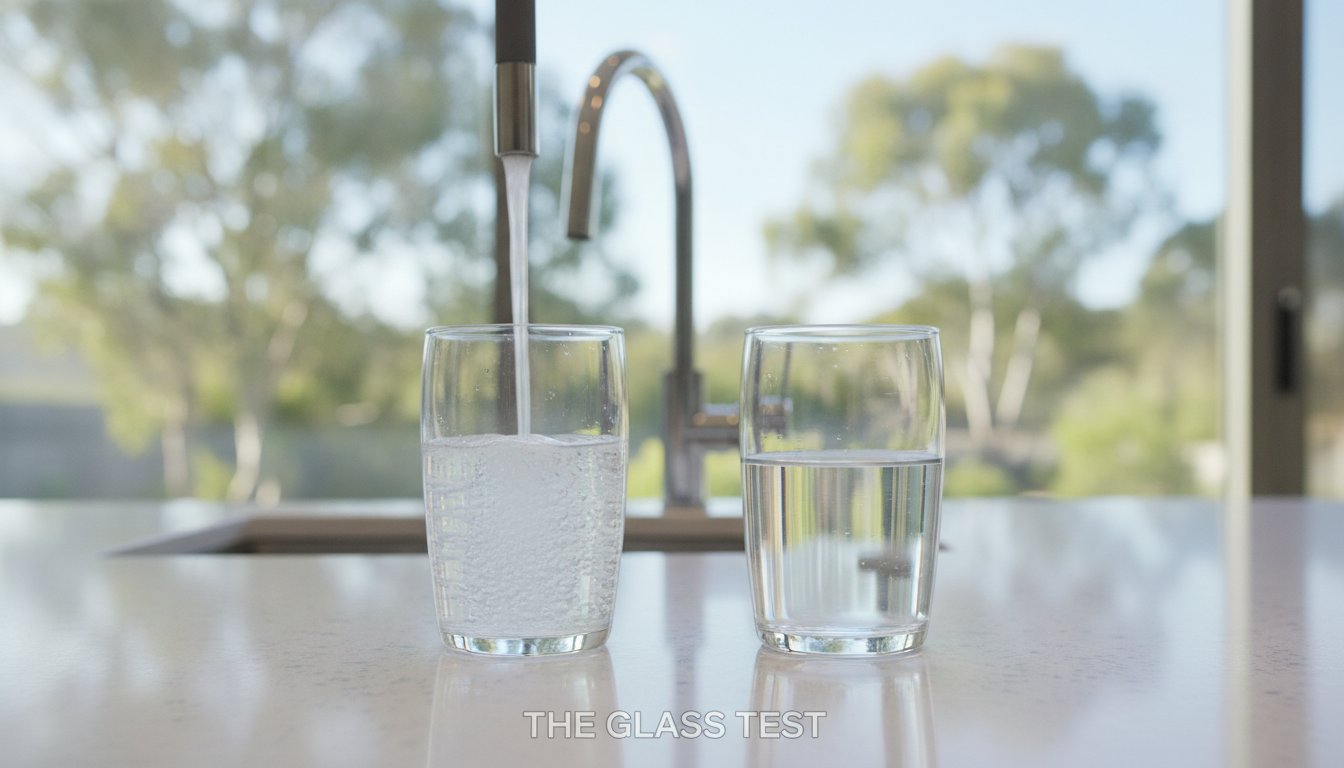
Before you invest in expensive treatment systems, start with a simple diagnostic at your kitchen bench. Homeowners across the country often ask is cloudy tap water safe to drink when they first spot a milky glass, but the answer is often revealed through a bit of patience. The "Glass Test" is the essential first step for any Australian household noticing a change in clarity. It helps you distinguish between a temporary pressure change and a persistent quality concern that might require further investigation. This simple check provides immediate feedback without the need for specialised equipment.
- Step 1: Fill a clean, clear glass with cold water from your main kitchen tap. Avoid using the hot tap for this initial check to ensure you're testing the incoming supply rather than your hot water unit.
- Step 2: Observe the glass immediately at eye level. Pay close attention to the direction of the clearing. Tiny air bubbles will rise, clearing the water from the bottom of the glass upwards within a few minutes.
- Step 3: If the water remains hazy after five minutes, let it sit undisturbed for 24 hours. This allows time for "settleable solids" to drop to the bottom of the glass, giving you a clear look at any physical sediment.
Interpreting Your Results
Bottom-up clearing is the most common result for those on town water. It confirms that the cloudiness is simply entrapped air, which is harmless. If the water clears from the top down or stays cloudy for hours, you have fine particulates in your supply. Fine silt or clay will often leave a visible layer at the base of the glass after 24 hours. If you see floating debris instead, this often points to organic matter from a rainwater tank or degraded washers within your internal plumbing. Persistent cloudiness that never settles suggests very fine "colloidal" particles that require professional analysis to identify.
Identifying "Red Flags"
Cloudiness shouldn't be ignored if it's paired with other sensory changes. If your water has a distinct earthy odour or a metallic taste, it's a sign that the supply is outside the preferred range. You should also watch for persistent staining on laundry or plumbing fixtures, as this indicates high mineral or sediment levels. If the cloudiness only happens when you turn on the hot tap, the issue is likely your hot water system's internal lining or anode failing rather than the water source itself. When these signs appear, asking is cloudy tap water safe to drink becomes a prompt to seek a scientific baseline from a laboratory.
Professional Water Analysis: The Practical Path to Certainty
While the glass test provides a helpful clue, it cannot give you the level of precision required to ensure your household supply is within the preferred range. Many homeowners feel pressured to buy expensive filtration systems the moment they see a bit of cloudiness. This is often a mistake. Without knowing exactly what is causing the turbidity, you might choose a treatment option that doesn't actually solve the problem. Professional analysis is the essential first step because it replaces guesswork with a scientific baseline. It helps you understand if you're dealing with harmless air, mineral hardness, or something that requires more attention.
Choosing a professional laboratory report over a DIY kit is about accuracy. Most off the shelf kits are limited and can't provide the specific measurements needed to compare your results against national standards. When you're asking is cloudy tap water safe to drink, you need to know the exact NTU (turbidity) levels and the mineral makeup of those particles. AWARE Water Testing provides this clarity, helping you move forward with confidence rather than relying on a visual estimate from a kitchen bench.
What a Standard Professional Test Includes
A laboratory environment removes human error from the equation. We use calibrated instruments to measure water clarity and identify the specific minerals or sediments present in your sample. Understanding what a standard water test includes is important for any property owner. Beyond just looking at cloudiness, a standard analysis checks for pH levels, hardness, and common minerals like iron and manganese that often contribute to a hazy appearance. Every sample we process results in a formal Certificate of Analysis (COA). This document is a professional record of your water quality at a specific point in time, which is valuable for your own records and for any future plumbing or treatment decisions.
Plain-English Results for Australian Families
We believe that scientific data is only useful if you can actually understand it. Many laboratories provide data-heavy reports that feel like they were written for other scientists. Our approach is different. We demystify the technical complexities by providing a clear summary alongside your results. This summary explains if any of your parameters are "above the guideline value" or if the sample "does not meet the Australian Drinking Water Guidelines" for aesthetic reasons. We focus on making the information readable and practical, so you know exactly what steps to take next.
If you're unsure about your tank, bore or drinking water, a professional water test is a practical first step. It gives you the facts you need before you spend money on treatment solutions that might not be necessary for your specific situation.
Moving Toward Water Clarity with Confidence
Understanding why your taps are running milky is the first step toward reclaiming your peace of mind. While air bubbles are a common and harmless occurrence, persistent turbidity signals that your water might be outside the preferred range set by the Australian Drinking Water Guidelines. Whether it's sediment in your rainwater tank or mineral fluctuations in your bore, knowing the exact cause helps you avoid the expense of unnecessary filtration systems.
If you've been asking is cloudy tap water safe to drink, the most practical solution is to move beyond the kitchen bench "glass test" and get a professional laboratory assessment. AWARE Water Testing provides Australia-wide service with technical reports that are easy to read. Every analysis includes a plain-English summary, so you'll know exactly how your water measures up against national standards without the technical jargon.
Getting a scientific baseline is a practical way to protect your appliances and ensure your family's water quality is exactly where it should be. We're here to help you find that certainty.
Frequently Asked Questions
Why is my tap water cloudy and white but then clears up?
White water that clears from the bottom up is almost always caused by tiny, harmless air bubbles. This happens when pressure changes in the water mains or your internal pipes force air into the liquid. It's an aesthetic issue rather than a quality concern, and the water is perfectly fine to use once the bubbles dissipate naturally in the glass.
Is cloudy water safe for my baby’s formula?
If the cloudiness is simply air bubbles, it doesn't change the water's safety for formula. However, if the water remains hazy or has visible sediment, it means physical particles are present. Australian health authorities recommend using cooled, boiled water for formula. If you're wondering is cloudy tap water safe to drink for an infant, persistent turbidity is a sign you should have the supply professionally tested.
Can cloudy water damage my washing machine or dishwasher?
Persistent cloudiness caused by sediment can definitely impact your household appliances. Fine particles like silt, clay, or sand can clog inlet filters, damage solenoids, and cause premature wear on pumps in dishwashers and washing machines. While air bubbles are harmless, water that stays outside the preferred range for turbidity can lead to expensive plumbing repair bills over time.
Does boiling cloudy water make it meet the Australian Drinking Water Guidelines?
Boiling doesn't remove the physical particles that cause cloudiness. While boiling is effective for addressing microbiological issues, it won't reduce turbidity or dissolved minerals. In some cases, boiling can even concentrate minerals as the steam escapes. To ensure your supply meets the Australian Drinking Water Guidelines, you must identify what those particles are through a professional laboratory analysis.
Why is my rainwater tank water suddenly looking milky after heavy rain?
Heavy rain often stirs up the sludge layer of organic matter and dust that settles at the bottom of every tank. If your first-flush diverters aren't working or your tank level is low, this sediment is easily agitated and drawn into your pump. If the water doesn't clear within a day or two after the rain stops, it's a sign your tank needs a health check.
What is the difference between cloudy water and hard water?
Cloudy water refers to suspended particles you can see, which is measured as turbidity. Hard water contains high levels of dissolved minerals like calcium and magnesium which are usually invisible in a cold glass of water. However, hard water can create a cloudy white scale inside your kettle or hot water system when those minerals react to heat and solidify.
Should I be worried if my bore water is cloudy?
You should treat cloudiness in bore water as a prompt for a professional check-up. Turbidity in groundwater often indicates the presence of silt or minerals that can interfere with your treatment systems. If you use a UV steriliser, those particles can shield bacteria from the light, meaning your water might not meet the Australian Drinking Water Guidelines despite your current filtration.
How much does it cost to have a professional laboratory test my cloudy water?
The cost depends on whether you need a basic clarity check or a more detailed mineral and microbiological analysis. Investing in a professional laboratory test is the most practical way to avoid the guesswork of buying expensive filtration. It's much more cost-effective to test your supply first than to install a treatment system that isn't actually tailored to your specific water quality issues.

Article by
Stephen McDougall
Stephen McDougall is the owner of AWARE Water Testing and Pristine Water Systems Sunshine Coast, with extensive experience in water quality, rainwater tanks, bore water, filtration and household water systems. Through AWARE Water Testing, he helps clients understand their laboratory results in clear, practical terms. Through Pristine Water Systems, he provides tailored solutions such as tank cleaning, filtration, UV purification and water treatment based on the issues identified. Stephen is known for straightforward advice and practical recommendations that help clients make informed decisions about their water.
Disclaimer
The information provided in this article is for general guidance only and is not a substitute for professional water testing or site-specific advice. Water quality can vary between properties. For accurate results and recommendations, we recommend professional testing and assessment.