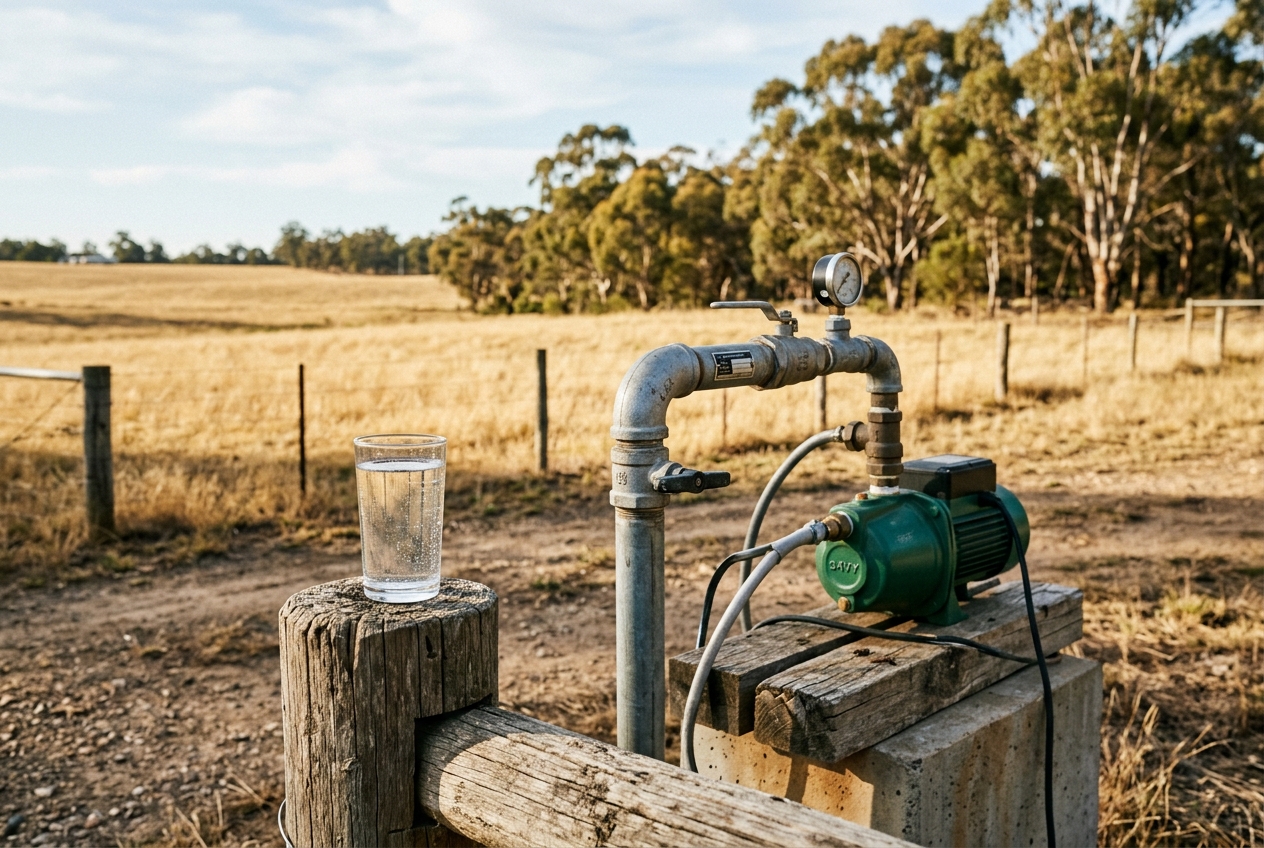
Bore water can be perfectly safe to drink — but you won't know unless you test it. Unlike mains water, nobody is monitoring your bore for you. What's down there depends on your local geology, nearby land use, and the condition of your bore itself.
This guide covers the risks, what to test for, how often, and what to do if something comes back outside the Australian Drinking Water Guidelines.
Why Bore Water Needs Testing
Groundwater might look clean, but it can carry contaminants you can't see, taste, or smell. Common issues in Australian bore water include:
- Bacteria — E. coli and coliforms can enter through cracks in the bore casing, surface water infiltration, or nearby septic systems (see our guide to coliform in your water)
- Nitrate — elevated levels are common near agricultural land where fertilisers and animal waste leach into the water table
- Iron and manganese — naturally occurring in many aquifers; causes staining, metallic taste, and can harbour iron bacteria
- Heavy metals — lead, arsenic, and chromium can be present depending on local geology and historical land use — more in our guide to heavy metals in water
- Salinity (TDS) — some bores produce water that's too salty for drinking, even if it's fine for irrigation
- Hardness — high calcium and magnesium levels cause scale build-up in pipes and appliances — water hardness explained
- pH extremes — acidic bore water can corrode plumbing and leach metals from fittings
The tricky part is that bore water quality can change over time. A bore that tested fine five years ago might not test fine today — seasonal variation, drought, nearby construction, or changes in agricultural activity can all shift what's in your water.
What to Test For
A comprehensive bore water test should cover:
Microbiological
| Parameter | Why It Matters |
|---|---|
| E. coli | Direct indicator of faecal contamination — any detection means do not drink |
| Coliforms | Warning sign that a contamination pathway exists |
Chemical
| Parameter | Why It Matters |
|---|---|
| pH | Acidic water corrodes pipes; alkaline water can cause scale |
| Total Dissolved Solids (TDS) | Overall mineral load — affects taste and usability |
| Nitrate | Health risk at elevated levels, especially for infants |
| Iron | Brown/orange staining, metallic taste |
| Manganese | Black staining, health concerns at higher levels |
| Hardness | Scale build-up, soap performance |
| Fluoride | Naturally present in some bores; excess causes dental fluorosis |
| Lead | Can leach from old fittings or occur naturally |
| Arsenic | Naturally occurring in some Australian aquifers |
If your bore is near agricultural land, mining activity, or industrial sites, you may want to test for additional contaminants like pesticides or specific heavy metals.
How Often Should You Test Bore Water?
As a minimum:
- Once a year — annual testing gives you a baseline and catches gradual changes
- After heavy rain or flooding — surface water can infiltrate the bore, introducing bacteria and sediment
- After any bore work — pump replacement, casing repair, or deepening can disturb the aquifer
- If you notice changes — new taste, colour, smell, or staining that wasn't there before
- Before buying or selling property — a water quality report protects both parties and can be a condition of sale
- If anyone in the household is unwell — unexplained gastrointestinal symptoms can be water-related, especially in children and elderly household members
What Do the Results Mean?
Your water quality report will compare your bore water results against the NHMRC Australian Drinking Water Guidelines (ADWG). Here's how to interpret the basics:
All results within guideline values — your bore water meets Australian drinking water standards at the time of sampling. Keep testing annually to track any changes.
Microbiological failure (E. coli or coliforms detected) — this is the most urgent result. Stop drinking the water immediately. Investigate possible contamination sources: damaged bore casing, nearby septic, surface water entry points. Disinfect the bore and retest before using it again. Read what to do if E. coli is detected for the full step-by-step.
Chemical exceedances — a single result slightly above a guideline value isn't necessarily an emergency, but it warrants attention. Sustained elevated levels of nitrate, lead, arsenic, or fluoride are a health concern and may require treatment or an alternative water source.
Aesthetic issues (iron, manganese, hardness, TDS) — these affect taste, staining, and appliance life but aren't typically health risks at moderate levels. Filtration or water treatment can address most aesthetic issues.
Remember: all test results relate solely to the sample as received by the laboratory. Results are a snapshot of your water at the time of collection — which is why regular testing matters.
Common Bore Water Problems by Region
While every bore is different, some issues are more common in certain parts of Australia:
- Coastal Queensland and NSW — iron, manganese, and acidic pH are common in shallow coastal aquifers
- Inland agricultural areas — nitrate contamination from fertiliser runoff
- Mining regions — heavy metals including arsenic, lead, and chromium
- Arid and semi-arid zones — high salinity and hardness from ancient marine deposits
- Granite country — naturally occurring fluoride (see fluoride in bore water) and sometimes uranium
Knowing your region's typical bore water characteristics helps you choose the right test package and interpret your results in context.
Treatment Options
If your bore water test reveals issues, common treatment approaches include:
- UV disinfection — effective against bacteria without adding chemicals
- Sediment filtration — removes particles, iron, and manganese
- Reverse osmosis (RO) — removes dissolved salts, heavy metals, and most contaminants
- pH correction — neutralising filters or chemical dosing to bring pH into range
- Water softening — ion exchange systems for hard water
The right treatment depends on what your test results show. Test first, then treat — not the other way around.
Frequently Asked Questions
Is bore water safe to drink without testing?
No. Bore water can contain bacteria, nitrate, heavy metals, and other contaminants that are invisible to the naked eye. The only way to know whether your bore water is safe is to have it tested by a laboratory.
How much does bore water testing cost?
The cost depends on how many parameters you test for. A basic microbiological and chemical screen is an affordable way to cover the essentials. Comprehensive panels that include heavy metals and additional contaminants cost more but give you a complete picture.
Can I use a home test kit for bore water?
Home test strips give a rough indication for a few parameters like pH and hardness, but they can't detect bacteria, heavy metals, or nitrate at the accuracy needed to compare against Australian drinking water guidelines. Laboratory testing is recommended for reliable results.
How do I collect a bore water sample?
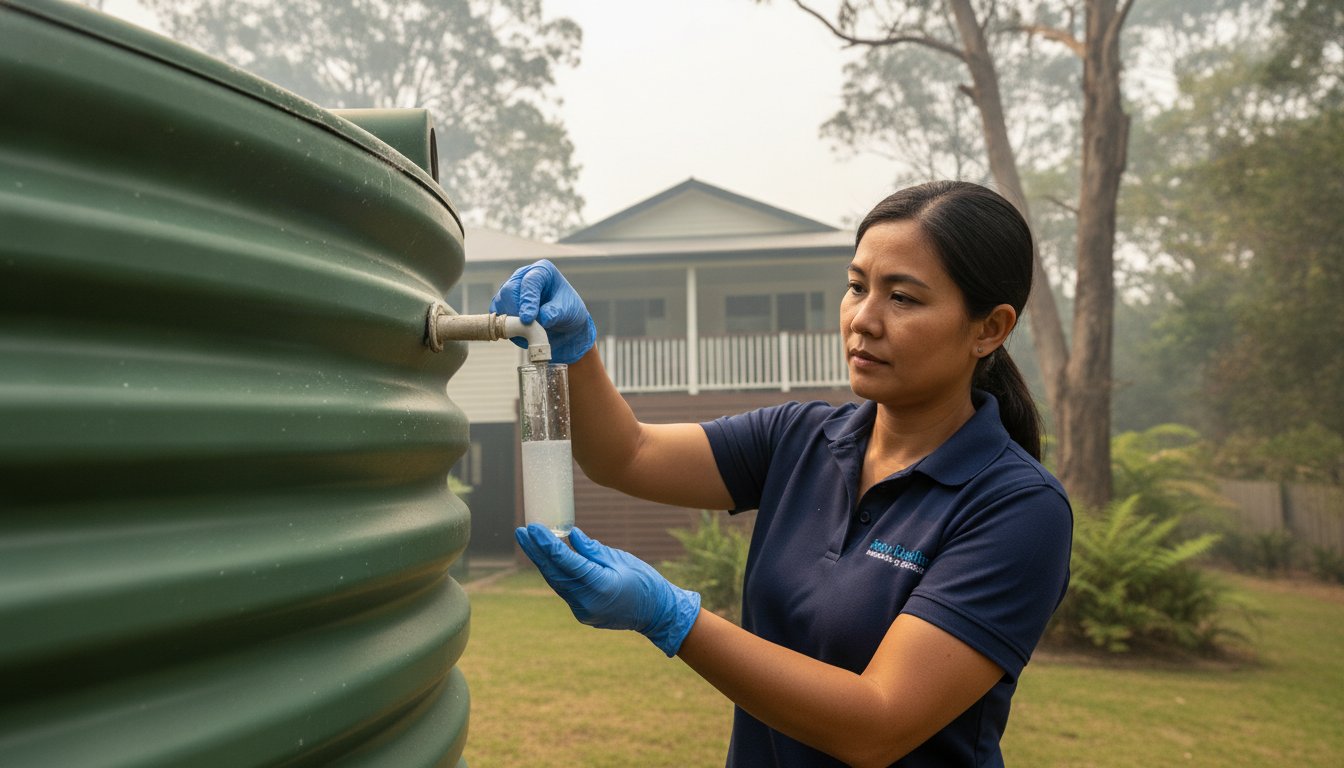
Run the bore pump for several minutes to flush standing water from the pipes. Collect the sample in a clean, sterile container provided by the laboratory. Keep the sample cool and get it to the lab within the timeframe specified — typically within 24 hours for microbiological testing.
What if my bore water has E. coli?
Stop drinking the water immediately. E. coli indicates faecal contamination, which could come from a damaged bore casing, nearby septic system, or surface water infiltration. Have the bore inspected, disinfected, and retested before using it for drinking again.
Ready to test your bore water?
Know exactly what's coming out of your bore — with plain-English results measured against the Australian Drinking Water Guidelines.