If your water test shows E. coli detected, stop drinking the water straight away. E. coli in drinking water means faecal contamination — animal or human waste has entered your water supply. This is the most serious result you can get on a routine water test.
The Australian Drinking Water Guidelines are clear: the acceptable level of E. coli is zero per 100mL. Any detection requires immediate action.
Why E. Coli Is Serious
E. coli (Escherichia coli) is a bacteria found only in the intestines of warm-blooded animals. Unlike coliforms, which can come from soil or vegetation, E. coli is exclusively faecal in origin. Its detection in your water confirms that waste material has found a path into your supply.
The bigger concern is what comes with it. Where there's E. coli, other faecal pathogens are likely present too:
- Salmonella — causes gastroenteritis, fever, and diarrhoea
- Campylobacter — one of the most common causes of bacterial gastro in Australia
- Cryptosporidium — a parasite resistant to chlorine; causes prolonged diarrhoea
- Giardia — a parasite causing stomach cramps, bloating, and diarrhoea
These organisms are particularly dangerous for young children, elderly household members, pregnant women, and anyone with a weakened immune system.
How E. Coli Gets Into Your Water
Tank Water
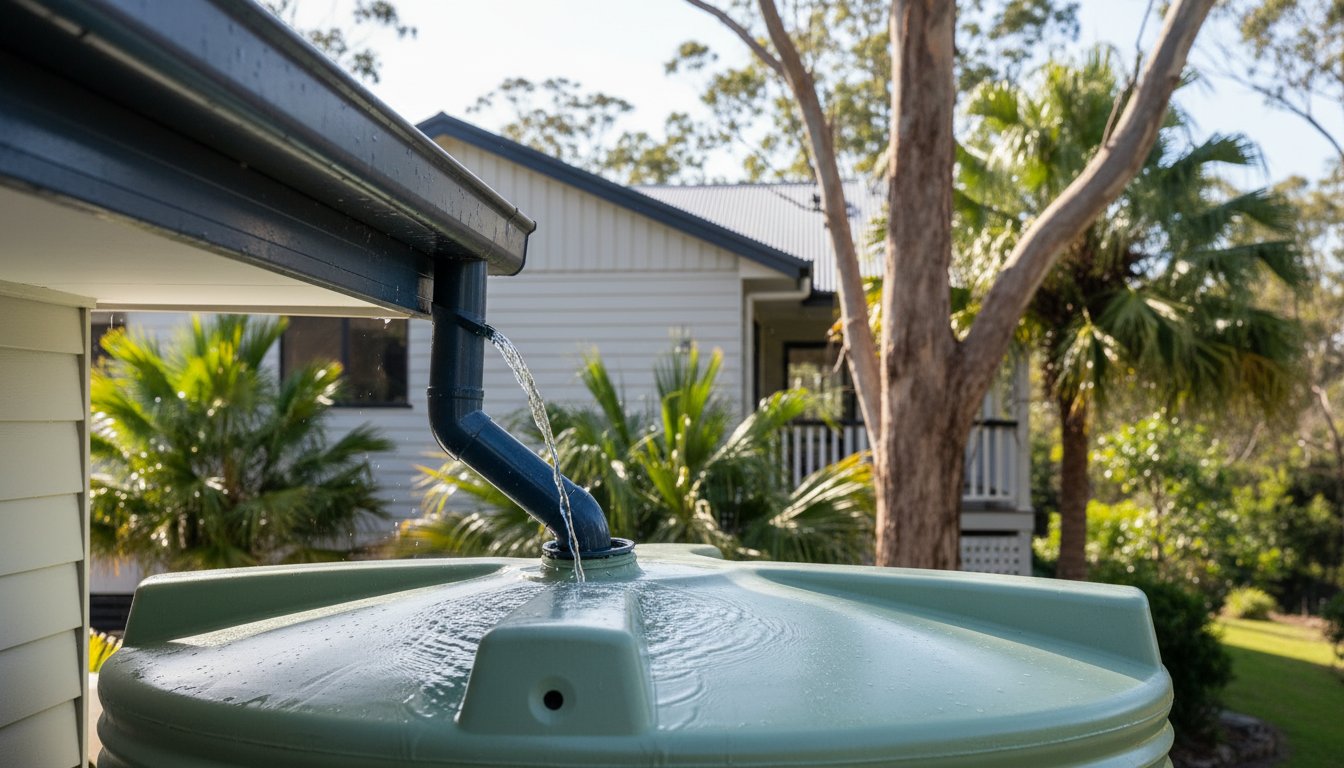
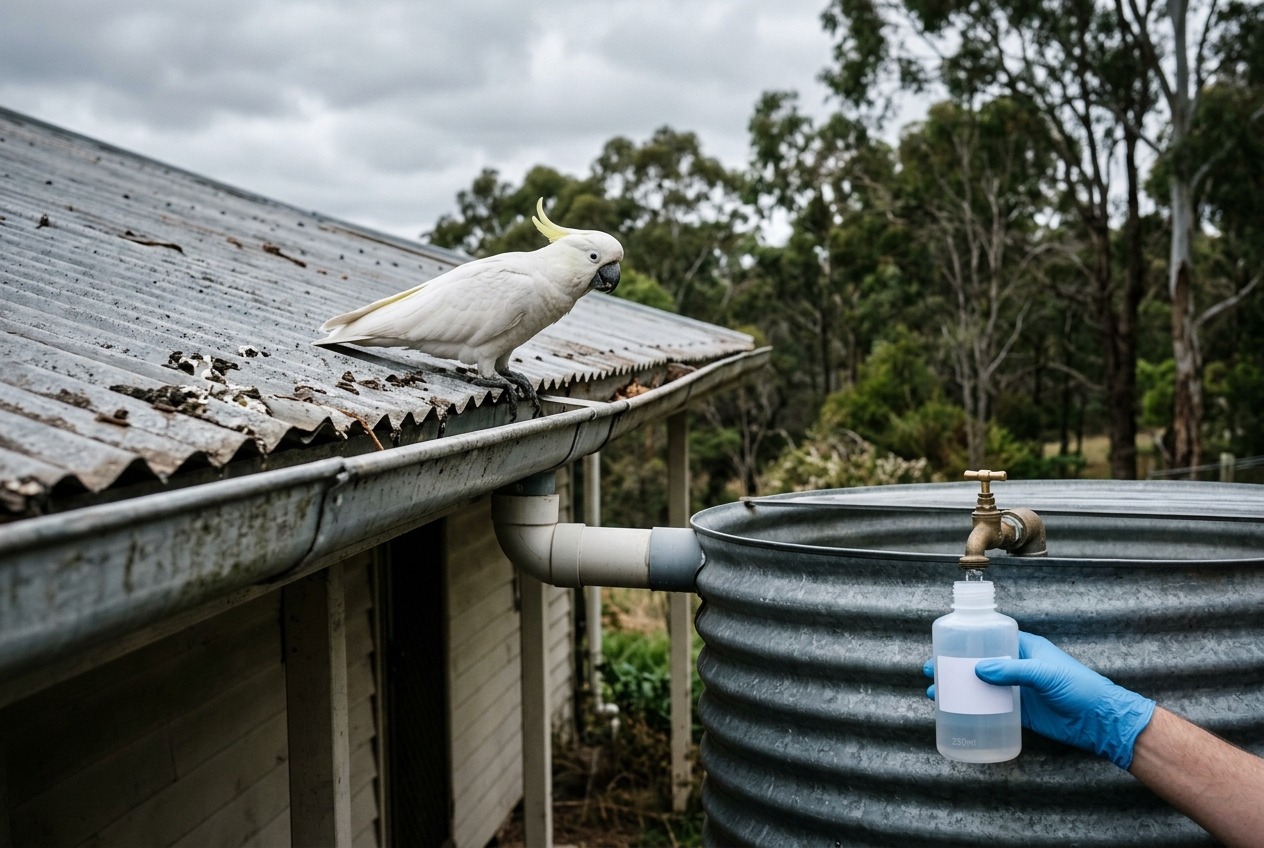
- Bird and animal droppings on the roof — the most common source. Droppings wash into the tank with the next rainfall
- Dead animals in the tank — a bird, frog, or possum that gets inside a poorly sealed tank
- No first-flush diverter — without one, the dirtiest roof water goes straight into the tank
- Cracked or open tank lids — allows direct animal access
Bore Water
- Damaged bore casing — cracks or corrosion allow surface water (carrying faecal matter) to seep into the groundwater
- Nearby septic systems — leaking or poorly maintained septic tanks contaminate the surrounding water table
- Surface water infiltration — heavy rain or flooding can push contaminated surface water into the bore through the bore head
- Poor bore head sealing — allows runoff to enter directly
What to Do Right Now
- Stop drinking the water. Use bottled water or an alternative supply for drinking and cooking immediately.
- Boil water if no alternative is available. A rolling boil for one minute kills E. coli and most other pathogens. Let it cool before drinking.
- Identify the source. Inspect your tank (lid, inlets, screens, inside the tank if possible) or bore (casing, head seal, nearby septic). Look for animal access, cracks, or obvious contamination points. For prevention, see our tank water safety and bore water safety guides.
- Fix the entry point. Seal gaps, repair casing, install or clean inlet screens, fit a first-flush diverter if missing.
- Clean and disinfect. Tanks should be professionally cleaned if a dead animal is found or heavy contamination is suspected. Bores should be shock-chlorinated and flushed.
- Retest before drinking again. After remediation, send another sample for an E. coli water test. Do not resume drinking until results come back clear.
Preventing E. Coli Contamination
- Keep gutters clean and fit mesh screens on all tank inlets
- Install and maintain a first-flush diverter
- Seal tank lids and overflow outlets to prevent animal entry
- Trim overhanging branches to reduce bird and possum activity on the roof
- Inspect bore casings and head seals annually
- Maintain septic systems properly and keep them at a safe distance from bores
- Consider UV disinfection on the outlet line for ongoing bacterial protection
- Test your water at least once a year — and after any heavy rain, flooding, or system maintenance. Our guide on how to test your water explains the process
Frequently Asked Questions
What does E. coli in water mean?
E. coli in your water means there is faecal contamination — from animal or human waste. E. coli is only found in the intestines of warm-blooded animals, so its presence confirms that waste material has entered your water supply. Stop drinking the water immediately and investigate the source.
Can you get sick from E. coli in drinking water?
Yes. E. coli contamination means other faecal pathogens like Salmonella, Campylobacter, Cryptosporidium, and Giardia may also be present. These can cause gastroenteritis, with symptoms including nausea, vomiting, diarrhoea, stomach cramps, and fever. Young children, elderly, and immunocompromised people are at greatest risk.
How does E. coli get into tank or bore water?
In tank water, the most common source is bird and animal droppings on the roof washing into the tank with rain. Dead animals inside the tank are another major cause. In bore water, E. coli typically enters through cracked or damaged bore casings, nearby septic system leakage, or surface water infiltration during heavy rain.
Ready to test your water?
Confirm whether E. coli — or anything else — is in your household water, with plain-English results measured against the Australian Drinking Water Guidelines.