
Slug: e-coli-rainwater-tank-symptoms-guide-2026
Meta Description: Learn the common signs of bacterial contamination in your tank and the practical steps to ensure your water meets Australian guidelines. Understand e coli in rainwater tank symptoms and how professional testing provides peace of mind.
Google Business Profile Excerpt: Are you concerned about your household water quality? For many Australian homeowners, identifying e coli in rainwater tank symptoms is a priority for peace of mind. While bacteria are invisible, certain signs can indicate your supply is outside the preferred range. AWARE Water Testing helps Australian households understand what is actually in their tank, bore or drinking water before choosing a treatment option. A professional laboratory test is the essential first step to identify if your water meets the Australian Drinking Water Guidelines. Our plain-English reports demystify technical data, giving you the facts needed to manage your supply with confidence. Testing first ensures you choose the right solution for your home without the guesswork of unnecessary filtration.
Is your rainwater tank providing the quality of water your family expects? Many Australians enjoy the independence of harvesting their own water, but when unexplained stomach upsets occur, it's natural to feel a sense of uncertainty. Identifying e coli in rainwater tank symptoms isn't always straightforward, especially when technical water reports feel like they're written in a different language.
We understand that you just want to know your water meets the preferred range for your home. This guide explains the common signs of bacterial contamination and provides the practical steps needed to see if your supply meets the Australian Drinking Water Guidelines. We'll look at the physical indicators of a breach, explain how to get an accurate test without the confusing jargon, and show you how to regain peace of mind regarding your household health.
Key Takeaways
- Understand why E. coli is used as the primary indicator for faecal contamination and what its presence means for your rainwater tank's health.
- Learn to recognise common e coli in rainwater tank symptoms, such as gastrointestinal upset, and why these signs can vary between different family members.
- Discover how bacteria travels from your roof and gutters into your household plumbing, often forming a bacterial "soup" in stagnant areas.
- Find out why the Australian Drinking Water Guidelines require zero detection of E. coli and how to interpret a report that does not meet these standards.
- Learn why professional laboratory testing is the essential first step to identify issues before you invest in any filtration or treatment systems.
Table of Contents
What is E. Coli and why is it in your rainwater tank?
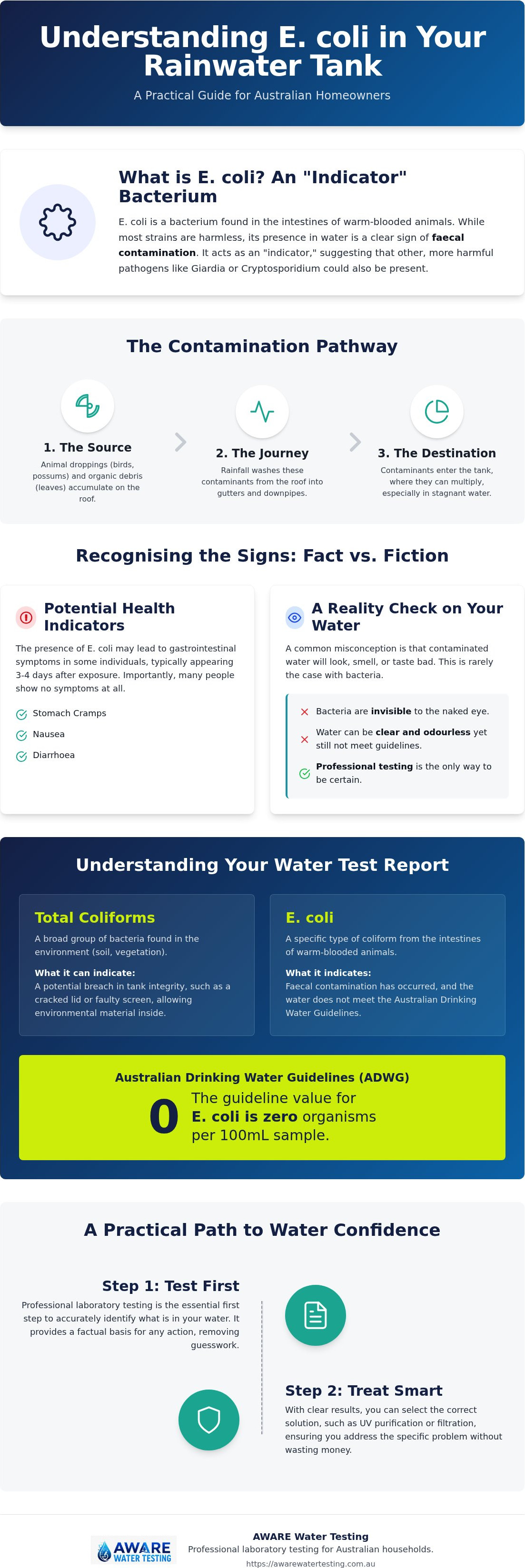
Escherichia coli (E. coli) is a bacterium that naturally lives in the intestines of warm-blooded animals, including birds, livestock, and humans. In the world of water quality, we categorise it as an "indicator organism." This means we don't necessarily test for every single virus or parasite that could exist; instead, we look for E. coli as a primary marker. If it's present, it's a clear sign that faecal contamination has reached your water supply.
Most strains of the bacteria are actually harmless. However, their presence is a significant red flag. It suggests that other, more serious pathogens like Giardia or Cryptosporidium might also be lurking in the tank. For many Australians, e coli in rainwater tank symptoms only become a concern after someone in the house feels unwell, but the bacteria can be present long before any physical signs appear in the household.
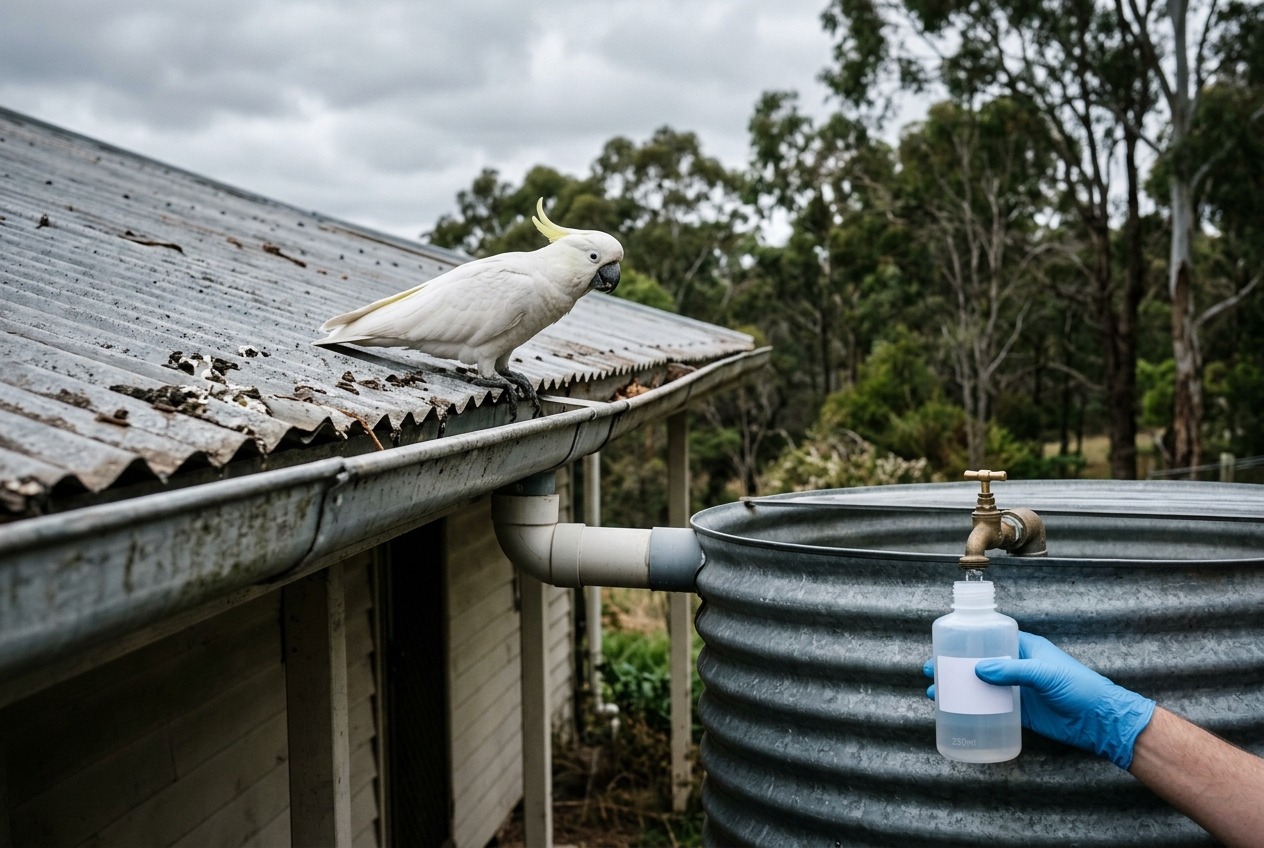
Australian rainwater tanks are uniquely vulnerable because they rely on expansive roof catchments. Unlike sealed bores or treated mains water, your roof is a landing strip for local wildlife and environmental debris. This exposure makes it easy for bacteria to hitch a ride into your drinking water during any rain event.
Common sources of contamination
Contamination rarely happens because of one single event. It's usually a gradual buildup of environmental factors. Bird droppings are the most frequent culprit, as rain easily washes waste from the roof into your gutters. Small animals like frogs, lizards, or even rodents can also enter the tank or perish in the gutters. Additionally, organic debris such as rotting leaves and sticks provides a nutrient-rich breeding ground where bacteria can survive and multiply. For many families, noticing e coli in rainwater tank symptoms is the first sign of a problem, but by then, the contamination source is often well-established.
The indicator role of Coliforms
When you receive a water report, you'll often see "Coliforms" alongside E. coli. It's helpful to understand the difference. While E. coli specifically points to faecal matter, Coliforms are a broader group found in soil and vegetation. Finding coliforms usually suggests a breach in the tank’s integrity, such as a loose lid, a perished seal, or a faulty insect screen, allowing the outside environment in. For a more technical breakdown, you can read our guide on microbiological analysis to see how these markers help us assess your water health.
Recognising E. Coli in rainwater tank symptoms and signs
One of the most challenging aspects of managing a private water supply is that bacteria are invisible to the naked eye. You can't see, smell, or taste E. coli in small concentrations, which is why e coli in rainwater tank symptoms often go unnoticed until someone in the household feels unwell. While many people may not experience any reaction at all, others might notice issues commonly associated with bacterial presence in their drinking water.
The most frequent indicators are gastrointestinal. This might include stomach cramps, nausea, or a sudden onset of diarrhoea. According to the CDC, the Symptoms of E. coli Infection typically appear three to four days after exposure, though this window can vary. It's important to remember that these signs are non-specific; they can easily be mistaken for a mild bout of food poisoning or a seasonal flu. Because the water often looks perfectly clear, homeowners frequently overlook the tank as the potential source of the problem.
Physical signs in your water
While E. coli itself doesn't change the look of your water, the conditions that allow it to thrive often do. If you notice unusual or earthy odours coming from your kitchen tap, it may indicate high levels of organic matter or stagnant water in your system. Changes in water colour or increased turbidity (a technical term for cloudiness) suggest that sediment from the bottom of the tank has been disturbed or that fresh contaminants have washed in after a storm. If you see a thick layer of organic sludge or "slimes" near the outlet, it's a strong sign that the microbiological health of your tank needs attention. If you've noticed these changes, a professional rainwater health check is a practical way to get some answers.
Vulnerable groups in the household
Not everyone reacts to contaminated water in the same way. Healthy adults often have robust enough immune systems to handle low levels of bacteria without showing any e coli in rainwater tank symptoms. However, certain groups are much more sensitive to changes in water quality. This includes infants, the elderly, and anyone with a compromised immune system. For families with young children, ensuring water meets the Australian Drinking Water Guidelines for baby formula is a top priority, as their developing systems are less equipped to manage bacterial loads. It's also worth noting that some individuals can become carriers, showing no physical signs themselves while still being able to pass the bacteria on to more vulnerable members of the family. Understanding your water's profile through testing is the only way to move beyond guesswork and ensure everyone in the home is protected.
How bacteria enters your household plumbing
The journey from a cloud in the sky to your kitchen tap involves several steps, and each one offers a chance for contamination. When rain hits your roof, it doesn't just collect water; it sweeps up everything sitting on that surface. This includes dust, bird droppings, and organic matter. If your gutters aren't sloped correctly or are blocked by debris, they hold onto pockets of stagnant water. This creates a literal "bacterial soup" where organisms can multiply rapidly between rain events.
Once this water enters your tank, the heavier particles settle at the bottom to form a layer of sludge. This environment is dark and often protected from temperature spikes, allowing bacteria to survive for long periods. During a heavy downpour, the incoming water creates turbulence that stirs this sediment back into the main water column. This is often the moment when e coli in rainwater tank symptoms suddenly appear in a household, as the pump draws this contaminated water directly into your plumbing system.
Roof and gutter maintenance
Your roof is the primary catchment area, so its condition directly impacts your water quality. Overhanging branches are a common issue because they provide easy access for possums, birds, and rodents to leave waste directly above your gutters. When gutters become blocked with leaves, they stop draining effectively and stay damp, which encourages bacterial growth. Regular cleaning isn't just about preventing overflow; it's a practical preventative measure to keep your water supply as clean as possible before it even reaches the tank.
The "First Flush" effect
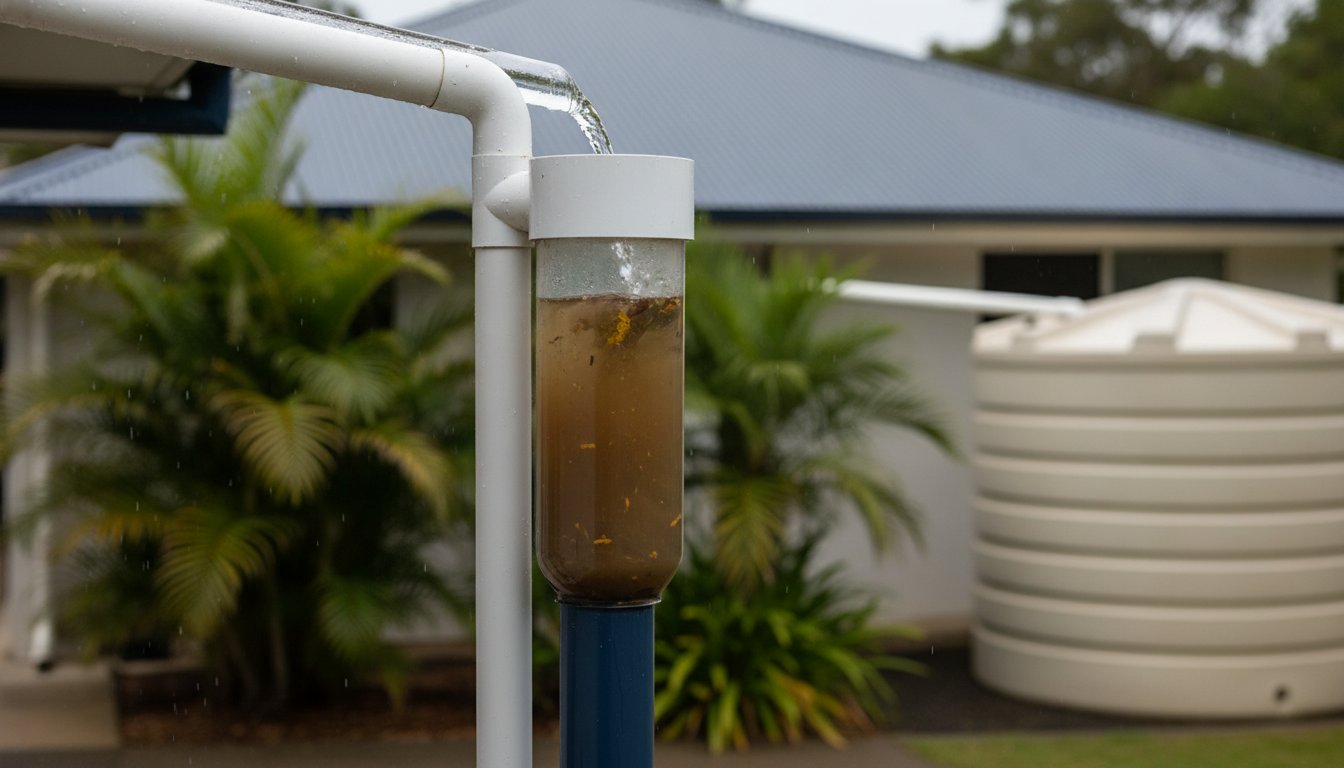
The first few millimetres of any rainfall are always the most contaminated. This "first flush" carries the highest concentration of roof debris and animal waste. Installing a first flush diverter is a great way to improve water quality, as it redirects this initial wash away from the tank. However, even the best diverters aren't a complete solution. Fine particles and bacteria can still bypass these systems, which is why a professional rainwater tank health check is necessary to confirm your water meets the Australian Drinking Water Guidelines. Relying solely on mechanical diverters without testing can lead to a false sense of security, especially if e coli in rainwater tank symptoms begin to emerge in more sensitive family members.
Testing for E. Coli: The Australian Drinking Water Guidelines
The Australian Drinking Water Guidelines (ADWG) provide the benchmark for what we should expect from our household taps. When it comes to microbiological safety, the standard is absolute: E. coli should not be detected in any 100mL sample of drinking water. If a laboratory test shows any presence of this bacterium, the result is recorded as "detected," which means the sample does not meet the Australian Drinking Water Guidelines. This isn't a reason for alarm, but it is a clear indicator that the guideline value has been exceeded and the source of the contamination should be investigated.
When a report shows that your water is outside the preferred range, it's a signal that the integrity of your tank system has been compromised. Identifying e coli in rainwater tank symptoms through physical signs alone is nearly impossible because the bacteria are microscopic. A professional test removes the guesswork. It confirms whether the issue is a simple case of environmental debris or a more significant breach that requires your attention to ensure the long-term health of your household.
Why professional lab analysis beats DIY kits
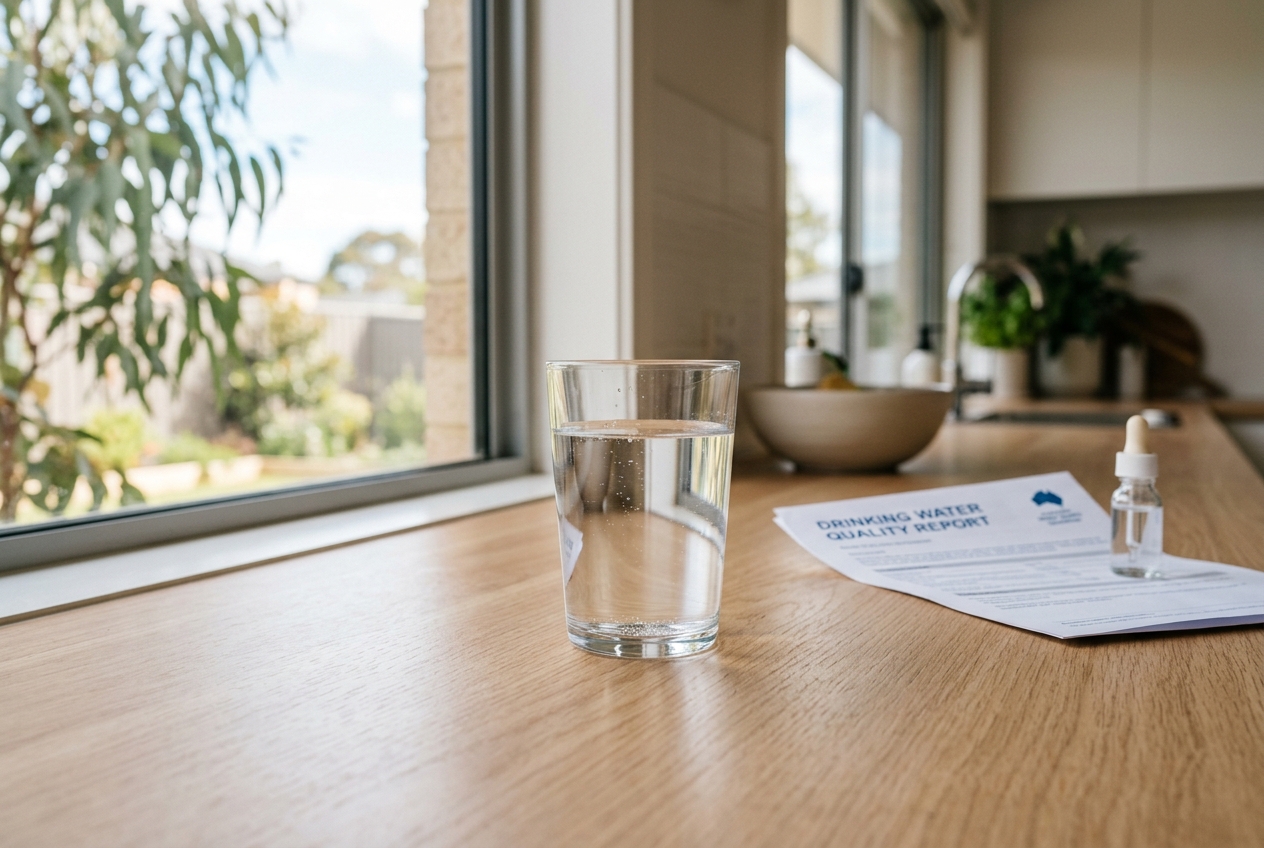
Many homeowners are tempted by cheap DIY "dip test" strips found in hardware stores. While these might offer a rough idea of chemical levels like pH, they are notoriously unreliable for detecting bacteria. Professional laboratory analysis involves a controlled incubation process that encourages any present bacteria to grow to detectable levels over 24 to 48 hours. This scientific approach ensures that even low-level contamination is identified. When you use a professional service, you receive a Certificate of Analysis (COA). This document provides a verified, plain-English record of your water quality that is far more accurate than any home kit.
When should you test your tank?
Knowing when to test is just as important as knowing how. You should consider a test after significant weather events like floods or heavy storms, as these often wash fresh animal waste or organic matter into the system. If you notice a sudden change in the taste, smell, or colour of your water, it's a practical time to check the tank's health. For most Australian homes, an annual routine check is the best way to maintain peace of mind. Regular testing ensures you aren't waiting for e coli in rainwater tank symptoms to appear in your family before you realise there's a problem with your supply.
Book a professional rainwater health check today
Next steps: Professional testing with AWARE Water Testing
Finding out your water doesn't meet the national standard can feel overwhelming, but it's a problem with a clear path forward. Many people react to a potential breach by immediately searching for "quick fix" chemicals or expensive hardware. We believe that testing is the essential first step. By identifying the specific levels of bacteria or minerals in your supply, you avoid spending money on treatments you might not actually need. If you've been monitoring e coli in rainwater tank symptoms and want certainty, a professional test provides a baseline of facts. A calm, data-driven approach is always the most effective way to address guideline breaches and restore your peace of mind.
Once you have your results, you can then look at tailored solutions like UV purification or specific filtration systems. These should only follow confirmed laboratory data to ensure the treatment actually matches the problem. We specialise in identifying issues before you invest in hardware, positioning you to make the best decision for your home's long-term water health.
Understanding your plain-English report
Clinical labs often produce data-heavy documents that leave homeowners more confused than when they started. Our mission is to bridge that gap. Every AWARE Water Testing report includes a plain-English summary that translates technical laboratory data into clear, actionable information. We explain if your water is above the guideline value or outside the preferred range in a way that makes sense for your daily life. You'll receive practical recommendations tailored to your specific situation, ensuring you know exactly what the results mean for your plumbing, appliances, and family. This clarity is what differentiates our service from impersonal, data-heavy competitors.
A nationwide service for Australian households
We provide professional laboratory analysis for families across the entire country, from remote rural blocks to regional centres and urban suburbs. AWARE Water Testing helps Australian households understand what is actually in their tank, bore, or drinking water before choosing a treatment option. This nationwide reach ensures that every homeowner has access to high-quality microbiological analysis without needing to live near a major city. If you've been concerned about e coli in rainwater tank symptoms, ordering a kit is simple. Our logistics are designed to get your sample to the lab quickly and efficiently, providing you with the facts you need to move forward.
Take Control of Your Household Water Quality
Understanding the factors that influence your water health is the first step toward a well-managed home. While e coli in rainwater tank symptoms like gastrointestinal upset are often the first sign of a breach, waiting for physical signs to occur is a reactive approach. By maintaining your roof and gutters and performing regular checks, you can prevent many common issues before they reach your kitchen tap.
AWARE Water Testing provides specialised microbiological testing and a professional laboratory Certificate of Analysis. Every health check includes a plain-English summary of results, so you don't have to decipher complex data on your own. This ensures you have a clear picture of your supply before you spend money on filtration or purification systems.
You deserve to feel confident about the water your family uses every day. Professional testing gives you the facts needed to make informed choices and ensure your supply meets the Australian Drinking Water Guidelines.
Frequently Asked Questions
Can I see or taste E. coli in my rainwater tank?
No, you cannot see, taste, or smell E. coli because it is a microscopic bacterium. Water that contains bacteria often looks perfectly clear and tastes normal to the average person. While you might experience e coli in rainwater tank symptoms such as stomach upset, the water itself won't provide any obvious physical warnings. This is why laboratory testing is the only reliable way to confirm its presence.
What should I do if my water test shows E. coli is present?
If E. coli is detected, the sample does not meet the Australian Drinking Water Guidelines and the issue should be addressed. Your first step should be to investigate the source of the contamination, such as checking for animal access to the roof or debris in the gutters. Once you've identified and fixed the likely cause, a follow up test is a practical way to ensure the water has returned to the preferred range.
Is it common to find E. coli in Australian rainwater tanks?
Yes, it is quite common for untreated rainwater tanks to show some level of bacterial presence. Because Australian tanks rely on open roof catchments, they are naturally exposed to waste from birds, possums, and frogs. Environmental factors like dust and decaying leaves also contribute to the bacterial load. Regular monitoring is essential for anyone relying on a private tank supply for their primary drinking water.
How often should I have my rainwater tank tested for bacteria?
We recommend a professional water test at least once a year to monitor the health of your supply. It's also wise to test after significant weather events, such as heavy storms or floods, which can wash a high volume of contaminants into the tank. Regular checks help you catch potential issues before anyone in the household starts noticing e coli in rainwater tank symptoms.
Can I boil my water to make it meet the guidelines if E. coli is found?
Boiling water is an effective short term method to neutralise bacteria, but it isn't a practical long term solution for a whole household. While it can make water suitable for drinking in an emergency, it doesn't fix the underlying contamination in your tank or plumbing. Identifying the source of the breach through professional testing allows you to find a permanent fix rather than relying on temporary measures.
Will a standard water filter remove E. coli from my tank water?
Most basic sediment or carbon filters are designed to improve taste and odour, not to remove bacteria. These systems often lack the fine pores or specialised technology required to trap microscopic organisms. If your water does not meet the Australian Drinking Water Guidelines for bacteria, you may need a specific solution like UV sterilisation, but this should only be installed after testing confirms the exact nature of the problem.
How much does a professional microbiological water test cost?
The cost of testing depends on the depth of analysis you require for your home. AWARE Water Testing provides several options, from basic safety checks for bacteria to more comprehensive assessments that include heavy metals and minerals. Choosing a professional laboratory test is a cost effective first step, as it prevents you from spending money on expensive filtration systems that might not be necessary for your specific water profile.
What happens if my water does not meet the Australian Drinking Water Guidelines?
If a result is above the guideline value, it simply means the water is outside the preferred range and requires attention. This result is a prompt to perform a "sanitary survey" of your system, checking the tank lid, insect screens, and gutter health. It is a manageable situation that usually involves cleaning the catchment area or the tank itself to bring the water quality back in line with the national standards.

Article by
Stephen McDougall
Stephen McDougall is the owner of AWARE Water Testing and Pristine Water Systems Sunshine Coast, with extensive experience in water quality, rainwater tanks, bore water, filtration and household water systems. Through AWARE Water Testing, he helps clients understand their laboratory results in clear, practical terms. Through Pristine Water Systems, he provides tailored solutions such as tank cleaning, filtration, UV purification and water treatment based on the issues identified. Stephen is known for straightforward advice and practical recommendations that help clients make informed decisions about their water.
Disclaimer
The information provided in this article is for general guidance only and is not a substitute for professional water testing or site-specific advice. Water quality can vary between properties. For accurate results and recommendations, we recommend professional testing and assessment.