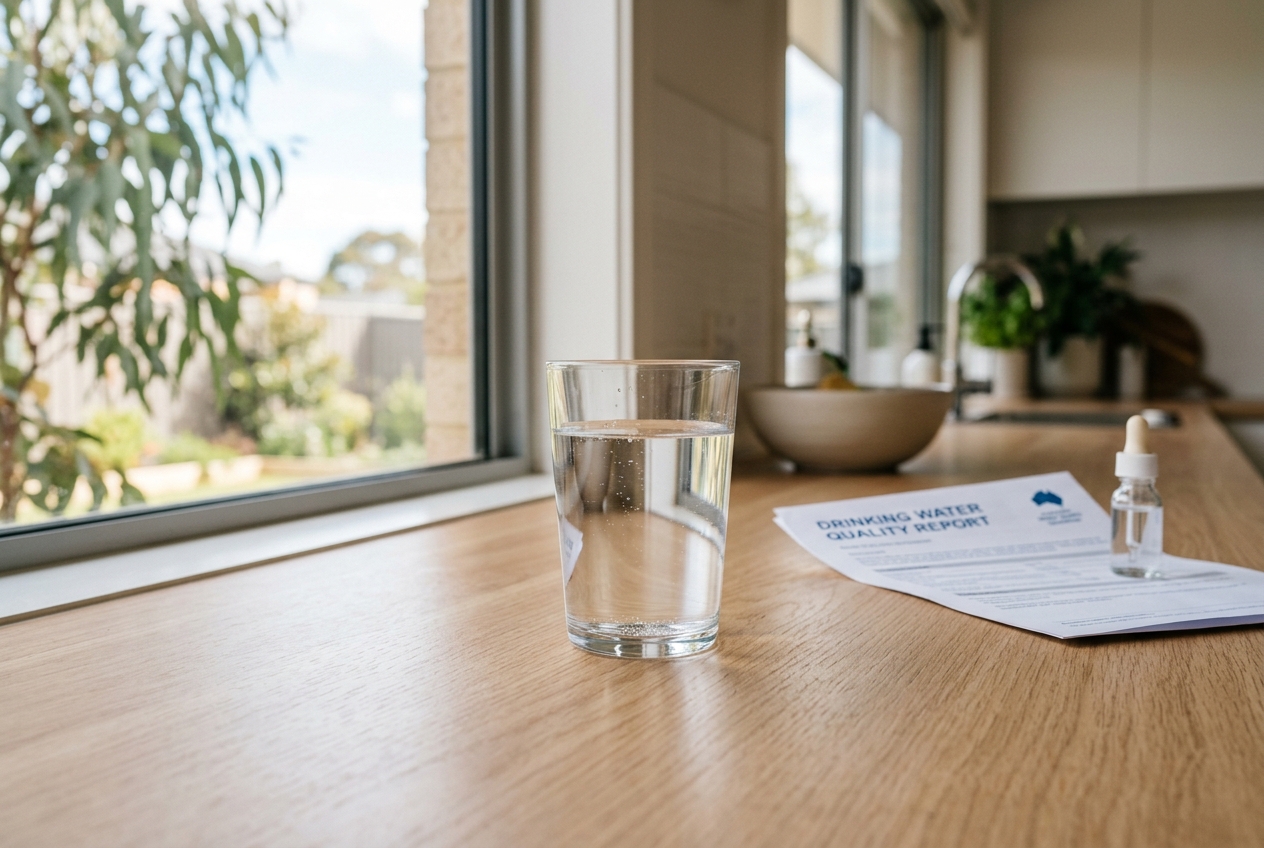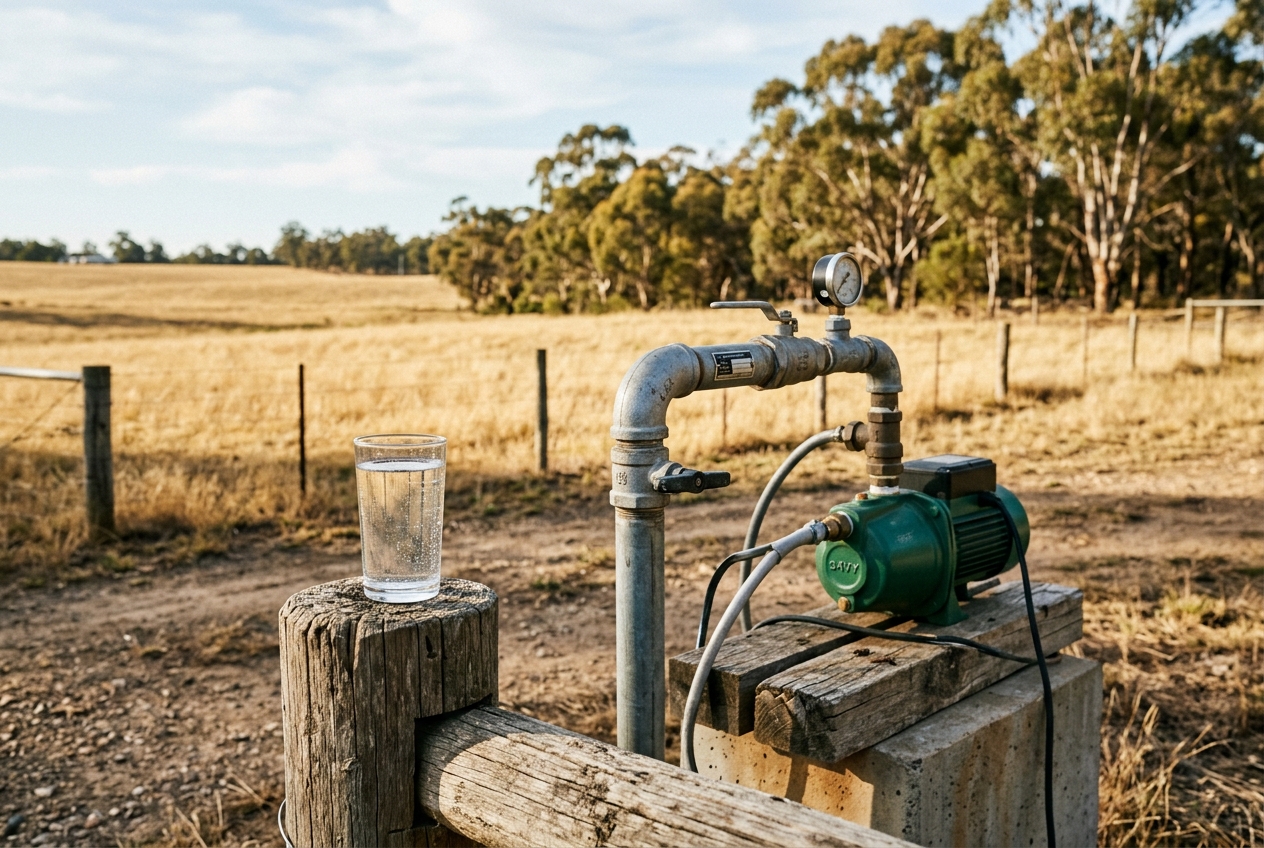
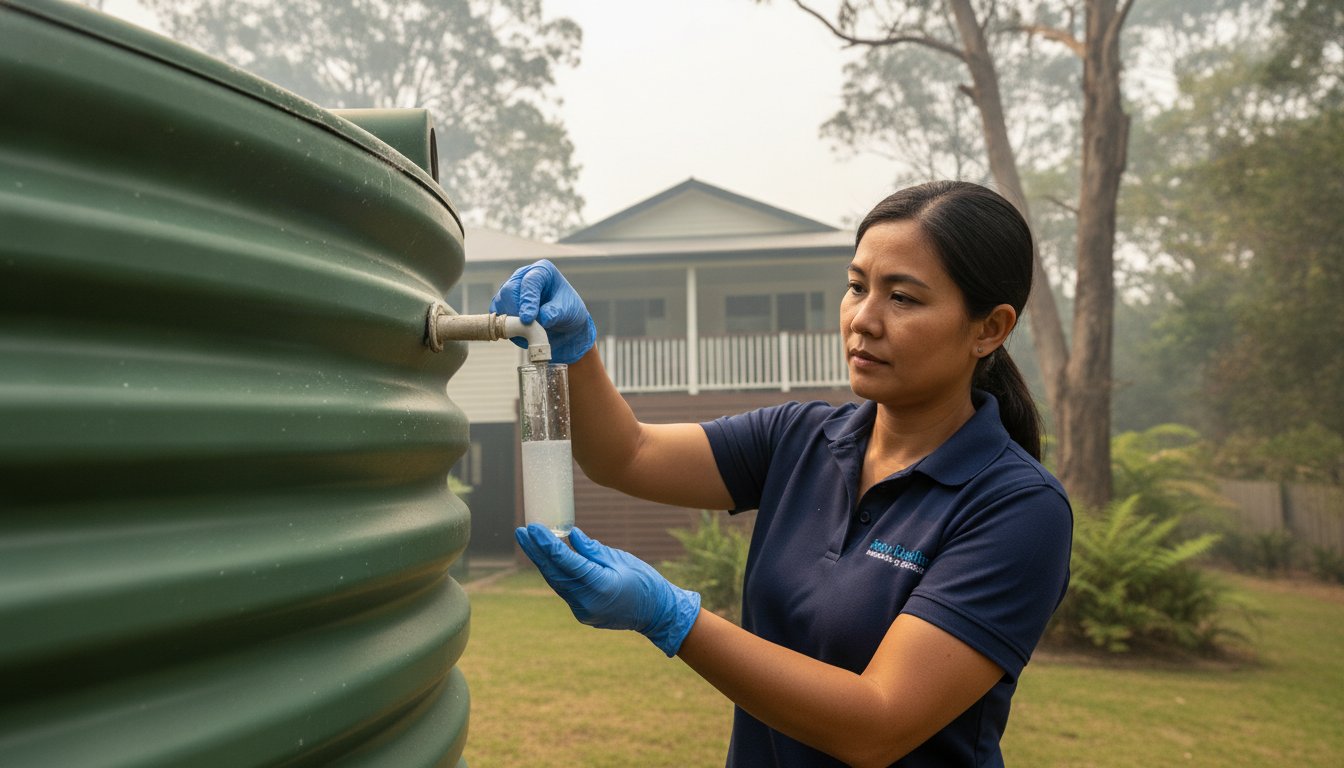
Have you noticed a persistent smoky taste in your drinking water or seen fine grey ash settling in your gutters? For homeowners across the Sunshine Coast, from Noosa to Tinbeerwah, the impact of bushfires on tank water quality is a serious concern that goes far beyond just a bit of soot. While visible debris is frustrating, the invisible shift in water chemistry and the presence of fire retardants often mean your supply does not meet Australian Drinking Water Guidelines and should be addressed.
We understand how unsettling it is to worry about the health of the water your family uses every day. This guide explains how smoke, ash, and chemicals interact with your rainwater supply and why simply boiling the water won't solve the problem. You'll learn how to identify specific contaminants and the practical, actionable steps required to restore your system to a high standard.
Testing is the only way to know exactly what's happening inside your tank. At Sunshine Coast Water Testing, we provide plain-English summaries that take the guesswork out of your results. Once we've identified the issue, local experts like Pristine Water Systems Sunshine Coast provide the solution through professional tank cleaning and filtration. From Doonan to Pomona, we're here to help you move from uncertainty to total peace of mind.
Key Takeaways
- Understand how fine smoke particles and ash bypass standard gutter guards, significantly altering the impact of bushfires on tank water quality.
- Learn why boiling water won't remove fire retardants or heavy metals, which can cause your supply to fall short of Australian Drinking Water Guidelines.
- Discover why post-fire rainfall creates a "first flush" risk, carrying high levels of sediment and bacteria into your household supply.
- Identify why professional analysis from Sunshine Coast Water Testing is required to pinpoint invisible chemical shifts before they affect your health or appliances.
- Gain a clear path to recovery by linking scientific testing with professional solutions from Pristine Water Systems Sunshine Coast to restore your tank's health.
How Bushfire Ash and Smoke Settle into Your Rainwater Supply
When the wind picks up during a fire season, it carries more than just heat. It transports atmospheric fallout. This fine debris settles on your roof and eventually washes into your tank during the next downpour. The impact of bushfires on tank water quality starts the moment smoke enters your local atmosphere. Even if the flames are kilometres away, fine particulates bypass your gutter guards with ease. These guards are built for leaves and twigs, not microscopic ash and soot.
Bushfire ash is a complex mix of carbon, minerals like potassium and phosphorus, and partially burnt organic matter. Because these particles are so light, they can remain suspended in your tank water for weeks. You might think your water looks clear, but visual clarity is a poor indicator of health. Dissolved minerals and fine sediments can still be present, affecting the chemical balance of your supply and potentially causing it to fall outside the Australian Drinking Water Guidelines.
The Mechanics of Atmospheric Fallout
In areas like Cooroy and Doonan, we often see "dry deposition" occurring between rain events. This is where ash and soot settle on your roof catchments during dry, windy days. Researching wildfire effects on water quality shows that these contaminants accumulate rapidly. When the rain finally arrives, it washes this concentrated layer of debris directly into your storage. This process can significantly alter the pH and mineral content of your water, even if you can't see the sediment at the bottom of your glass.
Smoke Taint and Sensory Changes
Have you noticed a distinct "ashtray" smell or a bitter, smoky taste in your morning coffee? This is smoke taint. It's caused by Volatile Organic Compounds (VOCs) that are absorbed into the water from the smoke-filled air. It's a common misconception that boiling your water will fix this issue. In reality, boiling won't remove the taste or smell of smoke taint. It often just concentrates the dissolved compounds, making the water even less pleasant to use. This sensory change can be incredibly stressful for families who rely entirely on tank water for their daily needs.
Understanding exactly what has entered your system is the first step toward recovery. At Sunshine Coast Water Testing, we provide a detailed analysis to show exactly how your water has changed. We don't just give you raw data; we provide a plain-English summary so you can make an informed choice about your household safety. We believe that water testing identifies the problem, while the solution comes next. If your results show high levels of sediment or chemical taint, Pristine Water Systems Sunshine Coast can provide the professional tank cleaning and filtration required to restore your supply.
Beyond the Visual: Fire Retardants and Chemical Leaching
While ash is easy to see, the chemical impact of bushfires on tank water quality is often invisible. During fire events, aerial firefighting plays a vital role in protecting homes in areas like Noosa and Pomona. However, the retardants used to slow the flames can find their way into your rainwater system. These substances aren't always visible once they've been diluted by rain, but their presence significantly alters the safety and taste of your water.
Most Australian fire retardants are composed of ammonium phosphates and sulphates. In simple terms, these are highly concentrated fertilisers. When they wash into your tank, they cause massive spikes in nitrogen and phosphorus. This nutrient surge often triggers rapid algae growth inside your tank, which can foul the water and lead to unpleasant odours. Because these chemicals are colourless once they enter your storage, you cannot rely on a "sight test" to know if your water is okay to use.
Understanding Fire Retardant Contamination
Aerial suppression often involves direct or indirect drift onto roof catchments. Even if the red slurry isn't obvious on your tiles, the chemical residue remains. These substances can lower the pH of your water, making it more acidic and corrosive. This acidity can damage your plumbing and shorten the life of household appliances like hot water systems and dishwashers. For a detailed checklist on protecting your supply, you can review this guide on rainwater tank safety after bushfires. Ultimately, because these chemicals are complex, they require professional laboratory analysis to detect with any accuracy.
Heavy Metals and Nutrient Spikes
It isn't just the retardants you need to consider. High heat from intense bushfires can release heavy metals like manganese, iron, and aluminium from the soil and local vegetation. These metals are carried in the smoke and ash, eventually leaching into your stored water. This shift in mineral content can also change the "softness" of your rainwater, leading to a metallic taste or staining on your bathroom fixtures. Fire-affected water often exceeds ADWG limits for specific minerals, requiring professional intervention to restore balance.
At Sunshine Coast Water Testing, we provide specific heavy metals testing to identify these hidden risks. Our plain-English reports help you understand if your water does not meet Australian Drinking Water Guidelines and should be addressed. We believe that testing identifies the problem, while the solution comes next. If a chemical imbalance is found, Pristine Water Systems Sunshine Coast offers the filtration and purification solutions needed to fix it. if you're concerned about hidden chemicals, it's a wise move to book a water test as your first step toward recovery.
Why Post-Fire Rainfall Often Triggers the Biggest Issues
For residents in Pomona and Tinbeerwah, the real challenge often begins after the smoke has cleared. While the fire itself is the immediate threat, the first significant rainfall following a burn is what truly tests your water system. This is due to the "first flush" phenomenon. During a dry fire spell, ash, soot, and chemical residues accumulate on your roof. When the rain finally arrives, it doesn't just wash this debris away; it carries a concentrated "slug" of contaminants directly into your storage. The impact of bushfires on tank water quality is often at its peak during these initial storm events.
This sudden influx leads to a rapid sediment buildup at the bottom of your tank. Unlike organic leaf litter, bushfire ash is extremely fine and forms a thick, anaerobic sludge. This sludge can damage tank liners and significantly reduce the lifespan of your pump. Understanding How Wildfires Affect Water Supplies helps illustrate why these post-fire runoff events are so disruptive to both large-scale catchments and household tanks alike.
Turbidity and Sediment Shock Loads
In plain English, turbidity refers to the cloudiness of your water. High turbidity after a fire is caused by millions of tiny ash particles suspended in the water column. This isn't just an aesthetic issue. These particles act as a "shield" for bacteria and viruses. If you use a UV sterilisation system, the light cannot penetrate through the cloudy water to kill pathogens. Similarly, high sediment loads can quickly clog or bypass standard household filters. If your water appears milky or grey, it likely does not meet Australian Drinking Water Guidelines and should be addressed before use.
Microbiological Risks After the Burn
Fires are devastating for local wildlife. It's a sad reality that birds or small mammals often perish in gutters or roof spaces during intense heat. When the rain comes, this organic matter washes into your tank, introducing harmful pathogens. The nutrient-rich ash then acts as a fertiliser, encouraging rapid bacterial blooms. This is why a professional microbiological analysis is essential after a fire event. It identifies hidden hazards like E. coli or coliforms that you can't taste or see.
At Sunshine Coast Water Testing, we specialise in identifying these biological and physical shifts. We believe that water testing identifies the problem, while the solution comes next. If your test reveals high turbidity or bacterial spikes, Pristine Water Systems Sunshine Coast can provide the professional tank vacuuming and UV purification needed to restore your supply. Taking action after the first rain ensures your system remains reliable throughout the remainder of the season.

Restoring Your Tank Health: A Homeowner’s Recovery Checklist
When smoke hangs in the air around Cooroy or Doonan, your first priority is protecting your supply. Don't wait for the rain to arrive. Disconnecting your downpipes immediately prevents ash and soot from entering your tank in the first place. This simple step is the most effective way to mitigate the impact of bushfires on tank water quality before the damage is done. By diverting the initial runoff, you ensure that the most concentrated "slug" of contaminants never reaches your stored water.
Cleaning the Catchment and Roof
Once the fire threat has safely passed, you can begin the process of restoring your catchment area. Follow these steps to ensure a clean start:
- Hose down the roof: Use a high-pressure hose to wash away ash and soot while the downpipes are still disconnected. This prevents the next rain event from carrying a layer of debris into your storage.
- Clear the gutters: Manually remove any sludge or debris that has settled in the tracks. Ash often mixes with moisture to create a thick paste that won't simply wash away.
- Inspect diverters: Check your first-flush diverters and leaf strainers. Fine ash can easily block these components, rendering them useless during the next storm.
It's vital to remember that you should never enter a tank to clean it yourself. Confined spaces pose serious risks including lack of oxygen or the buildup of toxic gases. Leave the internal work to professionals who have the right safety gear and training. A professional tank health check is the only way to confirm if the internal environment of your tank is still meeting the necessary standards.
The Essential Role of Professional Lab Analysis
While you can clean your roof, you can't "see" the chemical changes in your water. Many homeowners try DIY kits, but these are often insufficient for detecting the complex chemical shifts caused by fire retardants or heavy metal leaching. The impact of bushfires on tank water quality often involves subtle changes in pH or mineral levels that only a laboratory can identify with precision.
At Sunshine Coast Water Testing, we provide a comprehensive analysis that compares your results against the Australian Drinking Water Guidelines. We don't just hand over a page of confusing numbers. You'll receive a plain-English summary that explains exactly what is in your water and what it means for your family. We believe that water testing identifies the problem, while the solution comes next. If your results show that your water does not meet Australian Drinking Water Guidelines and should be addressed, Pristine Water Systems Sunshine Coast can step in to provide professional tank cleaning or advanced filtration. To get started on the right foot, we recommend you book a rainwater tank health check to ensure your recovery is based on facts, not guesswork.
Turning Data into Action: Solutions for Fire-Affected Water
The impact of bushfires on tank water quality can feel overwhelming, but the path to recovery is straightforward once you have the facts. We always remind our neighbours across the Sunshine Coast that water testing identifies the problem, while the solution comes next. Once your laboratory report arrives, you aren't left with a list of confusing numbers. Instead, you have a clear roadmap to restore your household supply to the standards your family deserves.
Using your test results to choose a treatment system ensures you aren't wasting money on unnecessary equipment. If your report shows high turbidity from ash, you need sediment removal. If it reveals chemical spikes from fire retardants, you require specific filtration. For residents in Noosa and the surrounding hinterland, this data-driven approach is the most efficient way to move from a smoky, tainted supply back to clear, reliable rainwater.
Professional Filtration and Cleaning
When your test results indicate that your water does not meet Australian Drinking Water Guidelines and should be addressed, professional remediation is the most effective next step. Local specialists like Pristine Water Systems Sunshine Coast can fix the specific issues identified during our testing process. They offer professional tank vacuuming, which is a clever way to remove ash sludge and sediment from the bottom of your tank without needing to empty the entire supply. This saves you the cost and hassle of water cartage.
Depending on your specific results, they can also install or service advanced carbon filtration systems designed to strip away the volatile organic compounds responsible for smoke taint. If your microbiological analysis showed bacterial spikes from organic debris, they can provide UV sterilisation units to ensure every drop entering your home is properly disinfected. This combination of scientific testing and professional treatment provides a complete resolution for your household.
Long-term Maintenance for Fire-Prone Regions
Living in fire-prone areas means proactive water management is a necessity, not an option. Organising regular rainwater tank testing should be a standard part of your seasonal fire preparation. It gives you a baseline of your water health before the smoke arrives, making it much easier to spot changes once the fire season begins. There is immense peace of mind that comes from knowing your family’s water consistently meets ADWG standards, regardless of the conditions outside.
Don't let the impact of bushfires on tank water quality linger in your system. Whether you've noticed a change in taste or you're just being cautious after a nearby burn, the first step is always the same. Take control of your water health today and book a water test to start your recovery journey with confidence.
Taking the Next Step Toward Clean Water
Managing the impact of bushfires on tank water quality requires more than just a visual check of your gutters. While hosing down your roof is a practical first step, it won't reveal the hidden chemical shifts or microbiological hazards left behind by smoke and ash. By prioritising a scientific laboratory analysis, you gain a factual understanding of whether your supply meets the Australian Drinking Water Guidelines.
As your trusted local experts, Sunshine Coast Water Testing provides plain-English summaries that strip away technical jargon, giving you clear recommendations for your home. Remember, testing identifies the problem, while professional solutions like those from Pristine Water Systems Sunshine Coast fix it. Don't leave your family's health to guesswork after a fire event.
Book a professional water test today to ensure your tank water meets Australian guidelines. Taking this proactive step is the best way to move forward with confidence and ensure your household water is safe for the long term.
Frequently Asked Questions
Is it safe to drink tank water that smells like smoke after a bushfire?
Water that smells or tastes like smoke should not be consumed. This distinct odour indicates that volatile organic compounds (VOCs) from the smoke have been absorbed into your supply. Such water does not meet Australian Drinking Water Guidelines and should be addressed through professional testing and carbon filtration to ensure it is suitable for household use. Once the water is safe again, our rainwater harvesting safety guide helps keep the tank protected year-round.
Will boiling my tank water remove fire retardant chemicals?
Boiling is ineffective for removing chemical contaminants. While heat kills bacteria and viruses, it does not remove fire retardants like ammonium phosphates or heavy metals. In some cases, boiling can actually concentrate these chemicals as the water evaporates. To manage the chemical impact of bushfires on tank water quality, you need specialised filtration rather than boiling.
How do I know if fire retardants have entered my rainwater tank?
You cannot rely on sight or smell to detect fire retardants once they are diluted in your tank. These chemicals are often colourless and do not have a strong scent. The only reliable method of detection is through scientific laboratory analysis. Sunshine Coast Water Testing offers specific chemical screenings that identify these residues and provide a clear, plain-English summary of the results.
Can I use ash-contaminated water for my garden or vegetables?
You can generally use ash-affected water for ornamental plants, but use caution with edible crops. While ash contains nutrients like potassium that can benefit soil, it may also carry concentrated fire retardants or heavy metals. Testing your water first ensures you aren't introducing unwanted chemicals into your home-grown vegetables, particularly in fire-prone areas like Cooroy and Pomona.
Should I empty my entire water tank if it contains ash?
Emptying the tank is rarely necessary and can be a waste of a precious resource. Professional remediation services like Pristine Water Systems Sunshine Coast can vacuum the settled ash sludge from the bottom of your tank while it is still full. This process removes the bulk of the contamination without the need for expensive water cartage to refill the system.
What is the most important water test to get after a bushfire event?
A comprehensive "Rainwater Tank Health Check" is essential. This test should specifically look at pH levels, heavy metals, and include a microbiological analysis to check for bacteria like E. coli. Understanding the full impact of bushfires on tank water quality requires a complete picture of both the chemical and biological changes that occurred during the fire and subsequent rainfall.
How long does it take for bushfire ash to settle in a water tank?
Bushfire ash is microscopic and very light, meaning it can remain suspended in your water for several weeks. Unlike heavier sediments like sand, these fine particles stay in the water column, causing persistent cloudiness or turbidity. This suspension can interfere with UV sterilisation systems and clog standard household filters much faster than usual.
Can I clean my own water tank after a fire?
Homeowners should only handle the external cleaning of the roof and gutters. You should never enter a water tank yourself due to the high risk of confined spaces, which can contain toxic gases or lack sufficient oxygen. For internal cleaning and sludge removal, always engage a professional with the correct safety equipment and training to avoid serious injury.

Article by
Stephen McDougall
Stephen McDougall is the owner of Pristine Water Systems Sunshine Coast and Sunshine Coast Water Testing, specialising in water quality, filtration, and tank systems. He is known for delivering clear, easy-to-understand advice and practical solutions to help clients maintain safe, reliable water.
Disclaimer
The information provided in this article is for general guidance only and is not a substitute for professional water testing or site-specific advice. Water quality can vary between properties. For accurate results and recommendations, we recommend professional testing and assessment.