pH is one of the quietest troublemakers in a water test. On its own it rarely makes anyone sick — but the wrong pH slowly attacks your plumbing, changes how water tastes, and controls whether metals like lead and copper end up in your glass. If you're on tank water safety or bore water safety is your responsibility, pH is one of the first numbers to understand.
The Australian Drinking Water Guidelines explained set the recommended pH range at 6.5 – 8.5. Water outside that range does not meet Australian Drinking Water Guidelines and should be addressed.
What pH Actually Measures
pH measures how acidic or alkaline your water is, on a scale from 0 (very acidic) to 14 (very alkaline), with 7 being neutral. Drinking water sits best in the slightly-alkaline middle: 6.5 to 8.5.
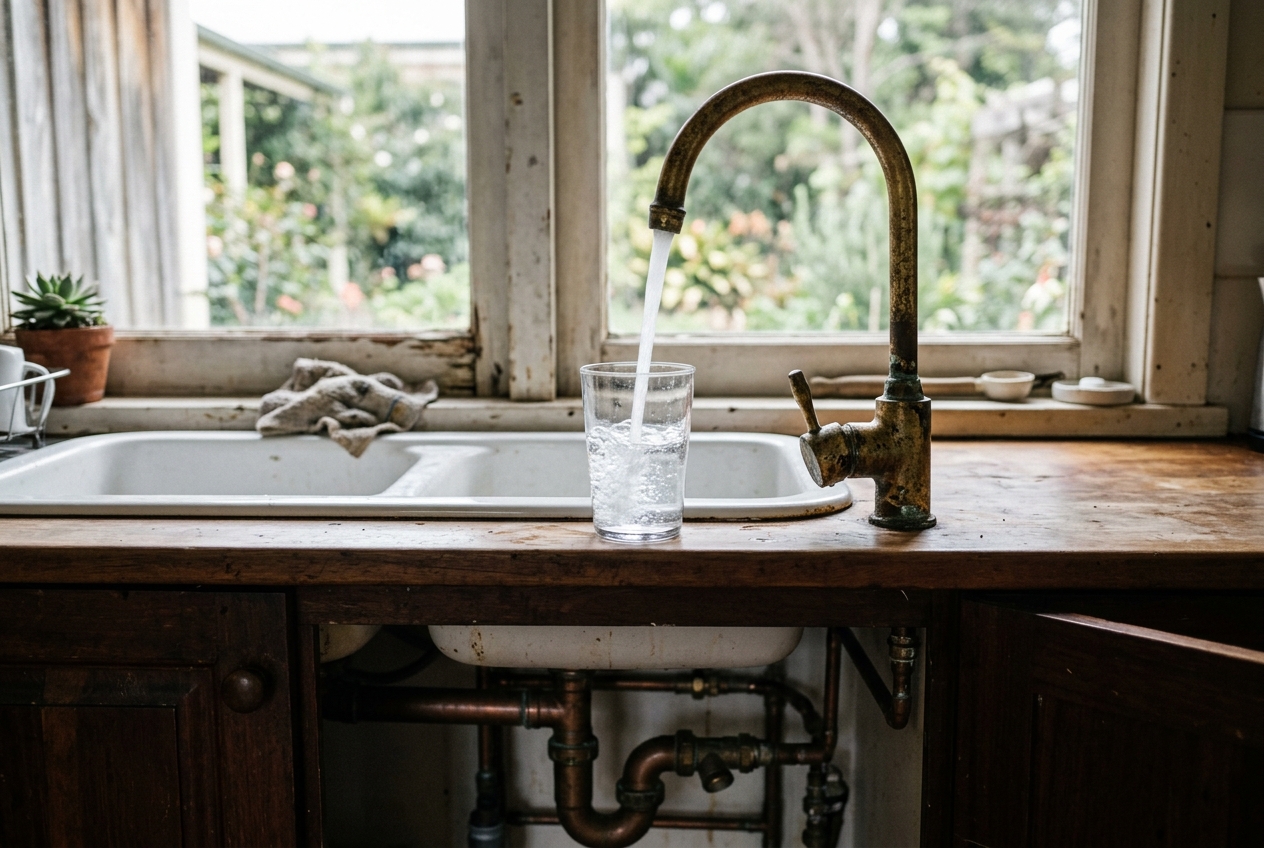
- Below 6.5 (acidic) — corrodes copper pipes, brass fittings and hot water systems. Acidic water dissolves metals, which is how lead and copper end up in tank water. Blue-green staining around taps and drains is the classic sign.
- Above 8.5 (alkaline) — causes scale build-up, a bitter or soda-like taste, and reduces the effectiveness of disinfection.
Why Tank Water Is Usually Acidic
Rainwater absorbs carbon dioxide on the way down, arriving at your roof around pH 5.5 – 6.5. Because rainwater carries almost no dissolved minerals, there's nothing to buffer it back toward neutral. That mildly acidic water then sits in contact with your pipes and fittings — slowly dissolving copper, and lead from old solder or flashing.
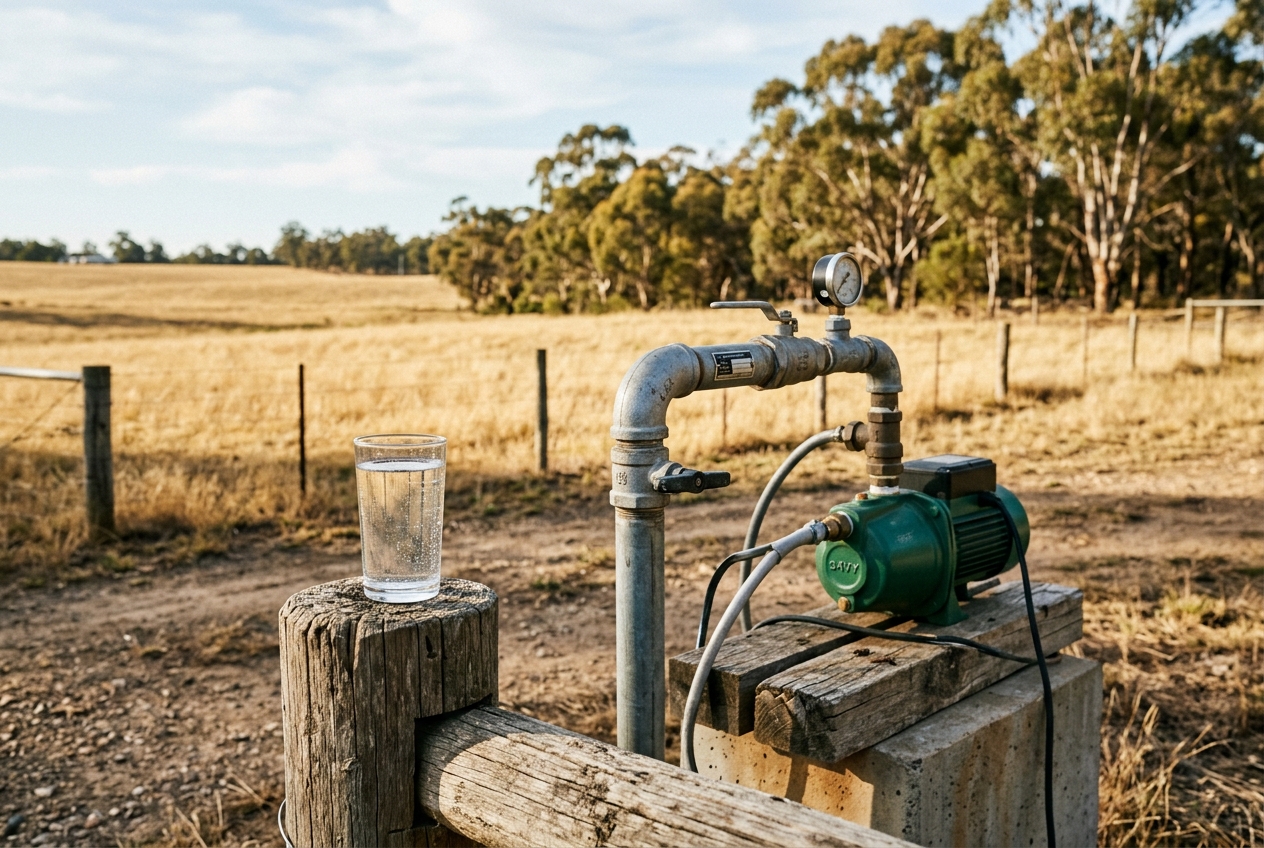
Bore water can swing either way depending on local geology: coastal and sandy aquifers often run acidic, while limestone country produces alkaline, hard water.
Signs Your pH Is Off
- Blue-green stains in sinks, baths or around taps (acidic water + copper pipes)
- Pinhole leaks in copper plumbing
- Metallic taste, especially first thing in the morning
- White crusty scale on kettles and taps (alkaline, hard water)
- Bitter or slippery-feeling water
How to Test and Fix pH
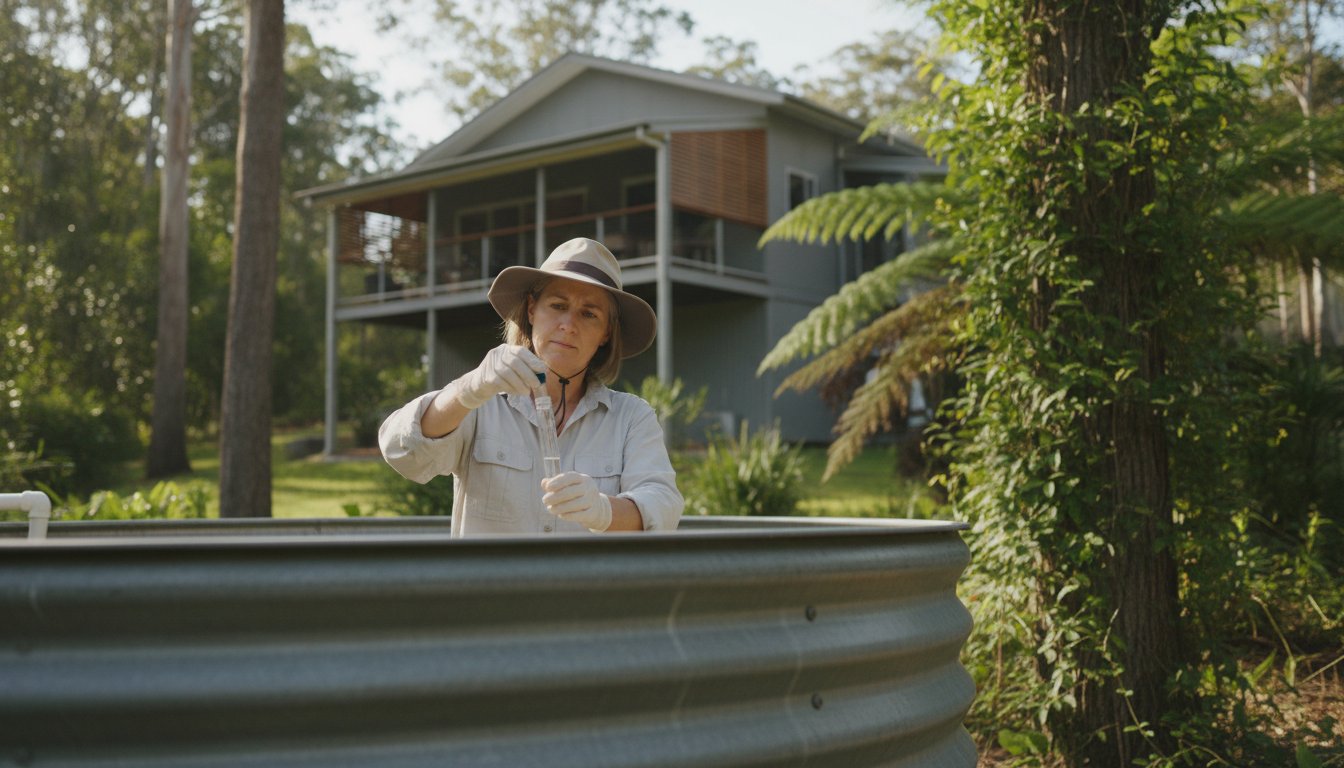
A laboratory water test measures pH precisely and — more importantly — measures the metals and chemistry that pH affects, so you can see whether acidic water is actually leaching anything into your supply. Our guide on how to test your water walks through the whole process.
If your pH is outside 6.5 – 8.5, common fixes include:
- Neutralising filter — calcite or magnesium-oxide media gently raises acidic pH as water passes through
- Dosing systems — for larger supplies or strongly acidic bores
- Re-testing after treatment — to confirm the correction worked and metal levels have dropped
Test first, then treat. The right fix depends on how far off your pH is and what it has been dissolving along the way.
Frequently Asked Questions
What is the ideal pH for drinking water in Australia?
The Australian Drinking Water Guidelines recommend a pH between 6.5 and 8.5. Water outside this range does not meet Australian Drinking Water Guidelines and should be addressed — usually because of what it does to your plumbing rather than the pH itself.
Why is my tank water acidic?
Rainwater is naturally slightly acidic (typically pH 5.5–6.5) because it absorbs carbon dioxide as it falls. Tank water has very little mineral buffering, so it stays acidic — which can corrode copper pipes and leach metals into your water.
Can I test pH myself?
pH strips and handheld meters give a rough reading, but they drift, need calibration, and tell you nothing about what the pH is doing to your water — like whether metals are leaching from your pipes. A laboratory test measures pH alongside the metals and chemistry that acidic water affects.
Ready to check your water's pH?
Find out your exact pH — and whether it's pulling metals into your water — with plain-English results measured against the Australian Drinking Water Guidelines.