Does your rainwater tank actually deliver the clean water you expect, or is it just a collection point for everything that lands on your roof? If you have noticed visible sediment at the bottom of your tank or an unusual odour after a heavy downpour, you aren't alone. Many locals across Noosa and the Sunshine Coast Hinterland assume their first flush diverter is a 'set and forget' solution, but the reality is more complex. Understanding the common rainwater tank contaminants sunshine coast properties deal with is the first step toward ensuring your household water remains within the preferred range.
It's frustrating when you're uncertain if your roof-harvested water truly meets Australian Drinking Water Guidelines (ADWG) parameters. We'll show you exactly what is likely entering your system and how a well-maintained first flush diverter can significantly improve your water quality. You will also learn how to optimise your setup for local conditions and identify the specific moments when professional lab testing is the only way to get the clarity you need. By the end of this article, you'll have a practical plan to manage your tank health with confidence and peace of mind.
Key Takeaways
- Identify how your specific location, from the Noosa coast to the Cooroy Hinterland, dictates the common rainwater tank contaminants sunshine coast residents face.
- Learn how a first flush diverter acts as a mechanical gatekeeper by capturing the most concentrated pollutants during the initial "first wash" of a rainfall event.
- Understand the link between nutrient runoff and the bacterial growth that causes unpleasant odours and discolouration within your storage system.
- Discover practical maintenance tips, such as the "Summer Storm" check, to manage biofilm buildup accelerated by the Sunshine Coast's high humidity.
- Recognise why visual clarity isn't a guarantee of quality and how a professional Rainwater Tank Health Check provides the data needed to compare your water against ADWG parameters.
Table of Contents
- Common Rainwater Tank Contaminants on the Sunshine Coast
- What is a First Flush Diverter and How Does it Protect Your Water?
- The Role of First Flush Diverters in Improving Water Quality
- Maintenance and Optimisation for Sunshine Coast Conditions
- Validating Your Tank Health: The Next Step Beyond Filtration
Common Rainwater Tank Contaminants on the Sunshine Coast
Every property on the Sunshine Coast faces a unique set of challenges when it comes to harvesting clean rainwater. While the region is known for its pristine environment, the local geography directly influences what ends up in your gutters. For residents in the Sunshine Coast Hinterland, particularly around Cooroy and Doonan, the high density of native vegetation and wildlife creates a significant biological load. In contrast, coastal areas like Noosa deal with airborne salt and fine sand that can alter water chemistry before it even reaches the tank.
Biological Hazards: Beyond Just Leaves
Wildlife is a defining feature of Hinterland living, but it's also a primary source of contamination. Birds, bats, and possums frequently use rooftops as transit points, leaving behind droppings that are a leading cause of elevated E. coli levels in local tanks. When heavy rain arrives, these deposits are washed into the system along with decaying organic matter trapped in gutters. This organic debris often leads to tannin leaching, which gives the water a tea-like discolouration and a distinct earthy odour. Turbidity is a measure of water clarity, representing the concentration of suspended solids like fine silt and organic particles that can make your tank water appear cloudy.
Chemical and Mineral Intrusions
The coastal fringe presents a different set of issues. In Noosa and surrounding beachside suburbs, constant salt spray can increase the conductivity of your water and potentially accelerate the corrosivity of the supply. This is particularly relevant for older homes where heavy metal leaching from lead-based flashings or weathered galvanised guttering can occur. Even newer homes aren't immune; industrial dust and non-biological particulates settle on roofs during dry spells, waiting for the next downpour. Seasonal factors also play a role. Following bushfire activity, fine ash can settle on catchment areas, significantly increasing the mineral content and impacting the taste of the water.
The interaction between your roof material and the Sunshine Coast's high humidity often encourages the growth of biofilm. Whether you have Colorbond, tiles, or polycarbonate sheeting, these surfaces can harbour microscopic growth that traps dust and pollutants. Installing a first flush diverter is a practical way to manage these common rainwater tank contaminants sunshine coast households encounter, as it redirects the most polluted initial runoff away from your main storage. Understanding these local factors is the first step toward effective management. Sunshine Coast Water Testing helps local households understand what is actually in their tank or bore water before choosing a treatment option.
What is a First Flush Diverter and How Does it Protect Your Water?
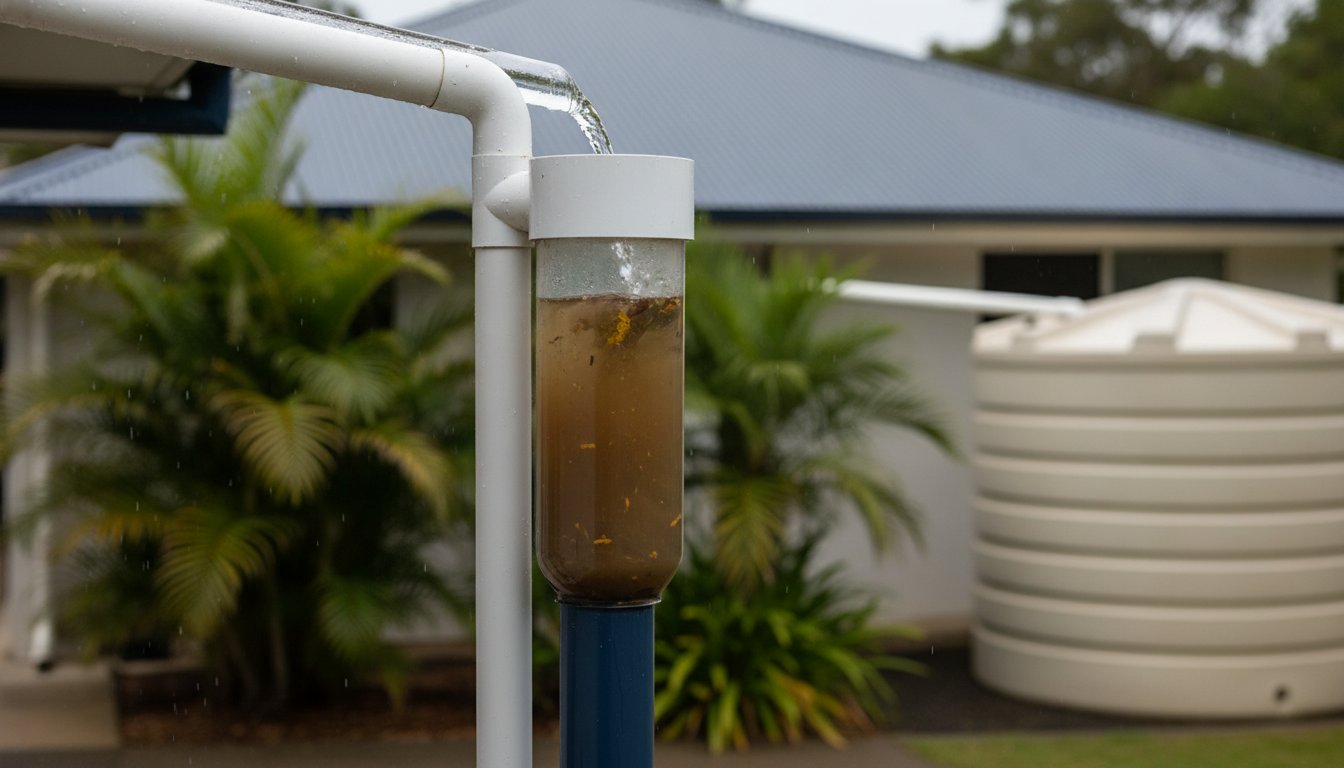
A first flush diverter is essentially a mechanical gatekeeper for your rainwater system. It's a simple, effective chamber designed to capture the initial, most contaminated runoff from your roof before it ever reaches your tank. This process relies on the 'first wash' principle. The first few millimetres of rain that fall after a dry spell are always the most polluted. This initial flow scours your roof, picking up the bird droppings, salt spray, and industrial dust discussed earlier. By diverting this concentrated slurry, you prevent the bulk of common rainwater tank contaminants sunshine coast properties face from entering your main water storage.
The system works using a clever ball-and-seat mechanism. As the first rain falls, it flows into a vertical diversion chamber rather than the tank. Inside this chamber, a buoyant ball rises as the water level climbs. Once the chamber is full, the ball seals against a seat at the top, effectively closing off the diversion pipe. Any subsequent, cleaner rainfall is then automatically redirected straight into your tank. It's an automated process that requires no electricity, making it a reliable first line of defence for any household in Noosa or the Hinterland.
Components of a Standard Diverter System
Most standard systems consist of the diversion chamber, a sealing ball, and a slow-release valve at the base. This valve allows the dirty water to drain away slowly over several hours, resetting the system for the next rain event. A leaf strainer or rain head is also vital. It acts as a secondary barrier, catching larger debris like gum leaves or twigs before they can clog the diverter. The capacity of this chamber isn't one-size-fits-all; it must be calculated based on the total surface area of your roof to ensure enough water is diverted before the tank begins to fill.
Sizing Your Diverter for Queensland Storms
In Queensland, our storms are often intense and sudden. This heavy rainfall requires specific diverter calibration to be effective. For standard garden use, a diversion rate of 0.5 millimetres per square metre of roof might suffice. However, if you're using the water for household appliances or laundry, a higher rate of 2.0 millimetres is generally recommended. Properties in areas like Cooroy or Doonan with heavy tree canopy have a higher 'pollutant load', meaning they need larger diversion chambers to capture all the organic matter before the ball seals the system.
While these devices are excellent at reducing sediment, they can't catch every microscopic hazard. Getting a Rainwater Tank Health Check is a practical way to see if your current diverter setup is actually keeping your water within the preferred range.
The Role of First Flush Diverters in Improving Water Quality
Installing a diverter isn't just about catching leaves; it's about fundamentally altering the chemical and biological environment of your tank. By intercepting fine silt and dust before they settle, you significantly reduce turbidity. Lower turbidity means clearer water, but the benefits go deeper than appearance. High levels of suspended solids often provide a protective 'shield' for bacteria, making secondary treatments like UV light less effective. When you remove these particles at the inlet, you ensure that any downstream filtration system can perform its job with much higher precision.
This mechanical separation also cuts off the nutrient supply that fuels bacterial growth and algae blooms. Organic matter like pollen and bird droppings are rich in nitrogen and phosphorus. If these reach the main storage, they create a 'nutrient soup' that encourages microorganisms to multiply. By diverting the first few millimetres of rain, you keep these common rainwater tank contaminants sunshine coast properties struggle with out of the system. This proactive approach also protects your infrastructure. Abrasive grit and fine sand are notorious for wearing down pump seals and clogging the internal valves of washing machines and dishwashers.
What a First Flush Diverter Cannot Stop
It's vital to remember that a diverter is a mechanical barrier, not a molecular one. While it's excellent at catching physical debris, it cannot stop dissolved chemical contaminants. If pesticides are being sprayed on a neighbouring property or if heavy metals are leaching from older roof flashings, these substances are often dissolved in the water and will bypass the diversion chamber. Similarly, while a diverter reduces the volume of pathogens, it cannot guarantee the removal of 100% of microscopic E. coli or Giardia. Atmospheric gases and fine aerosols can also mix with rain before it even hits your roof, meaning some contaminants are present in the water throughout the entire duration of a storm.
The Impact on Water Taste and Odour
Most unpleasant tastes and odours in tank water are caused by anaerobic decomposition. This happens when organic matter settles at the bottom of the tank to form a thick layer of sludge. In this oxygen-poor environment, bacteria break down the debris, releasing gases that create a swampy or 'earthy' smell. By preventing this organic load from entering in the first place, you keep the water smelling fresher and tasting cleaner. It also helps prevent the metallic tang that sometimes occurs when stagnant water reacts with sediment. For a broader look at maintaining your system, our Rainwater Harvesting Safety Guide provides more context on keeping your supply within the preferred range.
Maintenance and Optimisation for Sunshine Coast Conditions
The Sunshine Coast’s high humidity and warm climate create a perfect breeding ground for biofilm inside your diversion chamber. While these devices are effective at intercepting common rainwater tank contaminants sunshine coast properties face, they are not self-cleaning. If organic matter sits in a damp diverter for weeks, it begins to break down. This creates a concentrated sludge that can actually degrade your water quality if the system isn't maintained. Regular attention ensures the mechanical components continue to act as a reliable barrier rather than a source of secondary contamination.
Preparing for the "Summer Storm" season is a critical task for local homeowners. In Queensland, our rainfall often comes in heavy, high-volume bursts that can quickly overwhelm a poorly maintained system. Before the storm season peaks, check that your diverter is resetting correctly. If the chamber doesn't drain fully between rain events, the next downpour will wash the previous "first flush" of pollutants directly into your tank. Managing this waste water is also important. Ensure the slow-release valve drains into a garden bed or a dedicated drainage point to avoid creating boggy patches around your tank base or house foundations.
Your Quarterly Maintenance Checklist
- Transparent end cap: Unscrew the cap to clear out accumulated sediment and check for any signs of blockages.
- Filter screen: Rinse the internal screen to remove fine Hinterland dust and grit that can restrict water flow.
- Slow-release dripper: Ensure the small exit hole is clear. A single grain of sand can stop the chamber from resetting.
- Sealing ball: Inspect the ball for wear or slimy organic growth. A clean ball is essential for a water-tight seal against the seat.
When Maintenance Isn’t Enough
Sometimes, even a perfectly functioning diverter cannot overcome an existing problem. If you notice your water has a persistent odour or discolouration, a significant sludge layer might already be present at the bottom of your tank. It's important to understand the different roles of local specialists in this situation. Sunshine Coast Water Testing helps local households understand what is actually in their tank or bore water before choosing a treatment option. We identify the specific issues through laboratory analysis, while Pristine Water Systems Sunshine Coast provides the practical solutions, such as professional tank cleaning or filtration hardware installation.
Before you invest in expensive new hardware or assume your diverter has failed, getting a Rainwater Tank Health Check is a practical first step. This provides a clear, plain-English summary of your current water quality, allowing you to make informed decisions based on facts rather than guesswork.

Validating Your Tank Health: The Next Step Beyond Filtration
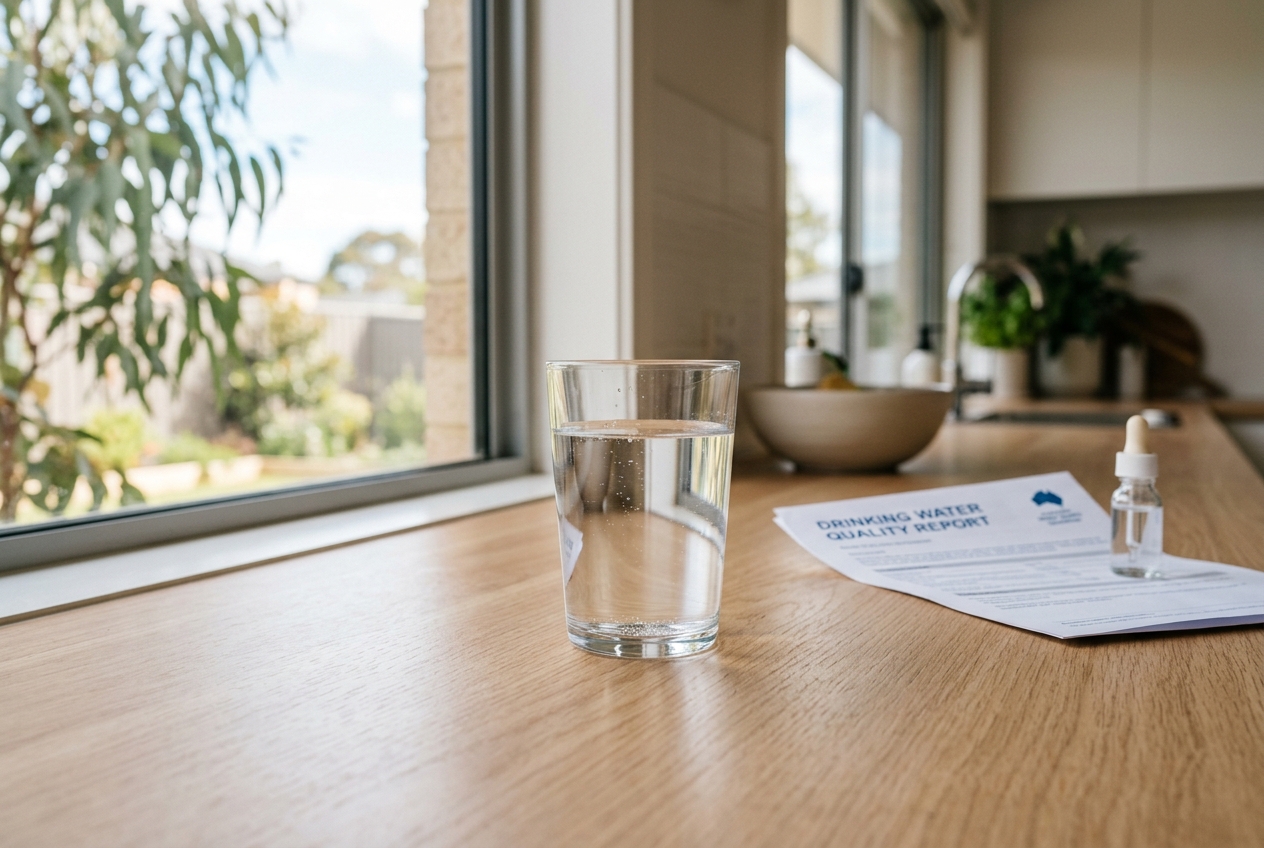
Clear water is often mistaken for healthy water. However, visual clarity is a poor indicator of microbiological or chemical quality. Even when a first flush diverter is performing perfectly, it cannot address the microscopic hazards that may be present in your supply. A professional Rainwater Tank Health Check is the only way to move from guesswork to scientific certainty. Sunshine Coast Water Testing helps local households understand what is actually in their tank or bore water before choosing a treatment option, providing a clear baseline against Australian Drinking Water Guidelines (ADWG) parameters.
By moving from assumptions to data, you can make informed decisions about your household water. We provide plain-English summaries of your results rather than just raw numbers. This ensures you understand exactly how your water interacts with your home, from the taste of your morning coffee to the longevity of your plumbing. Once you have these facts, you can choose the right treatment or filtration option without wasting money on hardware you might not actually need.
What a Professional Lab Analysis Reveals
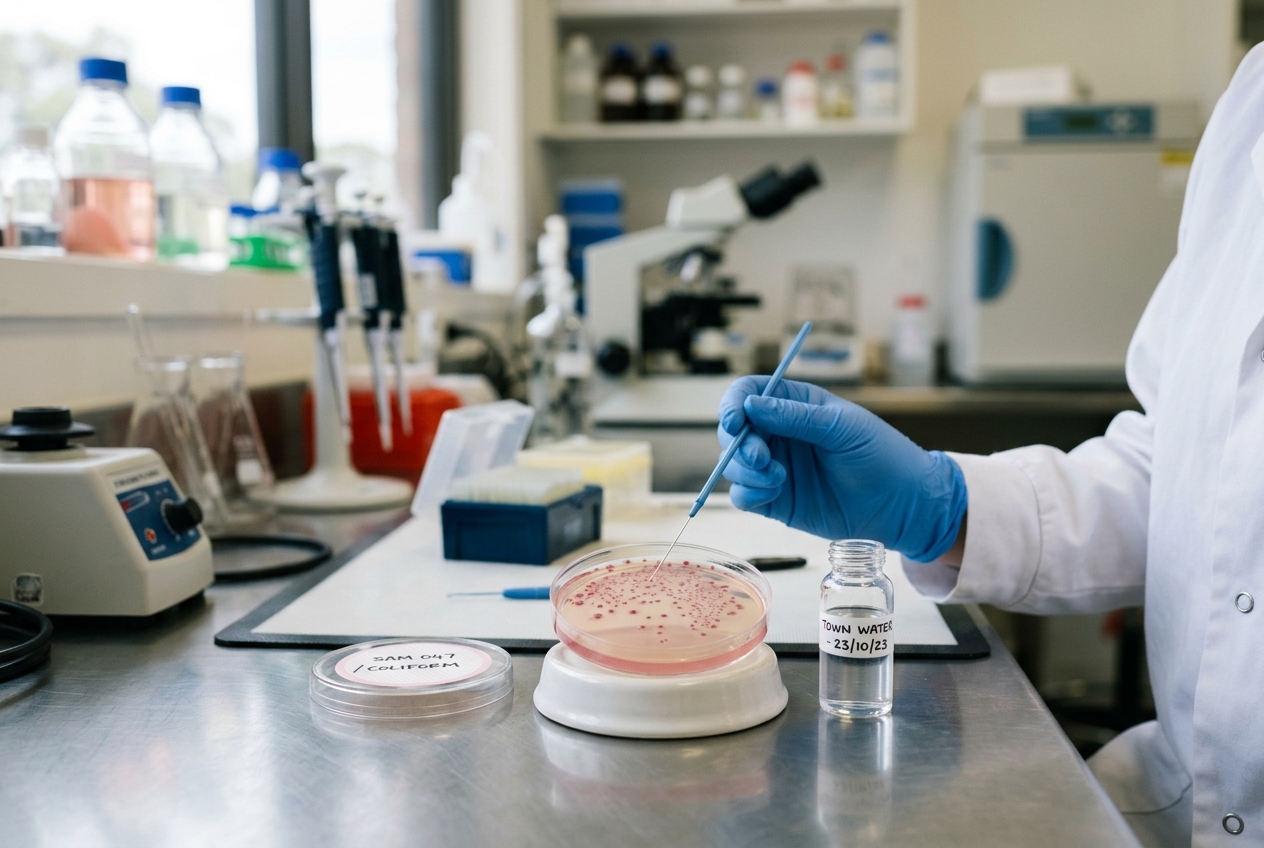
Laboratory testing identifies the specific common rainwater tank contaminants sunshine coast residents should be aware of, starting with biological markers. We test for E. coli and coliforms to validate the biological profile of your water. While a diverter reduces the organic load, it doesn't sterilise the water. We also assess pH levels; if your water is too acidic, it can lead to the gradual corrosion of your household copper pipes and blue-green staining on fixtures. Heavy metals testing identifies dissolved risks, such as lead or copper leaching, that mechanical diverters and simple mesh screens simply cannot intercept.
Practical First Steps for Sunshine Coast Homeowners
If you haven't tested your tank recently, organising a standard water test is a practical first step. This establishes a baseline for your system's health and confirms whether your current maintenance routine is effective. It's much better to be proactive than to wait for an obvious issue like an unpleasant odour to develop. Once you receive your Certificate of Analysis (COA) and our plain-English summary, you have a powerful tool for the future. You can use these results to communicate precisely with filtration specialists if improvements are needed. Identifying the problem first ensures that any subsequent investment in filtration is targeted and cost-effective.
To get started, you can Book a Rainwater Tank Health Check to understand what is actually in your water before making any changes to your system.
Take Control of Your Rainwater Quality
Managing your water supply shouldn't be a guessing game. While a well-maintained first flush diverter is a powerful tool for intercepting many common rainwater tank contaminants sunshine coast properties face, it is only one part of a healthy system. By combining mechanical protection with regular maintenance and professional validation, you can ensure your water remains within the preferred range throughout the changing Queensland seasons.
Instead of wondering if your water meets the standard, take a practical first step toward clarity. We are local Sunshine Coast specialists who provide scientific laboratory analysis rather than simple DIY test strips. Every Rainwater Tank Health Check includes a Certificate of Analysis and a plain-English summary of your results; this ensures you have the data needed to make informed decisions about your household. Understand what is actually in your tank with a professional water test and enjoy the peace of mind that comes with real evidence over guesswork. Taking care of your supply today ensures a more reliable system for your home tomorrow.
Frequently Asked Questions
Does a first flush diverter make my rainwater safe to drink?
No single device can guarantee that your water meets all Australian Drinking Water Guidelines. A first flush diverter is a vital pre-filtration step that reduces the physical and biological load, but it doesn't sterilise the water. To ensure your supply is within the preferred range for household use, you should combine diversion with secondary treatment and regular laboratory testing to identify any remaining invisible hazards — especially after events like bushfires (see the impact of bushfires on tank water quality).
How much water should a first flush diverter divert on the Sunshine Coast?
Most local properties should divert between 0.5 and 2.0 millimetres of rain per square metre of roof area. If you only use your tank for garden irrigation, the lower end of this scale is usually sufficient. However, for indoor use like laundry or toilet flushing, a higher diversion rate is necessary to manage the pollutant load. A 20-litre diversion chamber is often considered the optimum capacity for a typical household roof.
Can a first flush diverter remove E. coli from my tank water?
A diverter reduces the volume of organic matter that carries bacteria, but it cannot remove E. coli entirely. These pathogens are microscopic and can easily remain suspended in the water that enters your tank after the diversion chamber has filled. Mechanical diversion is an excellent first line of defence, but it isn't a substitute for specific disinfection methods if bacteria levels fall outside the preferred range.
How often should I clean my first flush diverter in the Hinterland?
You should aim to inspect and clean your diverter at least every three months. In Hinterland areas like Cooroy or Doonan, the high volume of leaf litter and wildlife activity means your system can clog much faster than in urban zones. It's also a smart move to perform a "Summer Storm" check before the heavy rainfall season to ensure the slow-release valve and sealing ball are functioning correctly.
What are the most common contaminants found in Sunshine Coast rainwater tanks?
The common rainwater tank contaminants sunshine coast residents deal with most often include bird and bat droppings, decaying vegetation, and fine wind-blown sediment. In coastal suburbs like Noosa, airborne salt and sand are also frequent issues that can affect turbidity and pH levels. These materials settle on your catchment area during dry spells and are then washed into your system during the next rain event.
Do I still need to test my water if I have a first flush diverter and a filter?
Testing is essential because it's the only way to confirm that your filtration and diversion systems are actually working as intended. Even the best filters have a limited lifespan and can become less effective over time without you noticing. A professional laboratory test provides a clear, data-driven summary of your water quality, removing the guesswork from your maintenance routine and ensuring your supply meets ADWG parameters.
What is the difference between a leaf eater and a first flush diverter?
A leaf eater is a physical mesh screen designed to stop large debris like leaves and twigs from entering your downpipes. In contrast, a first flush diverter is a chamber that redirects the entire initial volume of contaminated water away from your tank. Think of the leaf eater as a coarse physical barrier and the diverter as a system for managing fine sediment and dissolved pollutants.
Can bushfire ash be stopped by a first flush diverter?
A first flush diverter can intercept a significant portion of bushfire ash that has settled on your roof catchment. Because the ash is most concentrated in the initial runoff, the diversion chamber captures it before the ball seals the system. However, very fine ash particles can remain suspended in the water for the duration of a storm, meaning some may still enter the tank if the rainfall is light.

Article by
Stephen McDougall
Stephen McDougall is the owner of Pristine Water Systems Sunshine Coast and Sunshine Coast Water Testing, specialising in water quality, filtration, and tank systems. He is known for delivering clear, easy-to-understand advice and practical solutions to help clients maintain safe, reliable water.
Disclaimer
The information provided in this article is for general guidance only and is not a substitute for professional water testing or site-specific advice. Water quality can vary between properties. For accurate results and recommendations, we recommend professional testing and assessment.