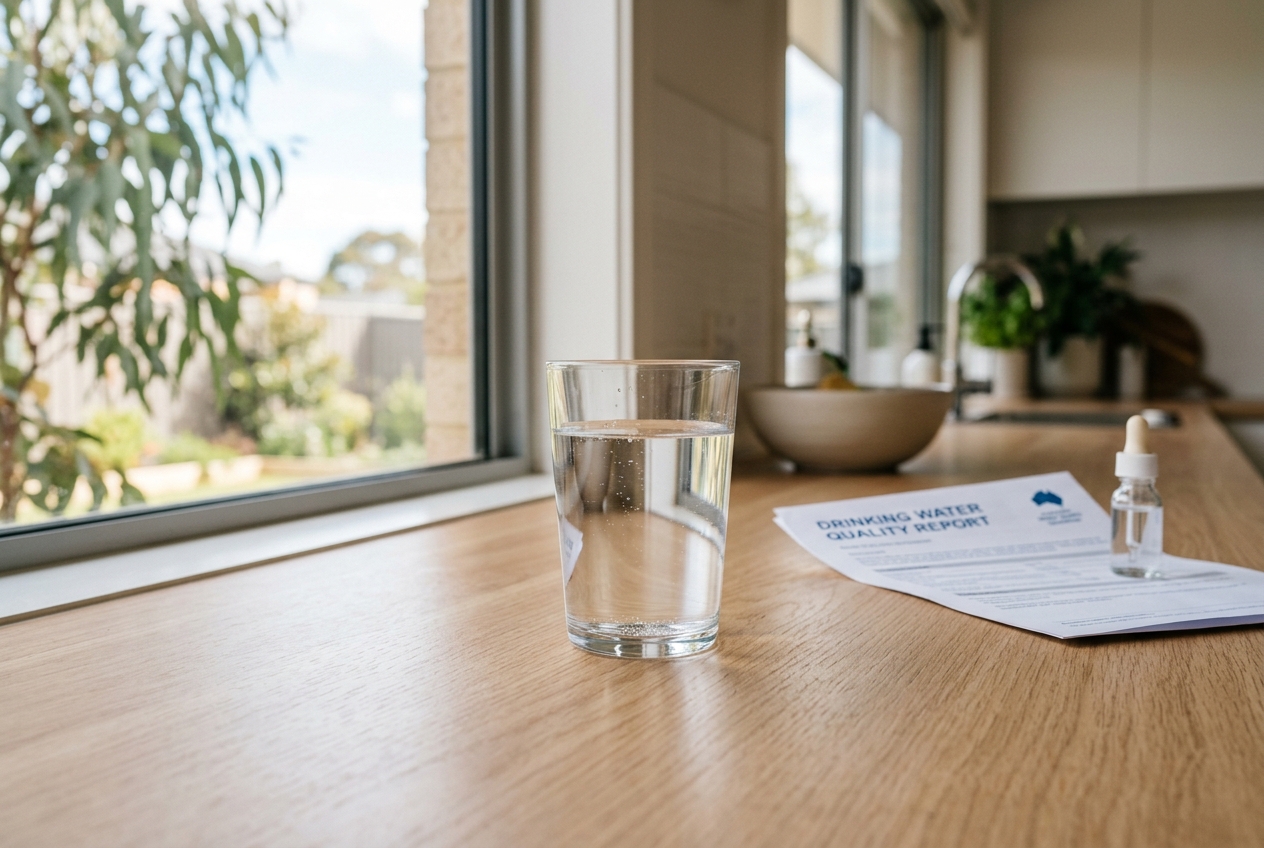
Lead is one of the most concerning contaminants that can show up in a water test. It's colourless, odourless, and tasteless — you can't detect it without laboratory testing. Long-term exposure to even low levels of lead in drinking water is a recognised health risk, particularly for children and pregnant women.
The Australian Drinking Water Guidelines set the limit at 0.01 mg/L (10 micrograms per litre). There is no known safe level of lead exposure for children.
Where Does Lead in Water Come From?
Lead rarely comes from the water source itself. In most cases, it leaches into the water from materials in your plumbing or roof catchment system:
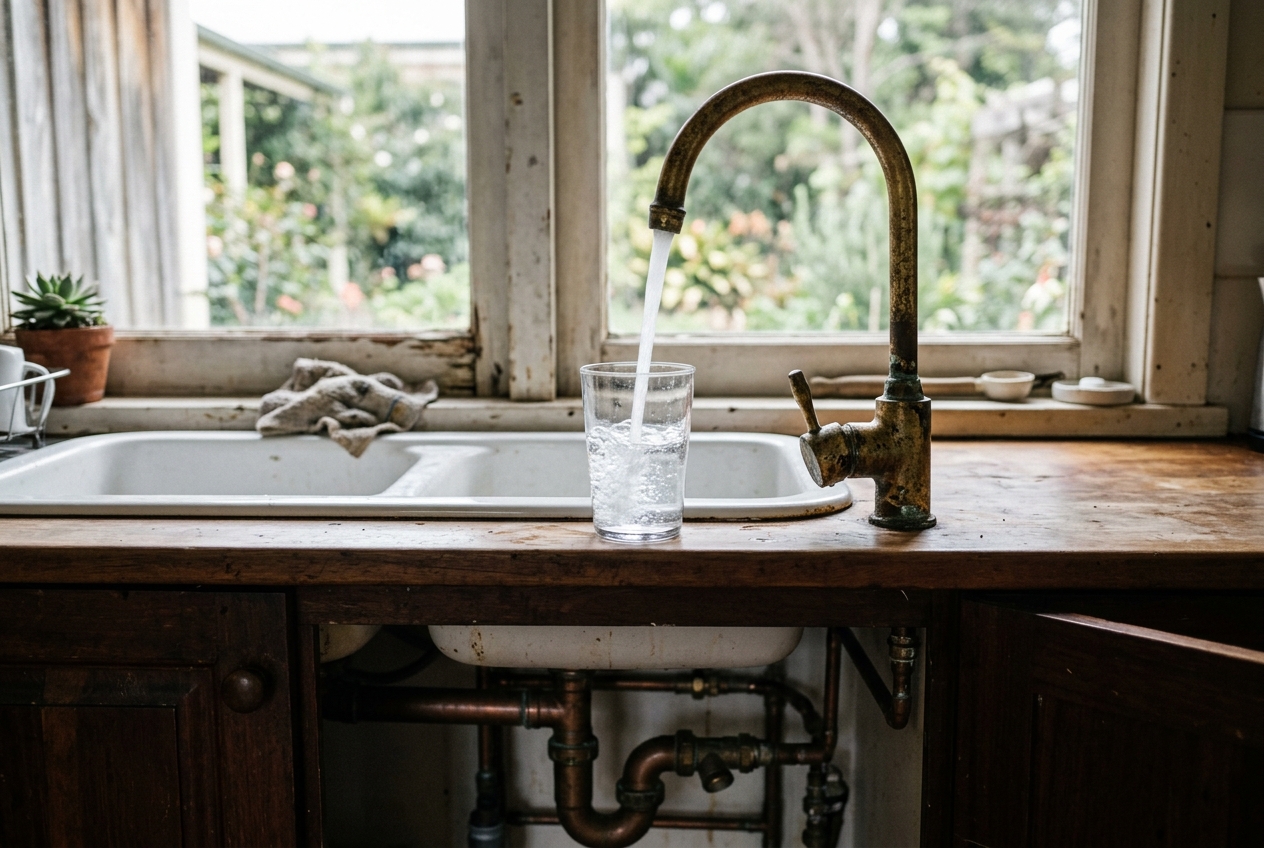
- Lead solder — used to join copper pipes in homes built before the mid-1990s. Australia banned lead solder for drinking water plumbing, but older joints remain in many homes.
- Brass fittings and taps — older brass contains lead. Even some newer "lead-free" brass fittings contain small amounts.
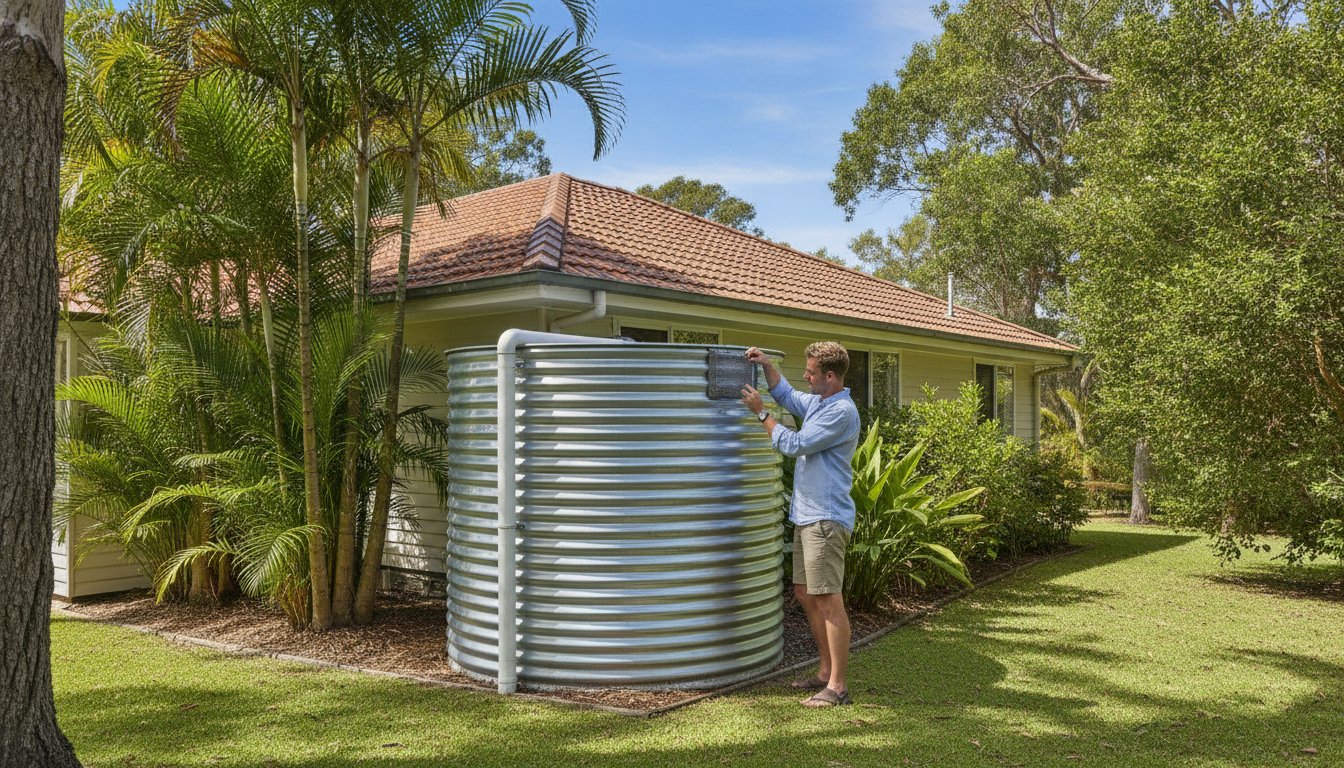
- Lead flashing on roofs — common around chimneys, valleys, and skylights. Rainwater running over lead flashing picks up lead and carries it into your tank.
- Old lead pipes — rare in Australia but still found in some very old properties.
- Bore water — in some geological formations, lead occurs naturally in groundwater, though this is less common. More in our bore water safety guide.
The pH Connection
Acidic water (low pH) dissolves lead more aggressively. Rainwater is naturally slightly acidic (pH 5.5–6.5), which is why tank water households with old plumbing or lead flashing are at the highest risk of lead contamination. This combination — acidic rainwater plus lead-containing materials — is the most common pathway in Australian homes. Our tank water safety guide covers the full catchment-to-tap picture.
Health Effects of Lead in Water
Lead is a cumulative toxin. It builds up in the body over time and affects multiple systems:
- Children — developing brains and nervous systems are most vulnerable. Even low-level lead exposure can affect learning, behaviour, and development. There is no known safe threshold.
- Pregnant women — lead crosses the placenta and can affect foetal development.
- Adults — long-term exposure is linked to kidney damage, high blood pressure, and reproductive effects.
Because lead has no taste or smell, regular testing is the only way to know whether your household is being exposed.
How to Test for Lead
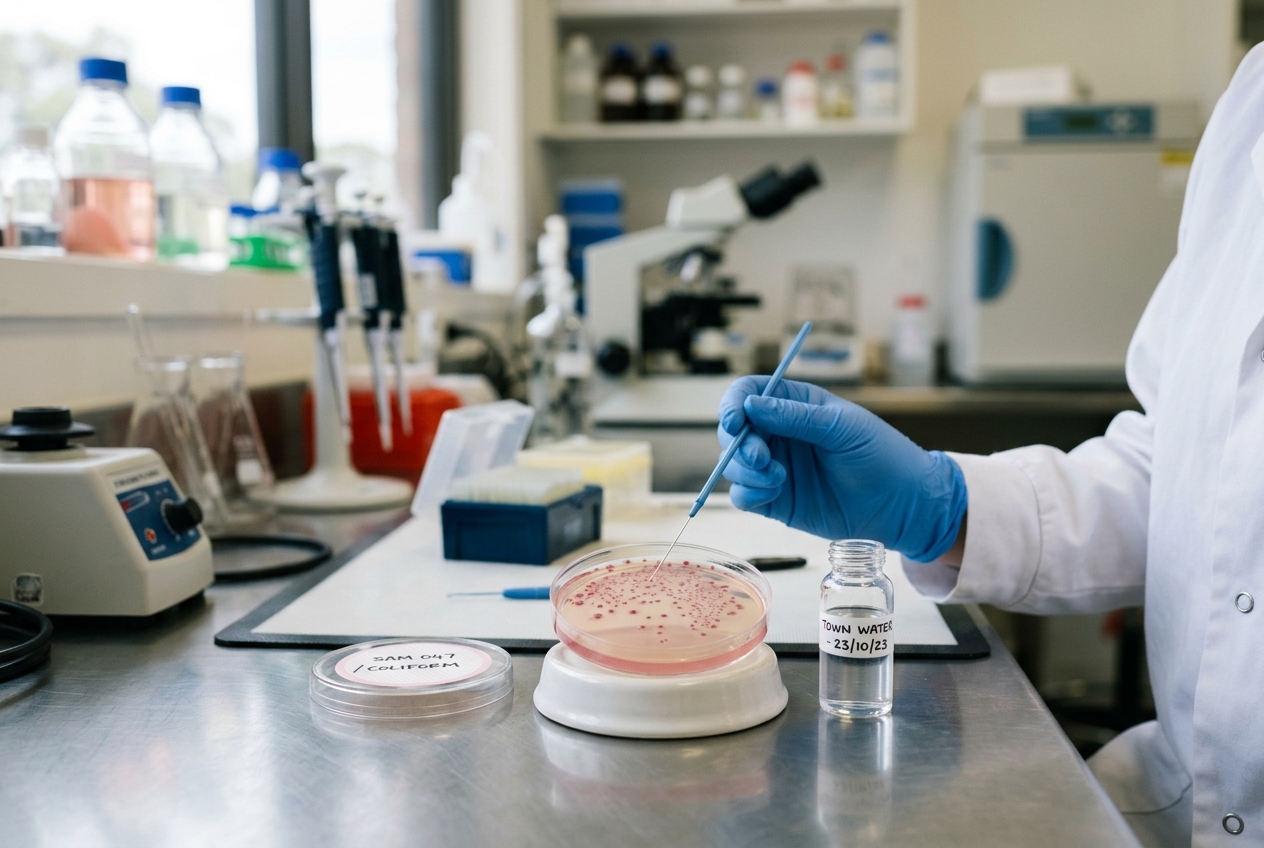
A standard lead in water test involves collecting a sample in a laboratory-provided container and sending it for analysis (see how to test your water for the full process). For the most accurate result:
- First-draw sample — collect the water first thing in the morning or after the taps haven't been used for at least six hours. This captures water that has been sitting in contact with your pipes and fittings, giving the highest potential lead reading.
- Flushed sample — run the tap for two minutes before collecting. This shows the lead level in flowing water after standing water has cleared.
Testing both gives you a complete picture. If the first-draw sample is significantly higher than the flushed sample, your plumbing is the likely source.
What to Do If Lead Is Detected
Below 0.01 mg/L — your water meets the Australian Drinking Water Guidelines for lead at the time of sampling. Retest annually to monitor.
At or above 0.01 mg/L — investigate the source. The most common culprits are lead solder joints, brass fittings, or lead roof flashing feeding a rainwater tank.
Steps to reduce lead exposure:
- Flush the tap before drinking. Run cold water for 30 seconds to two minutes before using it for drinking or cooking, especially first thing in the morning. This clears standing water that has been in contact with pipes.
- Use cold water for cooking and drinking. Hot water dissolves lead faster than cold water. Never use hot tap water for preparing baby formula, cooking, or drinking.
- Install a lead-reduction filter. Activated carbon filters, reverse osmosis systems, and certified lead-removal filters can reduce lead levels effectively. Replace cartridges on schedule.
- Replace the source. Long-term, identify and replace lead solder joints, old brass fittings, or lead flashing on the roof. This is the only permanent fix.
- Correct acidic pH. If your tank water is acidic, a pH correction filter or neutralising media reduces lead leaching from plumbing.
- Retest after remediation. Confirm your fix worked with a follow-up test.
Frequently Asked Questions
How does lead get into drinking water?
Lead enters drinking water primarily through old plumbing — lead solder on copper pipe joints, brass fittings and taps, and lead flashing on roofs that feeds into rainwater tanks. Acidic water (low pH) accelerates lead leaching. Bore water in some regions may also contain naturally occurring lead from geological sources.
What is the safe level of lead in drinking water in Australia?
The Australian Drinking Water Guidelines set the guideline value for lead at 0.01 mg/L (10 micrograms per litre). There is no known safe level of lead exposure for children, so any detection warrants investigation — particularly in households with young children or pregnant women.
Can a water filter remove lead?
Yes. Activated carbon filters, reverse osmosis systems, and specific lead-reduction filters can effectively reduce lead levels in drinking water. Check that the filter is certified for lead removal and replace cartridges according to the manufacturer's schedule. However, the best long-term solution is to identify and replace the source of lead in your plumbing or roof catchment.
Ready to test your water?
Find out whether lead — or anything else — is in your household water, with plain-English results measured against the Australian Drinking Water Guidelines.