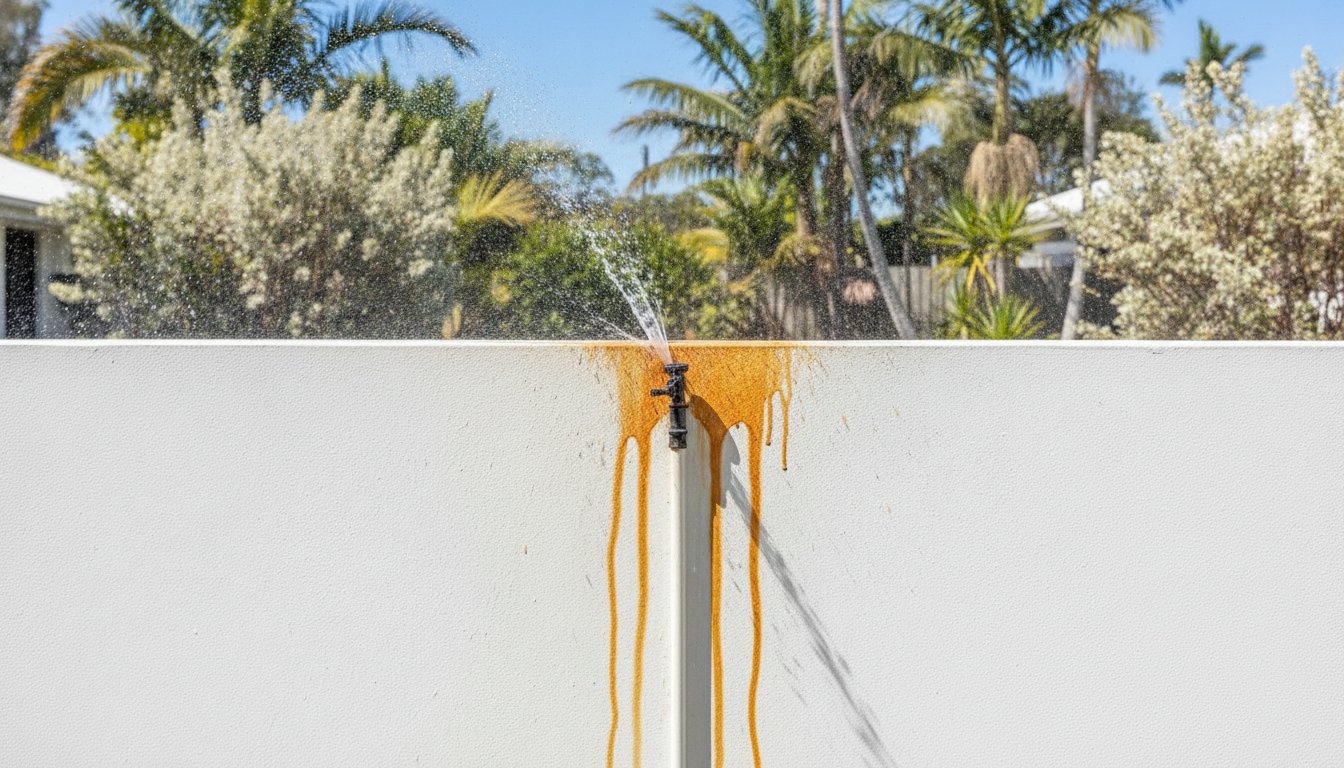
Have you ever spent a whole Saturday scrubbing orange streaks off your garden fence, only to watch them reappear the very next time your sprinklers turn on? It is a common headache for locals across the Sunshine Coast, from Cooroy to the Hinterland, who rely on groundwater for their gardens and toilets. Understanding what causes bore water stains is the first step toward reclaiming your property from those unsightly marks and preventing further damage to your home.
We know how discouraging it feels to see a fresh load of white laundry or a crisp school uniform ruined by mysterious rust-coloured spots. While it's tempting to reach for the heavy-duty cleaners, these stains are actually a chemical fingerprint of the minerals hidden deep within our local aquifers. In this guide, we'll explain the science behind orange and black staining (typically heavy metals like iron and manganese), the role of water hardness, and why professional testing is essential for choosing a solution that actually works. By identifying whether you're dealing with iron, manganese, or scale, you can stop the cycle of cleaning and address the source of the problem once and for all.
Key Takeaways
- Learn why clear groundwater can leave rust-coloured marks due to the chemical process of oxidation once it reaches the surface.
- Identify what causes bore water stains by distinguishing between orange iron deposits and the dark brown or black signatures of manganese.
- Understand how dissolved minerals interact with household detergents to permanently set stains in school uniforms and white laundry.
- Discover why professional bore water analysis is a practical first step to ensure you choose the correct treatment solution for your specific mineral levels.
- Explore how the unique geology of the Sunshine Coast, from our coastal sands to the Hinterland soils, impacts your groundwater quality.
The Science of Oxidation: Why Clear Water Leaves Orange Stains
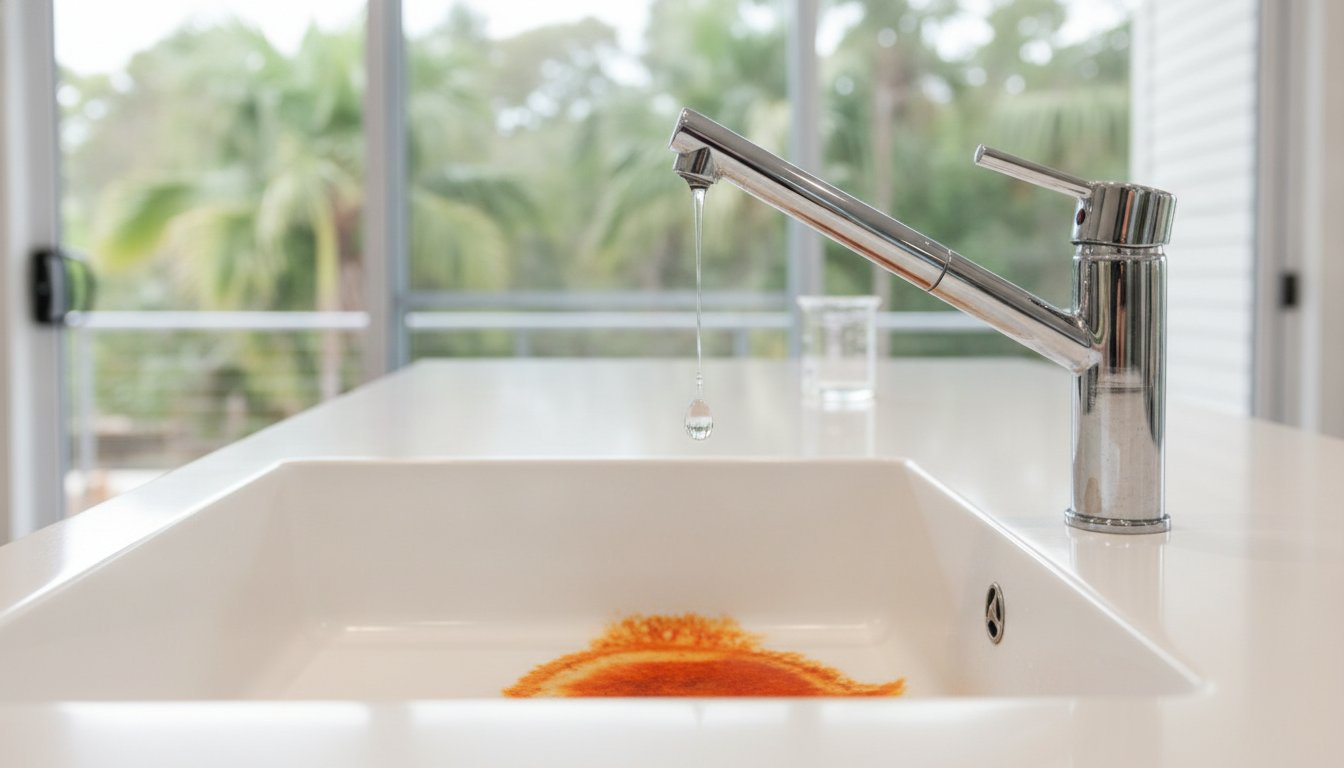
Many Sunshine Coast homeowners are confused when they pump bore water that looks perfectly clear, only to find orange streaks on their driveway the next morning. Deep underground in our local aquifers, iron exists in a low-oxygen environment. In these conditions, the iron stays completely dissolved and invisible to the naked eye. It is only when the water is pumped to the surface and exposed to the atmosphere that the transformation begins. Identifying what causes bore water stains on your specific property requires looking at the invisible chemistry before the water even leaves the ground.
This transformation is a chemical process. Oxidation occurs when dissolved ferrous iron meets atmospheric oxygen, transforming into insoluble ferric iron particles, commonly known as rust. Because this reaction isn't instantaneous, your garden might look fine immediately after watering. However, as the water sits on your fences or walls, the oxygen goes to work. Within a few hours or days, those invisible minerals "fall out" of the liquid and bond to the surface as a solid, stubborn pigment. This delayed reaction is a primary reason why many residents struggle to identify what causes bore water stains until the damage is already visible. The reaction takes time.
Dissolved vs. Suspended Iron
It helps to distinguish between the two states of iron found in groundwater. "Clear-water iron" is the dissolved ferrous type mentioned above. It passes right through standard mesh screens because it is part of the water's chemistry. On the other hand, "red-water iron" is already oxidised before it leaves the tap, often appearing cloudy or tinted right away. While red-water iron is easier to spot, clear-water iron is often more frustrating. It bypasses simple sediment filters. This leads to unexpected staining on bathroom tiles and outdoor furniture that persists despite basic filtration efforts.
The Role of pH in Staining Speed
A metallic taste often accompanies staining — see what causes metallic taste in bore water. The speed at which these stains develop often depends on the acidity or alkalinity of your water. In more alkaline conditions (high pH), oxidation happens much faster. If your bore is located in an area with limestone or specific clay deposits, you might see stains appear almost immediately. Conversely, acidic water can keep iron dissolved for longer, though it may also lead to pipe corrosion. Groundwater chemistry is complex. Because the geology of the Sunshine Coast varies significantly between the coast and the Hinterland, pH levels can change based on the depth of your bore. Understanding these levels through a bore water quality assessment is vital for predicting how your water will behave. This ensures your management plan aligns with broader water quality standards and protects your home's aesthetic value.
Identifying the Culprit: Iron, Manganese, or Hardness?
While orange streaks are the most common complaint, they aren't the only way your groundwater leaves its mark. To truly understand what causes bore water stains on your property, you first need to look closely at the colour and texture of the build-up. Different minerals create different visual signatures. Treating for iron when you actually have a manganese problem is a common and costly mistake that many homeowners make before seeking professional advice.
Mineral staining generally falls into three categories:
- Orange or Reddish-Brown: This is the classic sign of high iron content in the groundwater. These stains are most visible on light-coloured fences, walls, and white laundry.
- Black or Dark Brown: These darker marks usually indicate the presence of manganese. This mineral is often found alongside iron, creating a muddy or soot-like appearance that is notoriously difficult to scrub away.
- White, Chalky, or Grey: These are signs of water hardness, caused by an abundance of calcium and magnesium carbonates. Rather than a pigment, this is a physical build-up of mineral scale.
Often, a single bore will contain a "cocktail" of these minerals. You might notice orange streaks on your driveway while simultaneously seeing white crusty deposits on your garden taps. Because these minerals interact with each other and your household surfaces differently, a professional bore water analysis is a practical first step to unpick this mineral puzzle.
Manganese: The Stubborn Black Stain
Manganese is often much harder to remove than iron because it bonds more aggressively to surfaces. It is particularly troublesome in bathroom environments where it discolours grout and leaves a dark film on wall tiles. In the Sunshine Coast Hinterland, especially around areas like Cooroy and Doonan, manganese is frequently detected in local bores. It can even build up inside dishwashers, leaving a black residue on your plates and cutlery. Because it is chemically distinct, it requires specific testing and treatment for private wells to ensure the removal method is actually effective.
Calcium and Magnesium: The Scale Problem
Hard water is less about colour and more about texture. It leaves unsightly white spots on glass shower screens and chrome fixtures that look like dried water drops. Over time, this scale accumulates inside hot water systems and kettles, significantly reducing their efficiency and lifespan. It's easy to confuse mineral scale with soap scum, but scale is a rock-hard mineral deposit that survives most standard bathroom cleaners. Identifying what causes bore water stains of this nature is essential for protecting your expensive plumbing and appliances from long-term damage.
The Impact on Your Home: Clothes, Fixtures, and Gardens
While we have discussed the chemical reactions behind these marks, the real-world impact on your home is where the frustration truly sets in. Understanding what causes bore water stains is about more than just scientific curiosity; it is about protecting the significant investment you have made in your property. From ruined laundry to failing appliances, the minerals in your groundwater can leave a lasting and expensive trail if left unmanaged.
Laundry is often the first place Sunshine Coast homeowners notice a problem. When iron-rich bore water mixes with alkaline laundry detergents, it can cause the dissolved minerals to "set" instantly into the fibres of white fabrics and school uniforms. This creates stubborn, rust-coloured spots that are notoriously difficult to remove. In many cases, using standard bleach can actually oxidise the iron further, making the stain even darker and more permanent.
Inside the home, bathroom grout is particularly vulnerable. Because grout is naturally porous, it "soaks up" mineral pigments from the water like a sponge. This leads to deep-seated discolouration that surface scrubbing simply cannot reach. Outside, the impact is often even more visible. Light-coloured pavers, rendered walls, and concrete driveways are prone to unsightly orange streaks that can significantly devalue a home's street appeal. Identifying what causes bore water stains early on allows you to protect these surfaces before the pigment bonds permanently to the render or stone.
In the garden, while minerals like iron are technically plant nutrients, excessive build-up can be counterproductive. A thick coating of mineral scale on leaves can block the pores, known as stomata, interfering with the plant's ability to breathe and photosynthesise effectively. This can lead to stunted growth or yellowing leaves despite regular watering.
Plumbing and Appliance Longevity
Beyond the visible marks, minerals that fall outside the preferred range can wreak havoc on your plumbing. Dissolved minerals and scale can slowly accumulate inside your pipes, gradually restricting flow and reducing water pressure over time. This build-up is particularly hard on modern appliances. Solenoid valves in washing machines and dishwashers are precision-engineered components; even a small amount of mineral grit can cause them to stick or fail, leading to leaks or expensive repair bills. A professional water test is a proactive way to protect your household investment from these hidden costs.
Irrigation System Maintenance
For those in Noosa or Cooroy with extensive gardens, irrigation maintenance becomes a constant battle when water quality is poor. A related issue often found in local bores is iron bacteria. This creates a thick, jelly-like slime that can block drippers and seize up irrigation heads. Replacing these components every season is an expensive and repetitive cycle. Testing helps you understand exactly what is happening in your pipes, allowing you to choose a targeted solution rather than just replacing clogged parts.

Why Testing is the Essential First Step Before Treatment
Many homeowners skip straight to buying a filtration system once they see orange streaks on their walls. However, "guessing" at the mineral content is a risky approach that often leads to spending thousands on equipment that isn't fit for purpose. To stop the cycle of cleaning, you must first confirm what causes bore water stains by looking at the specific chemical makeup of your groundwater. Without a clear picture, you might install a sediment filter that does nothing to remove dissolved iron, or a softener that fails to address high manganese levels.
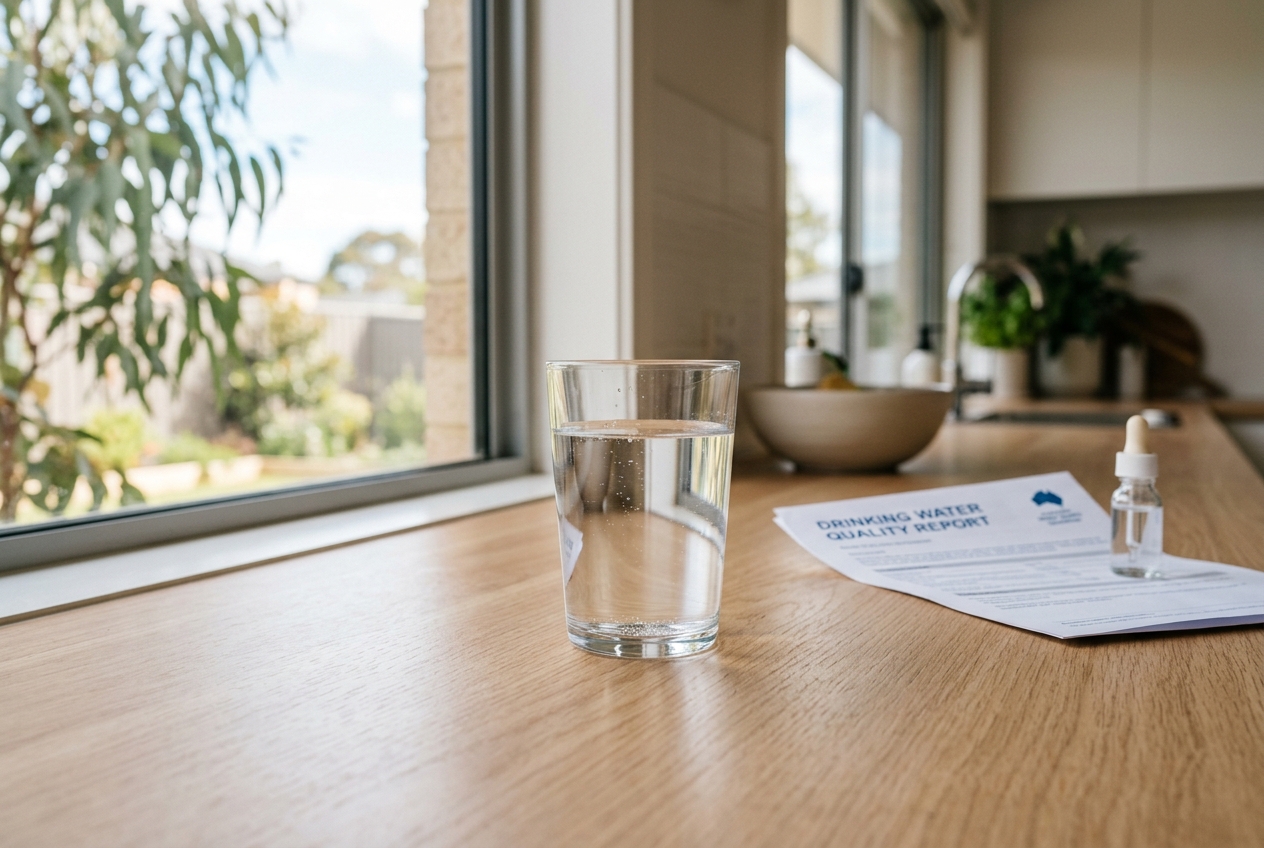
While DIY home test strips are widely available, they are often insufficient for the complex chemistry found in Sunshine Coast bores. These strips frequently lack the precision needed to detect minerals at the low levels that still cause significant staining. A professional laboratory Certificate of Analysis (COA) provides a much higher level of accuracy. At Sunshine Coast Water Testing, we take this technical data and provide a plain-English summary. This helps you understand exactly what the numbers mean for your home and your budget.
The "Test, Then Treat" Framework
We advocate for a logical, step-by-step approach to water management. Identifying the issue before investing in a treatment system saves time and prevents buyer's remorse. Professional analysis ensures you understand exactly what is in your water before choosing a treatment option. This moves you away from generic data toward actionable recommendations tailored to your property. Before you commit to a solution, order a professional bore water analysis to get the facts first.
Meeting Australian Drinking Water Guidelines (ADWG)
For domestic use, even if the water is only for the garden, it should ideally fall within the aesthetic objectives set by the Australian Drinking Water Guidelines. For example, the aesthetic guideline for iron is less than or equal to 0.3 mg/L, while for manganese, it is just 0.05 mg/L. Our reports identify if your results are "outside the preferred range," helping you make sense of interpreting heavy metal water test results. Knowing whether your iron levels are slightly elevated or significantly high changes the type of filtration you will need. This precision is the only way to effectively address what causes bore water stains and ensure long-term property protection.
Managing Bore Water Quality on the Sunshine Coast
Managing water quality on the Sunshine Coast is unique because our local geology is so diverse. If you live near the coastal sands, your mineral profile will look very different from a property nestled in the volcanic soils of the Hinterland. These geological differences are a primary factor in what causes bore water stains across our region. Local rainfall patterns also play a significant role. During periods of heavy rain, aquifers can recharge, potentially diluting mineral concentrations. Conversely, in drier months, those same minerals can become more concentrated, leading to more aggressive staining on your property.
Because groundwater is a living system, we recommend regular testing every 1 to 2 years. This allows you to monitor changes in your bore's chemistry before they result in permanent damage to your home. Taking a proactive approach ensures you aren't caught off guard by shifting mineral levels. It's much easier to adjust a treatment plan than it is to replace a discoloured driveway or a bank of seized irrigation heads.
Finding Local Solutions
Sunshine Coast Water Testing helps local households understand what is actually in their tank or bore water before choosing a treatment option. We focus on the science of identification, providing you with a clear, plain-English report that demystifies the technical data. For practical solutions like filtration or tank cleaning, we recommend Pristine Water Systems Sunshine Coast. Our role is to identify the issue, while their team provides the technical hardware and services to resolve it. By giving our data to a filtration specialist, you ensure the system they install is exactly what your specific water chemistry requires.
Practical First Steps for Homeowners
A Standard Drinking Water Test or a dedicated Bore Water Analysis is the most logical starting point for any homeowner. Collecting a sample is straightforward. Use a clean, lab-supplied bottle and let the bore run for several minutes. This ensures you are testing the water directly from the aquifer rather than water that has been sitting in your pipes. This evidence-based approach removes the guesswork and provides genuine peace of mind. Understanding what causes bore water stains on your specific block is the only way to protect your home’s value and enjoy the benefits of your groundwater without the stress of constant scrubbing.
Take Control of Your Water Quality
Living on the Sunshine Coast means enjoying the benefits of local groundwater, but it shouldn't mean living with ruined laundry and stained fences. We have explored how the science of oxidation and the unique geology of our region play a role in what causes bore water stains. Whether you're dealing with orange iron streaks or stubborn black manganese deposits, identifying the specific mineral profile of your bore is the only way to find a permanent solution.
As a local, family-owned business, Sunshine Coast Water Testing is here to help you move past the guesswork. We provide a comprehensive Bore Water Analysis that includes a plain-English summary of all lab results and expert recommendations based on the Australian Drinking Water Guidelines. This data gives you the confidence to choose the right treatment option without wasting money on ineffective filters that don't match your water chemistry.
Book a professional Bore Water Analysis today to understand what is causing your stains. It's a practical first step toward protecting your home and reclaiming your weekends from the cycle of scrubbing. We look forward to helping you gain total clarity over your water quality.
Frequently Asked Questions
Can I use bore water to wash my clothes if it looks clear?
It is best not to use bore water for laundry until you have had it professionally tested. Even if the water appears crystal clear when it comes out of the tap, it often contains dissolved ferrous iron that is invisible to the eye. Once this water hits the air and mixes with alkaline laundry detergents, it oxidises and turns into solid rust particles that can permanently stain white school uniforms and bed sheets.
Will bore water stains damage my car paint?
Yes, mineral deposits from groundwater can damage your vehicle's finish over time. When bore water dries on a car's surface, the minerals bond to the clear coat and create a rough, etched texture. If left too long, these stains become very difficult to remove without professional polishing. Understanding what causes bore water stains on your driveway is the first step to ensuring you don't accidentally spray your car during a garden irrigation cycle.
Is it possible to remove orange stains from my concrete driveway?
You can remove these stains using specific acid-based cleaning products designed to dissolve iron oxide. However, cleaning is only a temporary fix if you don't address the source of the problem. Without treating the water or adjusting your irrigation, the orange streaks will reappear the very next time you water your lawn. Testing your bore helps you find a permanent solution rather than just treating the recurring symptoms.
How much iron in bore water causes staining?
Even very small amounts of iron can lead to visible discolouration on your property. The Australian Drinking Water Guidelines (ADWG) set an aesthetic objective of 0.3 mg/L for iron. Once your levels exceed this preferred range, you will likely notice orange staining on porous surfaces like pavers and grout. Because these concentrations are so minute, they cannot be accurately measured with basic home test strips.
Does a standard water filter remove bore water stains?
A standard sediment filter is usually insufficient for preventing bore water stains. Most staining is caused by dissolved minerals that are part of the water's chemistry, meaning they pass right through basic mesh or pleated filters. To stop the staining, the minerals must first be oxidised into a solid form or removed through specialised ion-exchange or catalytic media. A professional analysis identifies exactly which minerals you need to target.
Why has my bore water suddenly started staining when it never did before?
Groundwater is a dynamic system that changes based on environmental factors. A 2023 assessment showed a 30% decline in Sunshine Coast aquifer levels over the last decade, which can lead to higher mineral concentrations in the remaining water. Changes in local rainfall or even the installation of new bores nearby can shift the chemistry of your water, causing staining in a bore that was previously clear.
Is bore water that stains clothes safe for the garden?
Most plants can tolerate the iron and manganese found in groundwater, as these are technically plant nutrients. However, the problem arises when the mineral build-up becomes excessive. Heavy staining can coat the leaves of your plants, blocking their pores and making it harder for them to breathe and grow. If your water is significantly outside the preferred range, it may also affect the pH of your soil over the long term.
How often should I test my Sunshine Coast bore water?
We recommend testing your bore water every 1 to 2 years to monitor for any shifts in mineral content. Regular testing is particularly important in areas like the Noosa Hinterland or Cooroy, where local geology can cause fluctuations in water quality. Staying on top of your water chemistry allows you to adjust your management plan before what causes bore water stains leads to expensive property damage or clogged irrigation systems.

Article by
Stephen McDougall
Stephen McDougall is the owner of Pristine Water Systems Sunshine Coast and Sunshine Coast Water Testing, specialising in water quality, filtration, and tank systems. He is known for delivering clear, easy-to-understand advice and practical solutions to help clients maintain safe, reliable water.
Disclaimer
The information provided in this article is for general guidance only and is not a substitute for professional water testing or site-specific advice. Water quality can vary between properties. For accurate results and recommendations, we recommend professional testing and assessment.