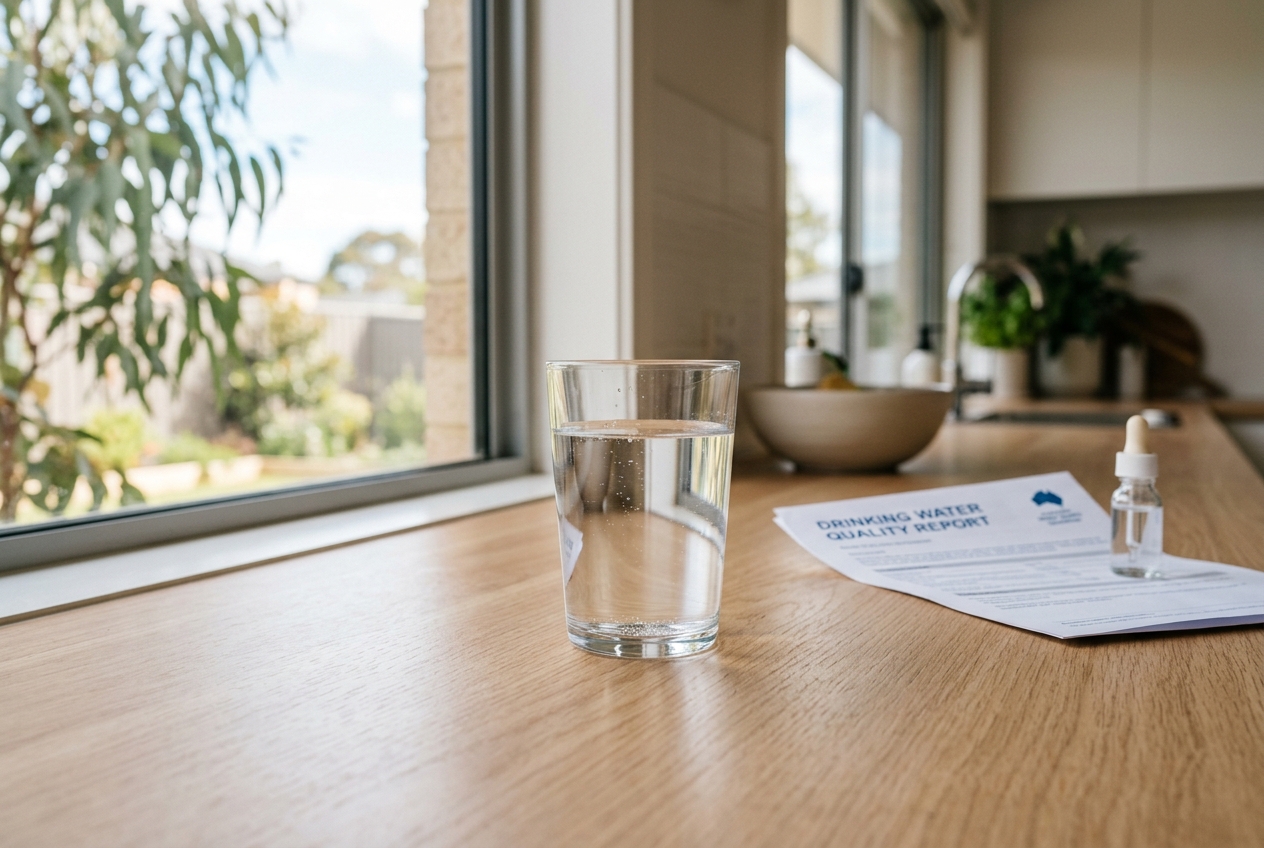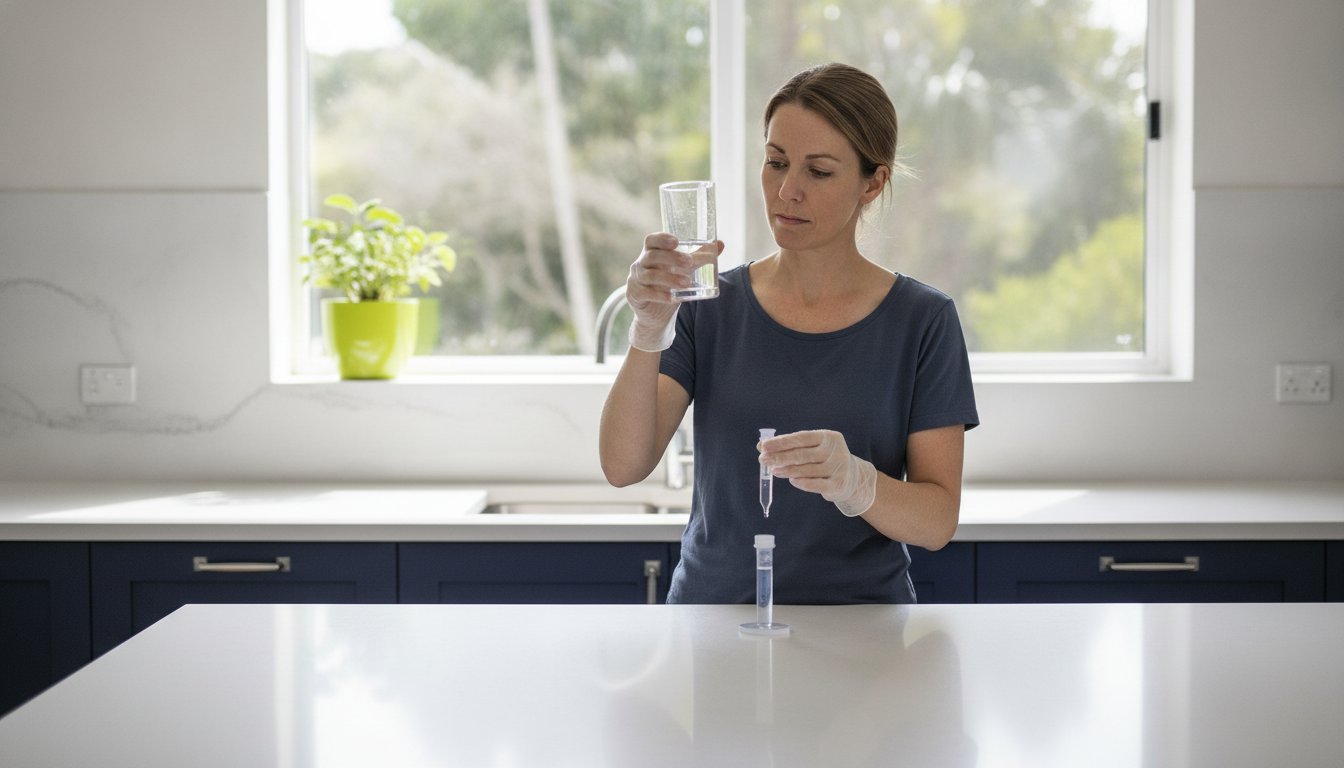
What if the "free" water from your backyard bore is actually costing you a fortune in dead plants and ruined equipment? Many homeowners across the Sunshine Coast Hinterland and Noosa reach for groundwater to keep their gardens lush, yet they're often met with yellowing leaves, white crusty build-up on the soil, or stubborn iron staining on their paths. If you've felt confused by technical reports in the past, you aren't alone. Testing bore water for irrigation suitability is the only way to know if your supply is a total win or a risk to your soil health.
We believe you deserve a thriving garden without the guesswork. This guide will teach you how to accurately assess your groundwater to protect your plants and irrigation gear from mineral damage. You'll learn how to translate lab jargon into a clear "yes or no" for your specific lawn and veggies. We will also walk through the practical steps to manage common issues, ensuring your bore remains a reliable asset for your property in 2026 and beyond.
Key Takeaways
- Understand why clear-looking groundwater can still contain high levels of salt or sodium that damage soil structure over time.
- Learn how testing bore water for irrigation suitability identifies the "Big Four" mineral risks specific to Sunshine Coast and Hinterland properties.
- Discover how to categorise your garden plants by their salt tolerance to prevent yellowing leaves and stunted growth.
- Master the correct way to collect a water sample using a clean plastic bottle to ensure your lab results are accurate and reliable.
- Find out how a plain-English summary helps you choose the right treatment solution before investing in expensive irrigation equipment.
Why Testing Bore Water for Irrigation Suitability is Essential
Irrigation suitability isn't just a technical term; it's the delicate balance of minerals that allows your garden to thrive without destroying the very soil it grows in. Many homeowners in Noosa or Doonan assume that if their bore water looks clear and smells fresh, it's perfect for the lawn. However, "clear" water can be deceptive. It often hides high levels of salt or sodium that act as a slow-acting poison for sensitive species. Testing bore water for irrigation suitability is the only way to reveal these invisible threats before they cause visible damage.
Standard water quality testing procedures allow us to look past the surface and evaluate the chemical makeup of your groundwater. Without this data, you're essentially gambling with your landscaping budget. Replacing a mature hedge or a designer garden bed is an expensive exercise that can be avoided with a bit of foresight. Sunshine Coast Water Testing helps local households understand what is actually in their tank or bore water before choosing a treatment option, ensuring you don't spend money on fixes you don't need.
The Hidden Risks to Your Soil Structure
High sodium levels are a particular concern for properties across the Sunshine Coast Hinterland. When sodium levels are too high relative to calcium and magnesium, it leads to a process called "dispersion." This causes the clay particles in our local soils to pack together tightly, ruining drainage and preventing air from reaching plant roots. You might notice your garden beds becoming hard and crusty, or water pooling on the surface long after you've finished watering. Another common sign is a white, powdery crust on the soil surface, which indicates high salinity. Over time, this salt build-up makes it harder for plants to take up moisture, leading to "leaf burn" even when the ground is wet.
Protecting Your Irrigation Infrastructure
Key Water Quality Parameters for Sunshine Coast Gardens
Every backyard in our region is unique, yet four specific indicators dictate how your garden responds to groundwater. We call these the "Big Four": Salinity, pH, Sodium, and Iron. Bores in the Hinterland, such as those around Maleny or Mapleton, often show vastly different profiles compared to coastal bores in Noosa or Peregian. Coastal water frequently deals with higher salinity from the sea spray and sandy aquifers, while Hinterland water is often more acidic with higher iron content. Understanding these nuances through a Bore Water Quality Assessment is vital for long-term garden health.
Do not rely on a basic pool kit for this task. Those kits are designed for swimmers, not soil. They measure chlorine and basic alkalinity but miss critical factors like the Sodium Adsorption Ratio (SAR) or dissolved iron levels. Professional lab analysis is the only reliable method for testing bore water for irrigation suitability, as it provides the precision needed to protect your landscape.
Salinity and the Sodium Adsorption Ratio (SAR)
Salinity measures the total salt content, but the Sodium Adsorption Ratio (SAR) is far more important for soil health. SAR looks at the relationship between sodium and the "stabilising" minerals, calcium and magnesium. If sodium is too high relative to the others, your soil structure can collapse, leading to poor drainage. When interpreting irrigation water tests, we look for this specific balance to ensure your garden beds don't become hard and impermeable.
| Plant Category | Salinity Tolerance (EC dS/m) |
|---|---|
| Sensitive (Citrus, Azaleas, Strawberries) | Less than 0.7 |
| Moderately Tolerant (Roses, Tomatoes, Hibiscus) | 0.7 to 1.5 |
| Tolerant (Couch Grass, Saltbush, Oleander) | 1.5 to 3.0 |
pH Levels and Nutrient Lockout
The pH of your water dictates "nutrient lockout." If your bore water is too acidic or too alkaline, it prevents plants from "eating" fertilisers. Even if you apply high-quality nutrients, the plants simply cannot absorb them if the water pH is outside the preferred range of 6.0 to 8.5. In many Hinterland areas, we see naturally acidic water that can cause certain nutrients to become unavailable while others reach levels that are not ideal for plant growth.
Iron Content and Aesthetic Staining
In Sunshine Coast regions like Cooroy and Eumundi, iron is often the primary culprit behind unsightly orange or brown staining on fences, sandstone paths, and foliage. This occurs when dissolved iron in the bore water oxidises upon contact with the air. Beyond the mess, high iron can lead to a distinct metallic taste and can eventually clog your pump and irrigation nozzles. Sunshine Coast Water Testing helps local households understand what is actually in their tank or bore water before choosing a treatment option, providing a clear path toward a healthy, stain-free garden.
Interpreting Results for Different Plant Species
Not every plant in your yard has the same thirst for minerals. While a tough Couch lawn might handle slightly salty water, your prize-winning Azaleas will likely struggle. This is where testing bore water for irrigation suitability proves its worth. It isn't just about a raw number; it's about understanding how those minerals interact with specific root systems over time. Suitability is a sliding scale that depends entirely on what you intend to grow.
Every time you turn on the sprinklers, you're adding a tiny amount of salt or sodium to the soil. If your drainage isn't perfect, these minerals don't just disappear. They build up in the root zone, creating a cumulative effect that can eventually starve a plant of water, even if the soil feels damp. Our plain-English summaries at Sunshine Coast Water Testing help you decide whether your water is a "green light" for your whole yard or if you need to stick to hardier species. We help local households understand what is actually in their tank or bore water before choosing a treatment option.
Sensitive Species vs. Hardy Natives
Common garden favourites like camellias, gardenias, and citrus trees are notoriously sensitive to mineral fluctuations. If your water is outside the preferred range, you'll see clear signs of distress. Watch for "leaf burn," where the edges of older leaves become brown and crispy. You might also notice chlorosis, which is a distinct yellowing between the leaf veins while the veins themselves stay green. Stunted growth is another red flag; your plants simply refuse to put on new height despite being fed and watered.
Local Sunshine Coast natives, such as Banksias and Grevilleas, are generally hardier, but they have their own quirks. Many prefer slightly acidic conditions. If your bore water is naturally alkaline, these natives may struggle to take up iron, leading to that tell-tale yellowing. Knowing your water's pH allows you to choose plants that actually want to live in your specific soil and water environment.
Managing Irrigation Frequency and Drainage
If your test results show "marginal" water quality, you don't necessarily have to abandon your bore. You can often manage the risk by changing your technique. Instead of light, frequent sprinkles, try applying a larger volume of water less often. This "leaching" process helps push accumulated salts deeper into the soil profile, away from the active root zone. It's a practical way to keep a garden alive during a dry spell without letting the salt build-up become a permanent problem.
Good drainage is your best friend here. In heavy clay areas of the Hinterland, you might need to improve your soil with organic matter to keep water moving. Whenever we get a typical Sunshine Coast downpour, take advantage of the free rainwater to "flush" your garden beds. This natural reset helps clear out the mineral build-up from your bore. Testing bore water for irrigation suitability gives you the data needed to create this management plan, ensuring your garden stays lush and healthy through every season.

Step-by-Step: How to Test Your Bore Water Correctly
A laboratory result is only as accurate as the sample you provide. If you collect water that has been sitting in your pipes for weeks, the data won't reflect the true state of your aquifer. This leads to incorrect decisions about your garden's health. For the most reliable results, you should perform testing bore water for irrigation suitability during the season you actually plan to water your plants. Groundwater chemistry can shift slightly between a wet summer and a dry winter, so timing is everything.
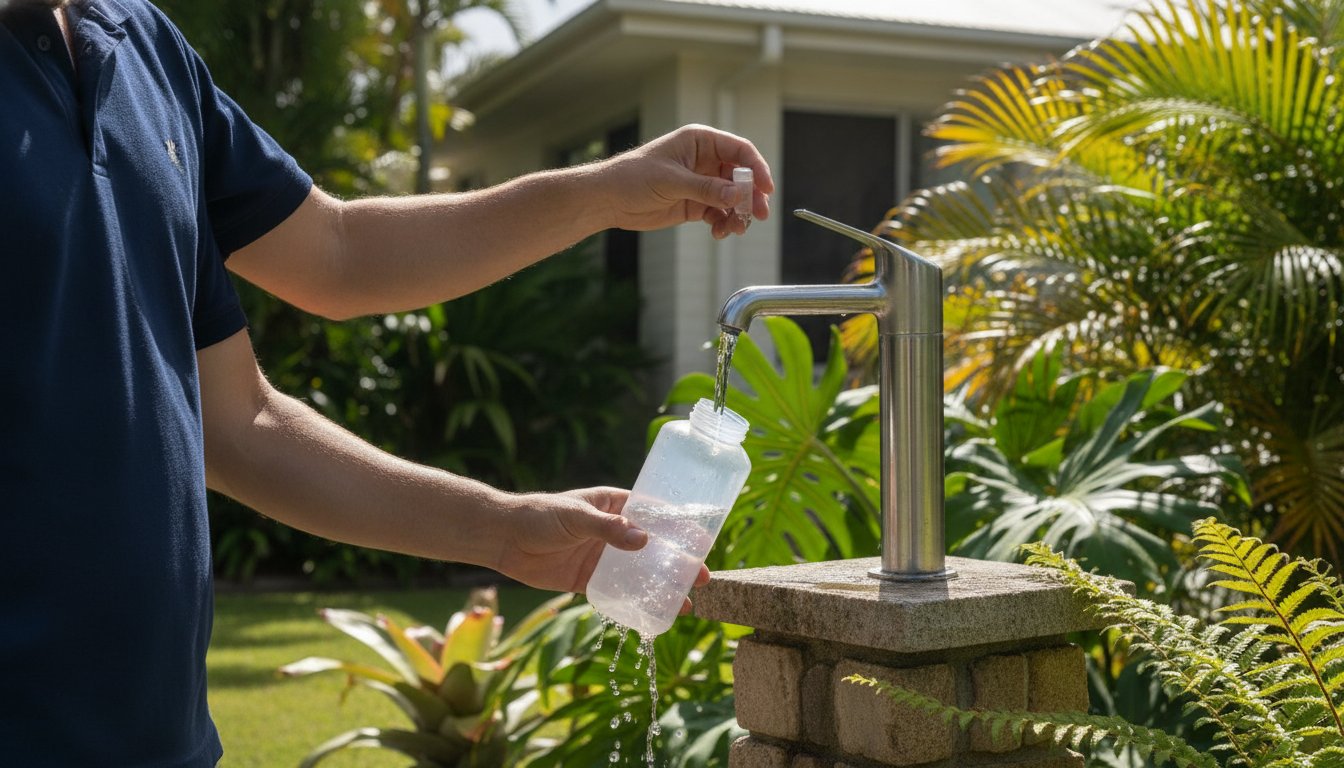
You don't need fancy equipment to get started. A clean 500ml or 1L plastic water bottle is perfect. Avoid using old milk or juice bottles, as even a tiny amount of residue can skew the mineral readings. If you are specifically concerned about salt levels, our guide on testing bore water for salinity provides deeper insights into that specific process.
The Purging Process: Getting Fresh Aquifer Water
Before you fill your bottle, you must purge the system. Run your bore pump for at least 20 to 30 minutes. This clears out any stagnant water sitting in the casing or the delivery pipes. Stagnant water often interacts with the plumbing materials, which can give a false reading for metals or pH. Once the water is running fresh from the source, follow the "rinse three times" rule. Fill your sample bottle a third of the way, shake it, and tip it out; repeat this three times before taking the final sample to ensure no contaminants from the bottle remain. This ensures the lab analyses the water exactly as it exists in the ground.
Lab Submission and What to Expect
Once your sample is collected, label the bottle clearly with the date, the specific location on your property, and the source. Professional lab analysis provides a level of detail that home test strips simply cannot match. While strips might give a vague colour change, a professional Certificate of Analysis (COA) provides precise parts-per-million data. This accuracy is essential for making informed choices about your soil. You can usually expect your results and a plain-English summary within a few business days. To get started, you can book your professional bore water analysis online today.
From Results to Resolution: Your Next Steps
Our role is to provide the diagnostic clarity you need. If the results show that your water requires physical correction, we provide a seamless hand-off to Pristine Water Systems Sunshine Coast. While we identify the specific mineral or chemical imbalances, they provide the practical, on-the-ground solutions like specialised iron removal or sediment filtration. This partnership ensures you get an honest assessment followed by an effective resolution.
Understanding the SCWT Plain-English Summary
Practical Treatment Options
If your results indicate that testing bore water for irrigation suitability has flagged an issue, several practical paths are available. For water with high mineral content, you might consider iron filters or water softeners to prevent staining and scale build-up. In cases where the water is only slightly outside the preferred range, a "shandy" system is often a clever local fix. This involves mixing your bore water with harvested rainwater in a holding tank to dilute the mineral concentration before it reaches your plants. pH correction systems can also be installed to ensure your fertilisers remain effective. For a full drinking-water picture, see our bore water quality assessment guide. Booking a bore water test is the most practical first step to take for your property, allowing you to choose the right solution based on facts rather than guesswork.
Securing Your Garden's Future with Reliable Data
Your garden is one of your property's most valuable assets. Protecting it requires more than just regular watering; it requires an understanding of what that water is doing to your soil and infrastructure. As we've explored, clear water doesn't always mean it's within the preferred range for your specific plants. By testing bore water for irrigation suitability, you move from guesswork to certainty, ensuring your soil structure remains healthy and your irrigation lines stay clear of mineral build-up.
Our team of local Sunshine Coast experts is here to help you demystify the technical side of groundwater. We provide scientific data you can actually understand, paired with a plain-English summary that outlines exactly what your results mean for your backyard. This diagnostic clarity is the essential foundation for any successful long-term irrigation strategy. Book your professional Bore Water Analysis as a practical first step today. Take the uncertainty out of your backyard bore and give your garden the best chance to thrive through every season.
Frequently Asked Questions
Is bore water always safe for my lawn and garden beds?
Bore water is not automatically suitable for all garden types. Even if the water appears clear, it can contain high levels of salinity or sodium that lead to soil dispersion and plant distress over time. Without professional analysis, you risk applying water that creates a cumulative mineral build-up in the root zone. This is why testing bore water for irrigation suitability is a vital first step for any new or existing garden.
How often should I test my bore water for irrigation suitability?
We recommend testing your bore annually, ideally at the start of the dry season when you plan to irrigate most frequently. Groundwater profiles can shift due to seasonal rainfall or local extraction levels. Regular checks ensure your water remains within the preferred range for your specific plants and soil type. If you notice new staining or your plants begin yellowing, you should organise a follow-up test immediately to identify any changes.
Can I use bore water on my vegetable patch and fruit trees?
You can use bore water for food crops, but many vegetables and fruit trees, such as citrus and strawberries, are highly sensitive to salt. High levels of chloride or sodium can lead to leaf burn and reduced yields. A professional lab report from Sunshine Coast Water Testing will help you understand if your water meets the necessary standards for edible gardens. It allows you to make informed decisions about which crops will thrive and which may need rainwater instead.
What does it mean if my bore water report shows high salinity?
High salinity indicates a high concentration of dissolved salts in your groundwater. This creates "osmotic stress," making it difficult for your plants to absorb moisture even when the soil is wet. Common signs include stunted growth and crispy, brown leaf edges. If your report flags this issue, you may need to choose salt-tolerant species or implement a leaching process to flush the salts deeper into the soil profile to protect your garden's health.
Will bore water stain my house, fences, or concrete paths?
Yes, bore water often causes unsightly orange or brown staining if it contains high levels of dissolved iron. When this water hits the air, the iron oxidises and leaves a stubborn residue on sandstone, fences, and foliage. This is a common issue in Hinterland areas like Cooroy and Eumundi. Identifying the iron concentration through testing allows you to choose appropriate filtration solutions before the staining becomes a permanent problem on your property.
Do I need a special kit to collect a bore water sample for the lab?
You don't need a specialised kit to collect a sample for our lab. A clean 500ml or 1L plastic water bottle is perfectly suitable, provided it has never contained milk, juice, or chemicals. The most important part is the collection process. Ensure you purge your bore by running the pump for 20 to 30 minutes first. This ensures we are testing fresh aquifer water rather than stagnant water that has been sitting in your pipes.
Can high sodium in bore water ruin my soil permanently?
High sodium levels can lead to a condition called soil dispersion, which causes clay particles to pack together and block drainage. This makes the soil hard and impermeable, effectively "choking" your plants' roots. While the damage can be significant, it is often manageable if caught early. Testing bore water for irrigation suitability identifies the Sodium Adsorption Ratio (SAR), allowing you to apply soil conditioners like gypsum to restore the balance before the soil structure is ruined.
What is the difference between salinity and hardness in bore water?
Salinity refers to the total concentration of all dissolved salts, which primarily affects plant hydration and soil health. Hardness is a specific measure of calcium and magnesium ions. While salinity impacts your garden's growth, hardness is more likely to cause scale build-up inside your irrigation pipes, pumps, and sprinkler nozzles. Understanding both parameters is essential for protecting both your landscaping and your expensive watering equipment from long-term mineral damage.

Article by
Stephen McDougall
Stephen McDougall is the owner of Pristine Water Systems Sunshine Coast and Sunshine Coast Water Testing, specialising in water quality, filtration, and tank systems. He's known for giving clear, easy-to-understand advice and practical solutions to help clients maintain safe, reliable water.
Disclaimer
The information provided in this article is for general guidance only and isn't a substitute for professional water testing or site-specific advice. Water quality can vary between properties. For accurate results and recommendations, we recommend professional testing and assessment.