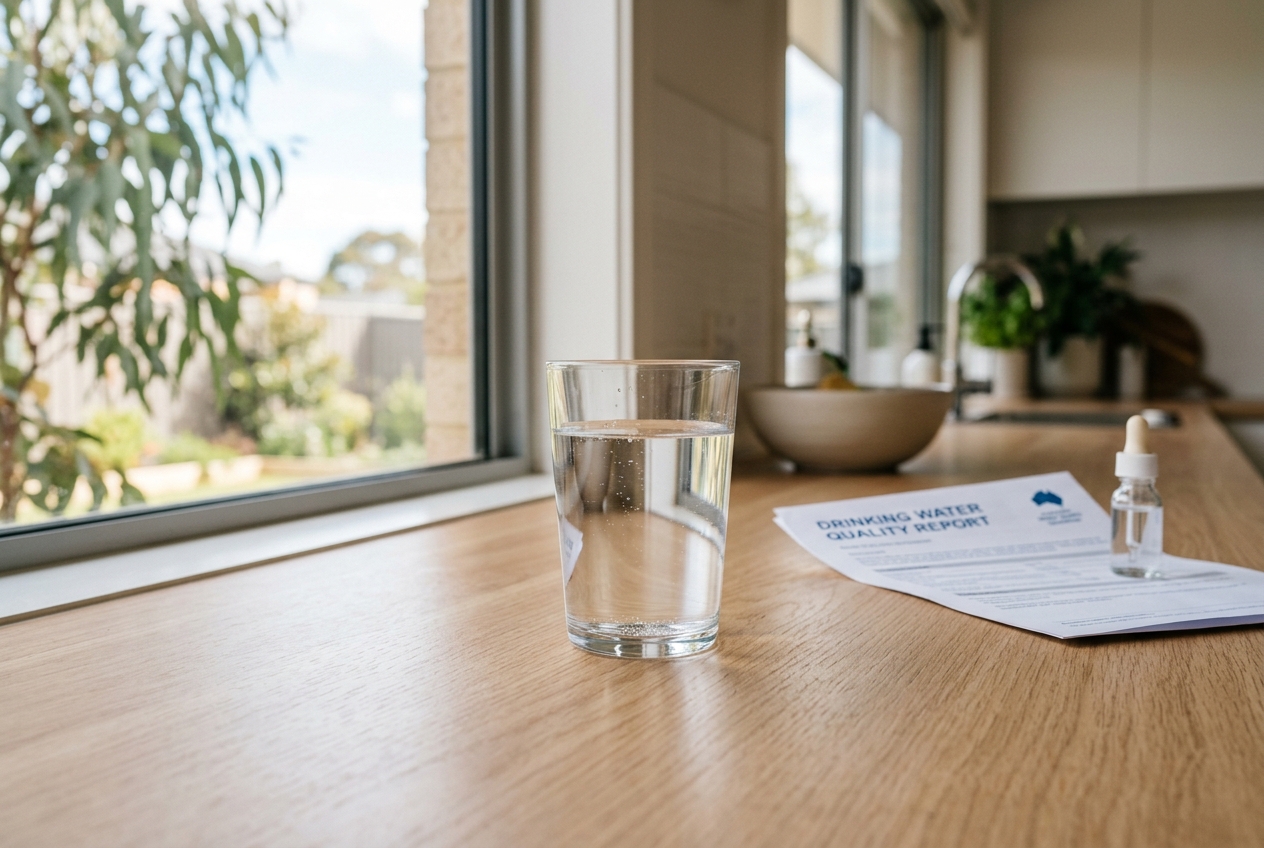
Would you sign a contract for a new home without knowing if the liquid in the pipes is actually fit for your family? Most buyers wouldn't dream of skipping a building and pest inspection, yet testing water quality before buying a house is often forgotten until the keys are already in hand. It's a significant risk when you consider that mineral imbalances or bacterial issues aren't always visible to the naked eye.
It's completely normal to feel overwhelmed by the 14 to 21 day due diligence window. You're likely worried about hidden defects and confused about the different risks associated with tank, bore, or mains water. This guide will teach you how to navigate water quality due diligence to ensure your new home’s supply meets the Australian Drinking Water Guidelines before you settle. We'll explain the specific tests required for different water sources and show you how to interpret laboratory results without needing a chemistry degree.
Key Takeaways
- Understand why testing water quality before buying a house is as critical as a building inspection for uncovering hidden plumbing and health risks.
- Learn how specific parameters like pH and turbidity can impact your home’s infrastructure and the performance of future purification systems.
- Identify the unique risks associated with different water sources, from lead in older urban pipes to the microbiological health of rainwater tanks and bores.
- Master the due diligence timeline to ensure you receive professional laboratory results before your property contract goes unconditional.
- Gain the confidence to interpret a Certificate of Analysis (COA) using plain-English summaries that align with the Australian Drinking Water Guidelines.
Table of Contents
Why Water Quality Testing is Essential Due Diligence
Buying a property is likely the biggest financial commitment you'll ever make. You wouldn't dream of skipping a building inspection, yet many Australians overlook the very thing they consume every single day. Water due diligence is the process of verifying a property’s water supply against national standards. It provides a scientific snapshot of what's happening inside those pipes before you sign on the dotted line.
A common mistake is assuming that if the water looks clear and smells fine, it's perfectly okay. This visual check is insufficient for detecting invisible contaminants. Elements like lead, copper, or E. coli don't always change the appearance of the water, but they can significantly impact your household. Testing water quality before buying a house ensures you aren't walking into a situation where the water supply fails to meet the Australian Drinking Water Guidelines (ADWG).
Beyond health, the chemistry of your water dictates the lifespan of your home’s infrastructure. Corrosive water with a low pH can quietly eat away at copper pipes, while high mineral content can lead to scale build-up in expensive hot water systems and dishwashers. Professional laboratory analysis identifies these issues early, saving you from premature appliance failure and costly plumbing repairs down the track.
Beyond the Building and Pest Inspection
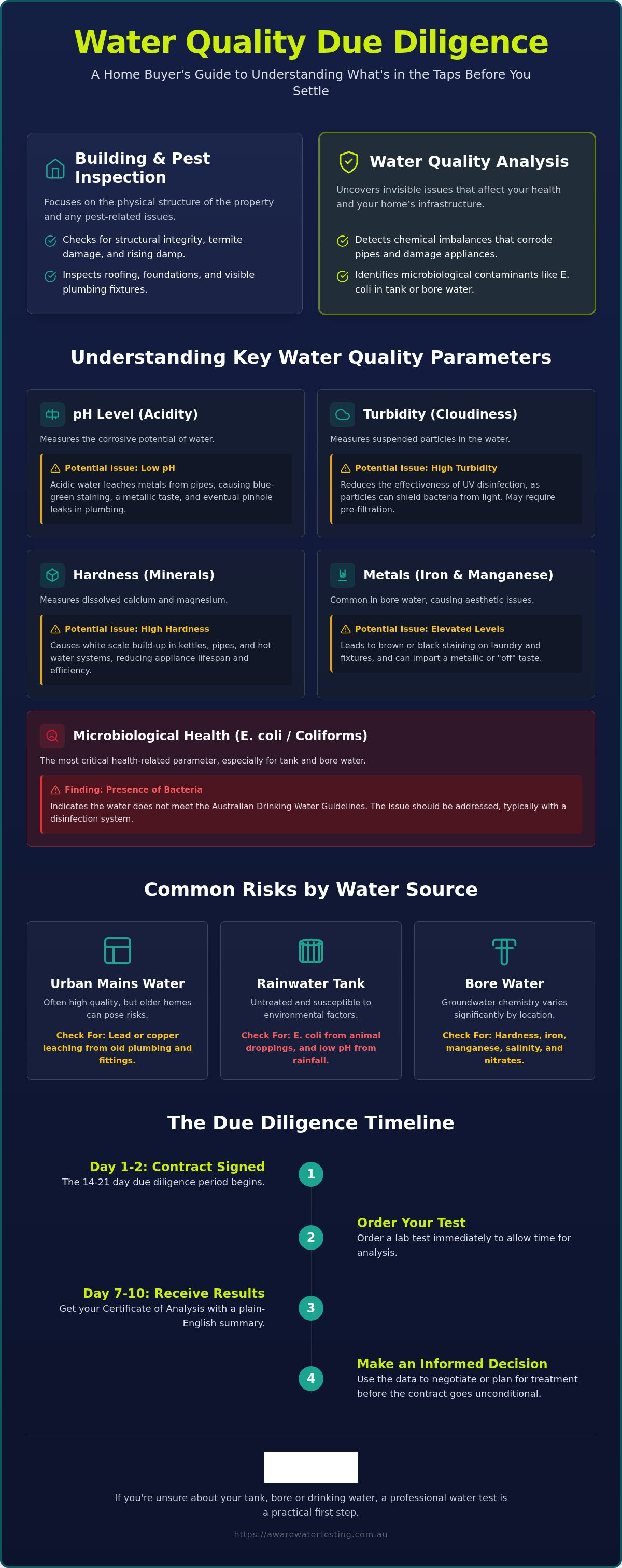
Most standard building and pest inspections focus on the physical structure of the home. They'll check for rising damp or termite damage, but they rarely investigate the chemical composition of the water flowing through the taps. This is a critical gap in the traditional due diligence process. Understanding the water chemistry is vital for maintaining the longevity of your plumbing and appliances.
There is also an immense emotional value in this step. Moving into a new home is stressful enough without wondering if the tank or bore water is suitable for your children's bath time or your morning coffee. Getting a clear result provides the peace of mind that your family’s water supply is safety-checked and ready for move-in day.
Identifying Potential Deal-Breakers
Discovering that a water sample is outside the preferred range doesn't necessarily mean you should walk away from the deal. Instead, it gives you a powerful tool for negotiation or remediation. If a report shows the water does not meet the Australian Drinking Water Guidelines, you can use this professional data to request a price reduction or ask the vendor to install a treatment system before settlement.
In some cases, the cost of fixing a complex bore water issue might be a deal-breaker for your budget. By testing water quality before buying a house, you identify these potential financial burdens during the 14 to 21 day due diligence window. This ensures your investment remains sound and your future home remains a sanctuary rather than a source of hidden costs.
Understanding Key Parameters in Australian Water Supplies
The Australian Drinking Water Guidelines (ADWG) provide a rigorous framework for what should come out of your taps. When you're testing water quality before buying a house, you aren't just looking for "clean" water. You're looking for a specific chemical and biological balance. These parameters provide a clear picture of whether the water is compatible with the home’s plumbing and your family's needs.
Turbidity is one of the first things a lab measures. It refers to the cloudiness of the water caused by suspended particles. While it may seem like a minor aesthetic issue, high turbidity is a significant problem for treatment systems. If you intend to use UV purification, the water must be clear. Suspended particles can act as tiny shields for bacteria, preventing the UV light from doing its job. Understanding this before you buy allows you to factor in the cost of necessary pre-filtration.
Chemical Properties: pH, Hardness, and Metals
The pH level of your water is a crucial indicator of its corrosive potential. If the water is outside the preferred range, usually because it's too acidic, it becomes aggressive toward metal. This leads to the leaching of copper from the home's internal pipes. You might notice blue-green staining in bathtubs or a bitter, metallic taste. Over time, this corrosion results in pinhole leaks and expensive re-piping jobs.
Hard water is another common Australian challenge, particularly in regional areas. This occurs when there are high levels of dissolved calcium and magnesium. It’s the primary cause of white scale build-up in kettles, dishwashers, and hot water units. If the property you're eyeing has very hard water, you’ll likely face higher maintenance costs and a shorter lifespan for your appliances. Metals like iron and manganese are also frequent culprits for staining and "off" tastes in bore water; they often turn laundry brown or leave black specks in the sink.
Microbiological Health: E. coli and Coliforms
Microbiological health is the most vital aspect of any water report. We use E. coli as a specific indicator of recent faecal contamination. It's a clear signal that the water source has been compromised. If a sample does not meet guidelines, the issue should be addressed promptly. This might involve cleaning a rainwater tank or repairing a bore head to prevent surface water ingress. Coliforms are a broader group of bacteria that indicate general environmental contamination, suggesting that the water system isn't as secure as it should be.
For those who want a deeper look at the science behind these tests, a microbiological analysis guide can provide comprehensive technical detail. If you're currently navigating a property purchase, booking a Standard Drinking Water Test is a practical way to get these answers before the contract becomes binding.
Assessing Property Types: Urban, Rural, and Coastal
Every Australian home has a unique water story. Whether you're moving into a Federation-style house in an inner-city suburb or a modern acreage estate, the risks vary significantly. Testing water quality before buying a house allows you to target the specific issues most likely to affect that property type. A one-size-fits-all approach often misses the subtle differences between a metropolitan mains connection and a regional bore.
Coastal properties, for example, face the constant challenge of salt air and fine sand sediment. Salt can accelerate the corrosion of metal tanks and fittings, while fine sediment can quickly clog up household filters. Understanding these environmental factors is a vital part of your due diligence before the contract goes unconditional.
Mains Water and Old Plumbing Risks
It's a common misconception that "treated" council water is always perfect by the time it reaches your glass. Even when the local authority meets its obligations, the water still has to travel through the property's own plumbing. In older Australian suburbs, particularly in homes built before the 1990s, lead and copper leaching is a genuine concern. Lead was frequently used in the solder for copper pipes or in older brass fittings.
If the water sits in these pipes for several hours, it can pick up metal concentrations that are outside the preferred range. Testing for heavy metals is a simple, effective way to verify if the internal plumbing is impacting the water quality. For a deeper look at what these laboratory numbers mean for your potential home, you can read our guide on interpreting heavy metal results.
The Complexity of Bore and Tank Systems
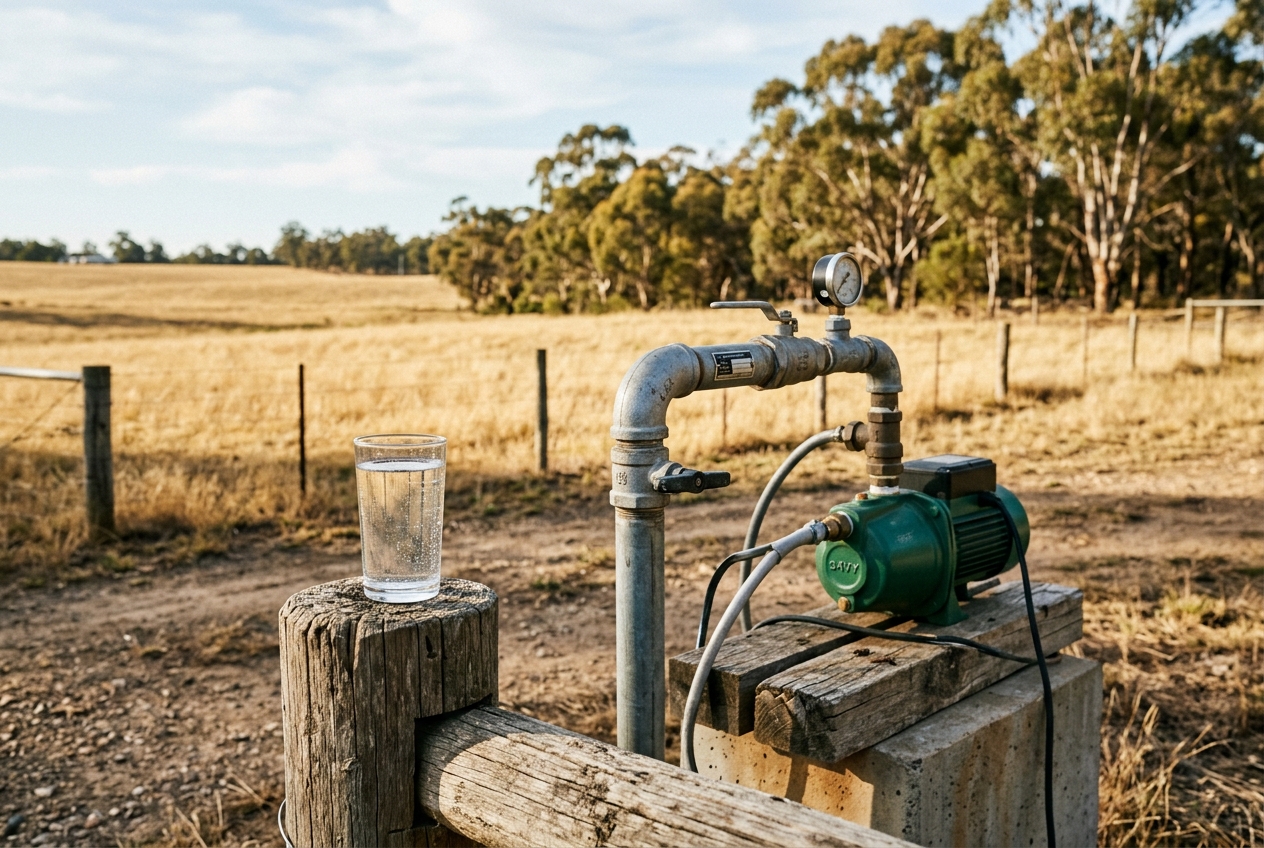
Rural and acreage properties present a more complex set of challenges because the homeowner is essentially their own water utility. Bore water is often high in salinity or nitrates, especially in regions with a history of intensive agriculture. Nitrates from fertilisers can seep into groundwater over decades, while high salt levels can ruin garden beds and corrode expensive pumps.
Rainwater tanks also require careful assessment. The quality of your tank water depends heavily on the roof material, the presence of overhanging trees, and how often the gutters have been maintained. Accumulated leaf litter and bird droppings can lead to microbiological levels that do not meet the Australian Drinking Water Guidelines. AWARE Water Testing helps Australian households understand what is actually in their tank, bore, or drinking water before choosing a treatment option. This targeted approach ensures you aren't paying for filtration you don't need or overlooking a parameter that could impact your home's infrastructure.
The Due Diligence Timeline: When to Order Your Test
Timing is everything when you're under contract. In the fast-paced Australian property market, the window for due diligence is often narrow. Testing water quality before buying a house requires a strategic approach to ensure you have the results in hand before the contract goes unconditional. Waiting until the final days of your building and pest period is a gamble you don't want to take with your family's health or your financial security.
To manage the logistics effectively, follow this structured timeline:
- Step 1: Order your professional water test kit immediately after your offer is accepted. This ensures the kit arrives while you're still organising other inspections.
- Step 2: Collect your water samples early in the week, specifically between Monday and Wednesday. This prevents the samples from sitting in a courier depot over the weekend, which is vital for the accuracy of microbiological results.
- Step 3: Allow 5 to 7 business days for the laboratory to complete the analysis. Professional lab work takes time because some bacterial cultures require specific incubation periods.
- Step 4: Review your plain-English report with your legal representative or the vendor before the due diligence deadline.
Fitting into the 14-21 Day Window
Most standard property contracts in Australia allow for a 14 to 21 day due diligence window. This period covers your building, pest, and any special conditions like water testing. If you move quickly, this is plenty of time to receive a comprehensive analysis. However, if your settlement period is shorter than 14 days, you must treat the water test as an absolute priority. You might even consider requesting the kit before the contract is signed to have it ready for the first day of the cooling-off period.
A professional water test is a practical first step if you are unsure about a property's history or current water health. It transforms a vague concern into a documented fact. Having these results early gives you the leverage to negotiate repairs or treatment systems without the pressure of a looming settlement date.
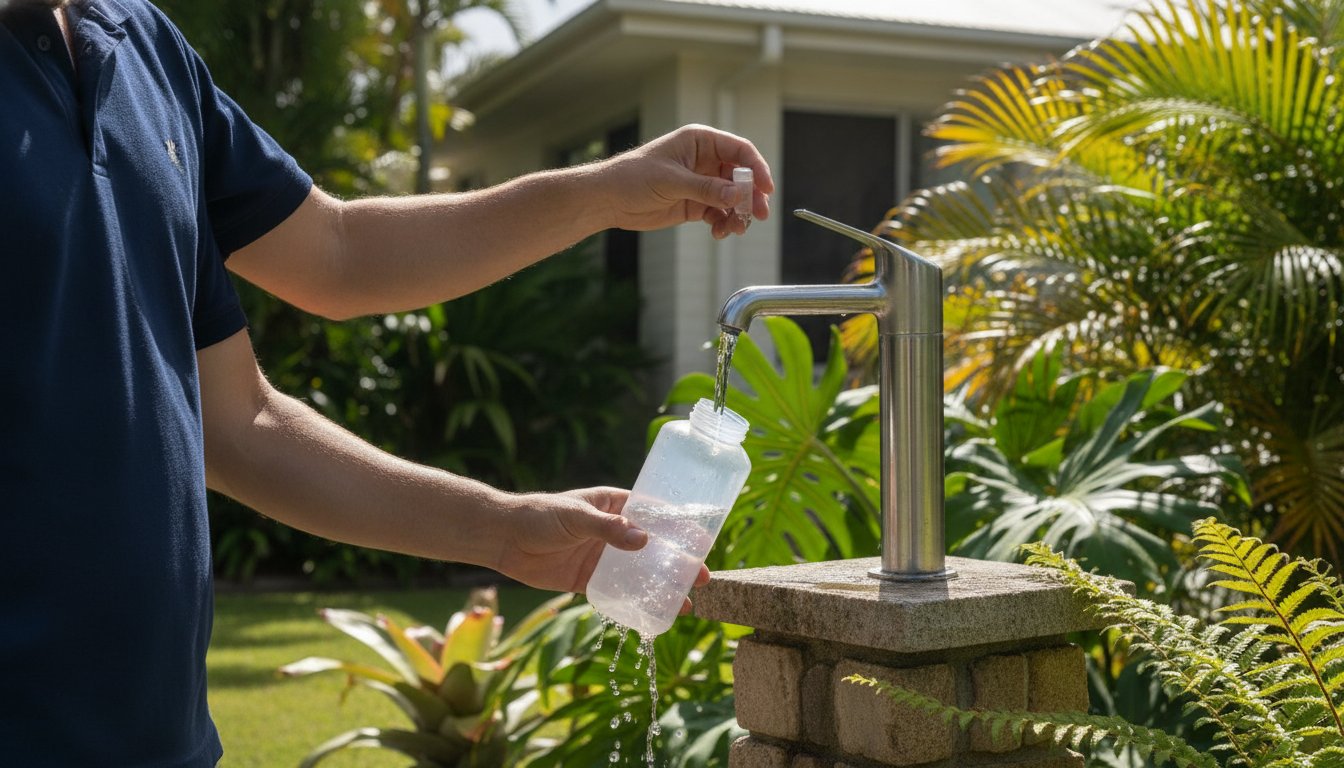
Logistics of Sample Collection
Coordinating the collection of samples requires clear communication with the real estate agent. Agents are generally used to granting access for building inspectors, so they'll likely accommodate a quick visit for water sampling. It's often easiest to time your sample collection with the building and pest inspection to save multiple trips. Just ensure you have the vendor's permission to run the taps if the property is currently vacant.
Following the kit instructions precisely is non-negotiable to avoid sample contamination. Even a small amount of bacteria from your hands can skew the results of a microbiological test. The bottles provided in professional kits are sterile and sometimes contain preservatives, so they must be handled with care. AWARE Water Testing helps Australian households understand what is actually in their tank, bore, or drinking water by providing a clear, step-by-step process that removes the guesswork from sample collection.
Interpreting Results and Planning Next Steps
Receiving your Certificate of Analysis (COA) from the lab is the final piece of your property due diligence puzzle. At first glance, the document might look like a confusing grid of chemical symbols and decimal points. However, testing water quality before buying a house is only useful if you can actually use the data to make an informed decision. The most important column to check is the one that compares your sample against the Australian Drinking Water Guidelines.
You'll likely encounter specific phrasing in your report. If a result is listed as "above the guideline value," it means the concentration of a particular element exceeds the level recommended for long-term consumption. If a parameter like pH or hardness is "outside the preferred range," it suggests the water might be corrosive to your plumbing or likely to cause scale build-up. These aren't necessarily reasons to panic, but they are indicators that the water supply requires attention before you move in.
A professional water test is the essential first step because it removes the guesswork. Some homeowners make the mistake of buying expensive filtration systems based on a hunch or a salesperson's pitch. By having a laboratory report first, you ensure that any treatment solution you eventually choose is tailored specifically to the problems identified in your pipes. This prevents you from over-investing in unnecessary equipment.
What to Do if Results are Outside Guidelines
If your report shows that the water does not meet the Australian Drinking Water Guidelines, stay calm. Most water quality issues have practical, well-established solutions. For example, if E. coli is detected, a UV purification system is a standard fix and the issue should be addressed before you start using the water. If the water is too acidic, a pH correction system can protect your copper pipes. Having the raw data allows you to get accurate, competitive quotes from water treatment specialists rather than relying on vague estimates.
Knowing exactly what is in the water gives you a clear path forward. You can read more about how to navigate these findings in our guide on what to do after water test results. This knowledge is your best asset during the final stages of a property negotiation, allowing you to settle with a clear plan in place.
The AWARE Plain-English Advantage
The biggest challenge for most buyers is the gap between raw laboratory data and real-world application. This is where the AWARE plain-English summary provides significant value. We don't just hand over a list of numbers; we explain what those numbers mean for your home’s plumbing, your appliances, and your family's daily life. This clarity empowers you to decide whether to proceed with the purchase, negotiate a lower price, or plan for a future filtration system without the stress of technical confusion.
Choosing a home is a massive commitment. Ensuring the water is fit for purpose is a simple step that provides lasting peace of mind. By following the steps in this guide, you can settle on your new property with total confidence in your water supply and the infrastructure of your investment.
Secure Your New Home with Confidence
Ensuring your family has access to a reliable water supply is one of the most important steps in the home-buying process. By testing water quality before buying a house, you protect yourself from hidden plumbing costs and ensure your new property aligns with the Australian Drinking Water Guidelines. Whether you're dealing with a rural bore or an older urban mains connection, professional laboratory analysis removes the guesswork from your due diligence window.
We provide Australia-wide service to help you navigate the settlement period with ease. You'll receive plain-English report summaries that explain exactly what's in your water and what practical steps you should take next. This clarity allows you to settle on your new property with peace of mind; it's the simplest way to confirm your investment is sound.
Take the first step toward household safety today. It's a small investment that pays off in long-term confidence and a healthier environment for your family.
Frequently Asked Questions
Is it worth testing water quality before buying a house with mains water?
Yes, testing water quality before buying a house with mains water is highly recommended. While the water is treated by the utility, it must travel through the property’s internal plumbing. In older Australian suburbs, lead solder and brass fittings can leach metals into the water. A lab test confirms that your specific taps aren't introducing contaminants that weren't present at the treatment plant, protecting your family’s health.
How long does a professional water test take to complete?
A professional laboratory analysis typically takes 5 to 7 business days once the samples reach the lab. This timeframe allows for necessary incubation periods for microbiological tests like E. coli. When you're testing water quality before buying a house, it's vital to order your kit early. This ensures results arrive well before your 14 to 21 day due diligence window expires, giving you time to review the data.
Can I use a DIY home test strip for property due diligence?
DIY test strips are generally unsuitable for property due diligence because they lack the required precision. These kits often provide vague colour-match results and don't cover the full range of parameters needed to meet the Australian Drinking Water Guidelines. For a significant financial investment like a home, only a professional laboratory report provides the scientific accuracy and peace of mind you need before the contract becomes binding.
What happens if the water test results do not meet the Australian Drinking Water Guidelines?
If a report shows that a sample does not meet the Australian Drinking Water Guidelines, the issue should be addressed promptly but calmly. Most problems have practical solutions, such as UV purification or specific filtration. You can use the plain-English summary of your results to obtain accurate quotes from treatment specialists or negotiate with the vendor to rectify the issue before the contract goes unconditional or settlement occurs.
Should I test bore water if I only plan to use it for the garden?
Yes, testing bore water is essential even if you only intend to use it for the garden. High salinity can quickly kill sensitive plants, while iron and manganese can stain pathways and outdoor furniture. Additionally, corrosive water with a low pH can damage expensive irrigation pumps and copper pipes. This leads to significant replacement costs that are easily avoided with a preliminary analysis of the groundwater.
Does a standard building and pest inspection include water testing?
No, a standard building and pest inspection focuses on the physical structure and timber pests; it does not include chemical or biological water analysis. Water testing is a specialised service that requires sterile collection equipment and laboratory processing. To ensure a complete picture of the property's health, you must book a separate water test alongside your traditional building inspections during the due diligence period.
How much water do I need to collect for a standard lab test?
Most standard drinking water tests require between 500ml and 1 litre of water, collected in specific sterile bottles provided in your kit. Some bottles may contain small amounts of preservative powder to stabilise the sample during transit. It's important to follow the provided instructions exactly. Ensure you don't rinse the bottles or touch the inside of the caps, as this can lead to sample contamination and inaccurate results.
What are the most common water contaminants found in Australian homes?
Common issues in Australian homes include pH levels outside the preferred range, water hardness, and elevated iron or manganese. In rural areas, microbiological contaminants like E. coli or coliforms are frequently detected in rainwater tanks and bores. Urban properties more commonly face issues with chlorine by-products or heavy metals like lead and copper leaching from old internal plumbing systems. Identifying these through testing is the first step toward a solution.

Article by
Stephen McDougall
Stephen McDougall is the owner of AWARE Water Testing and Pristine Water Systems Sunshine Coast, with extensive experience in water quality, rainwater tanks, bore water, filtration and household water systems. Through AWARE Water Testing, he helps clients understand their laboratory results in clear, practical terms. Through Pristine Water Systems, he provides tailored solutions such as tank cleaning, filtration, UV purification and water treatment based on the issues identified. Stephen is known for straightforward advice and practical recommendations that help clients make informed decisions about their water.
Disclaimer
The information provided in this article is for general guidance only and is not a substitute for professional water testing or site-specific advice. Water quality can vary between properties. For accurate results and recommendations, we recommend professional testing and assessment.